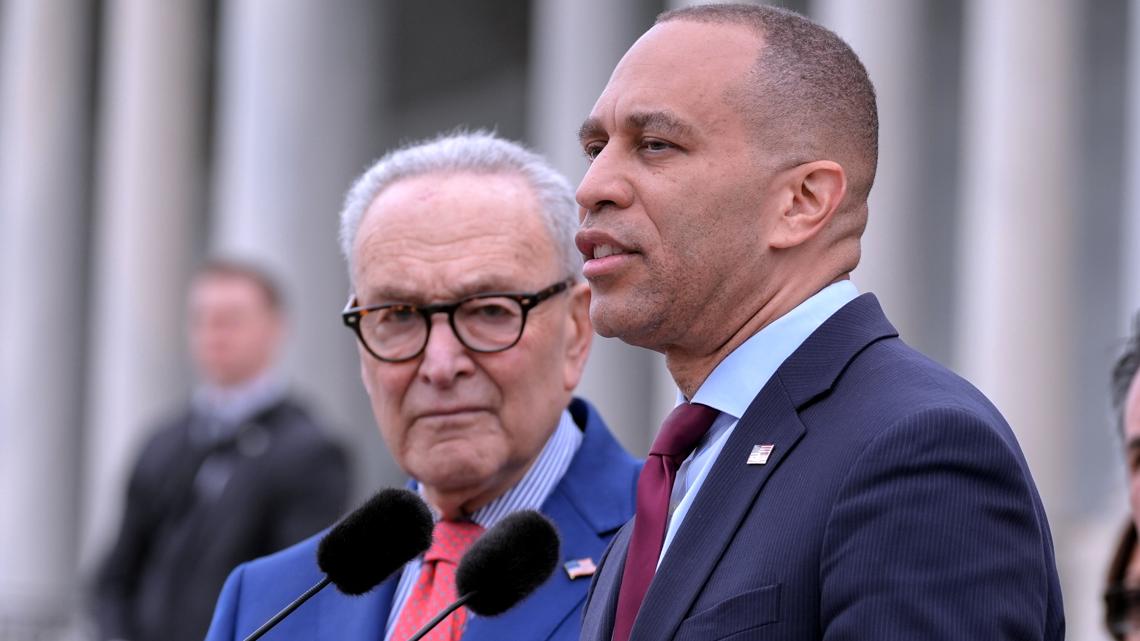
Congress is struggling to muster votes on war powers resolutions that would constrain President Trump’s Iran campaign, with House GOP leaders delaying a vote and Senate Republicans also facing defections. The standoff comes after more than 60 days of conflict without congressional authorization, while the White House argues the ceasefire makes the law moot. The article highlights elevated geopolitical risk, including disruption in the Strait of Hormuz and U.S. gasoline prices rising to $4.53 per gallon.
The market implication is less about the immediate vote and more about regime risk: once Congress begins credibly constraining executive war powers, the premium for a prolonged Hormuz disruption compresses. That matters because shipping, insurance, and bunker-fuel costs are the first-order transmission, but the bigger second-order effect is inventory behavior—importers and refiners front-load supply when policy uncertainty is high, then unwind quickly once a path to de-escalation appears.
Energy is the obvious loser in the near term, but the asymmetry is in the duration of the shock. If the conflict is legally curtailed or politically boxed in over the next 2-6 weeks, crude’s geopolitical premium can mean-revert faster than physical fundamentals deteriorate, especially if spare capacity elsewhere is not as tight as headline fear implies. Conversely, a failed vote or executive bypass keeps escalation risk alive and preserves upside convexity in oil, defense, and tanker/insurance names.
The more interesting underappreciated beneficiary is broader “risk-off without recession” positioning: lower war premium would ease gasoline inflation, improve consumer discretionary sentiment, and reduce pressure on rates via lower breakeven inflation. That creates a setup where the first derivative move is negative for energy, but the second derivative could be positive for retail, airlines, and transports if the market starts pricing a shorter-lived disruption. The contrarian miss is that traders may be overestimating how much of the current price move reflects lasting supply damage versus political theater plus precautionary stocking.
AI-powered research, real-time alerts, and portfolio analytics for institutional investors.
Overall Sentiment
mildly negative
Sentiment Score
-0.25
