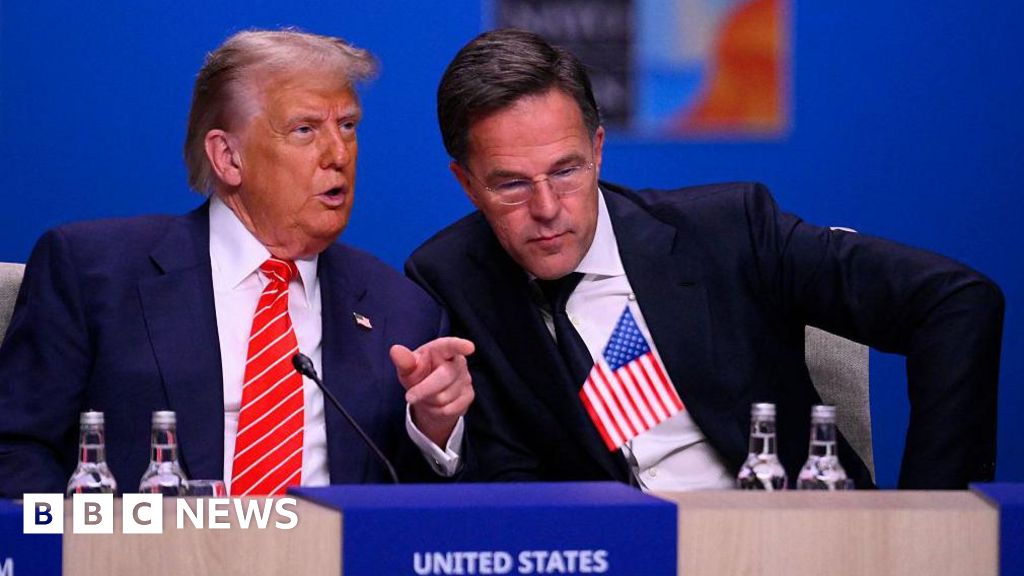
NATO leaders are poised to approve a significant increase in defence spending at their Hague summit, targeting 5% of economic output, largely driven by US President Donald Trump's pressure for greater burden-sharing. This "historic" agreement, despite some dissent from Spain, marks a substantial shift in alliance financial commitments, signaling heightened investment in the defence sector and a reinforced collective security posture amidst global tensions. The outcome, however, is framed by Trump's broader geopolitical focus and past questioning of Article Five, introducing a nuanced outlook on long-term alliance dynamics.
NATO is on the verge of a significant strategic pivot, with leaders set to agree on a substantial increase in defense spending to a target of 5% of member nations' economic output. This move, heavily influenced by pressure from the United States, represents a fundamental shift in the alliance's fiscal commitments, aiming for 3.5% on direct defense by 2035 and an additional 1.5% on related projects. While the summit is being framed as "historic," the consensus is not absolute, as evidenced by Spain's outright rejection of the 5% target in favor of its 2.1% goal and Belgium's more cautious acceptance of 3.5% as a realistic 10-year objective. This spending escalation is a direct response to a perceived "dangerous moment" in global security, intended to bolster collective defense capabilities. However, the situation is nuanced by the US President's rhetoric, including prior questioning of the Article Five mutual defense guarantee and a stated preference to focus on Middle East conflicts over Ukraine, introducing an element of political uncertainty despite the increased financial commitments.
AI-powered research, real-time alerts, and portfolio analytics for institutional investors.
Overall Sentiment
moderately positive
Sentiment Score
0.45
