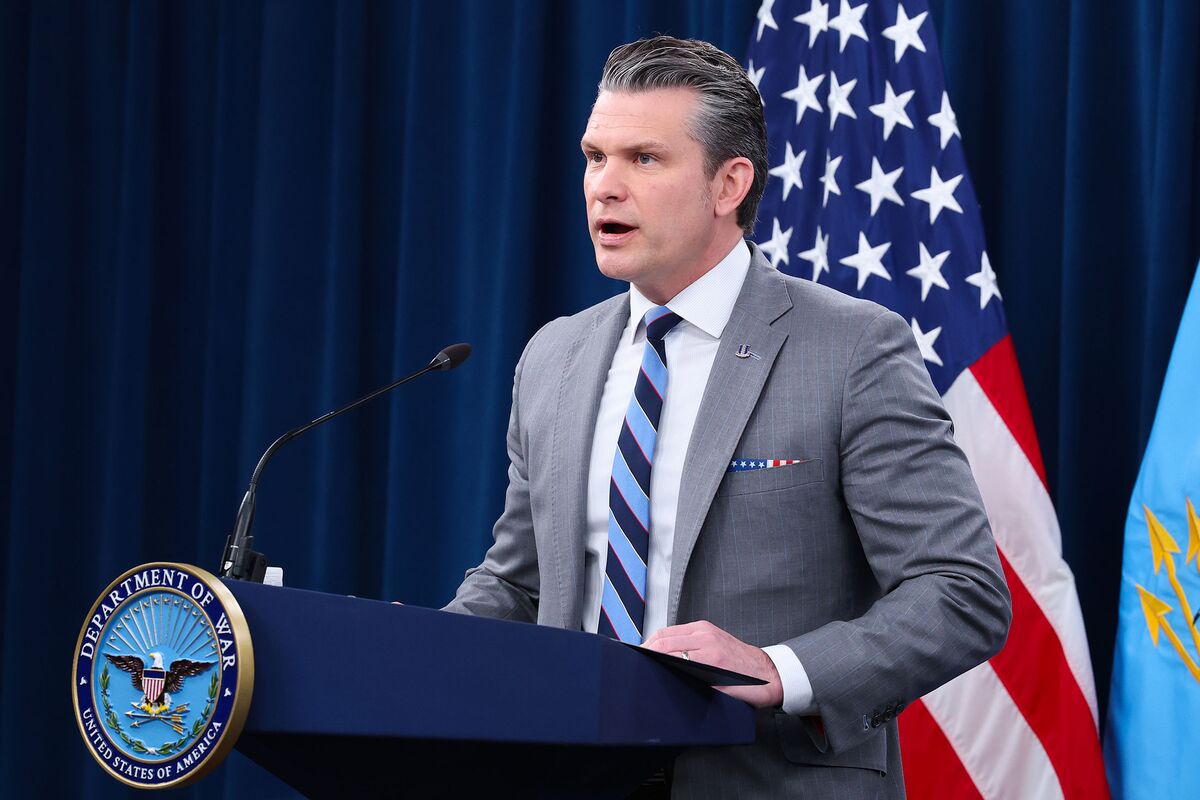
Defense Secretary Pete Hegseth criticized Europe and Asia for 'freeriding' on US military action to reopen the Strait of Hormuz after the route was closed by war with Iran. The comments underscore elevated geopolitical risk around a critical energy chokepoint and could keep oil markets and defense-related risk sentiment volatile. No policy action was announced, but the remarks signal a tougher US stance on allied burden-sharing.
The market implication is less about the rhetoric and more about an accelerated burden shift: allies are now being told to internalize more of the cost of maritime security, which raises the odds of higher European and Asian defense procurement over the next 6-24 months. That creates a subtle but important re-rating channel for non-U.S. primes with credible naval, ISR, air-defense, and munitions capacity, especially those exposed to Gulf transit security and anti-drone systems. The second-order effect is that the U.S. is signaling willingness to make energy chokepoints a bargaining tool, which should keep a geopolitical risk premium embedded in crude even if physical flows normalize quickly.
For energy markets, the near-term setup is asymmetric because the removal of shipping confidence can tighten effective supply without needing a large volume outage. Freight, insurance, and hedging costs can jump within days, but the larger signal is inventory behavior: refiners and traders may preemptively bid crude and middle distillates, while consuming regions with weaker strategic stockpiles become more price sensitive. The biggest losers are industrials and transport assets with high fuel beta in Europe and Asia, particularly airlines and chemical producers, where margins can compress before headline oil prices fully adjust.
The contrarian read is that the headline may overstate durable regime change. If the security burden-sharing talk is mostly political signaling, the market could fade the move once escort capacity, air defense, and diplomatic backchannels stabilize traffic, which would cap the risk premium within weeks rather than months. Still, the key tail risk is that even a short-lived disruption can change buyer behavior for a quarter or two, forcing higher working capital needs and amplifying volatility across freight-linked equities and energy-sensitive credit.
From a portfolio construction perspective, this is a volatility event with optionality rather than a clean directional macro thesis. The cleanest expression is not to chase spot crude immediately, but to own convexity around shipping disruption and benefit from defense repricing outside the U.S., while fading the most fuel-sensitive cyclicals if oil stays bid for multiple weeks. Watch for any follow-on commitments from Europe or Asia to fund naval protection, because that would convert this from a one-day headline into a multi-quarter capex cycle.
AI-powered research, real-time alerts, and portfolio analytics for institutional investors.
Request TrialOverall Sentiment
mildly negative
Sentiment Score
-0.25
