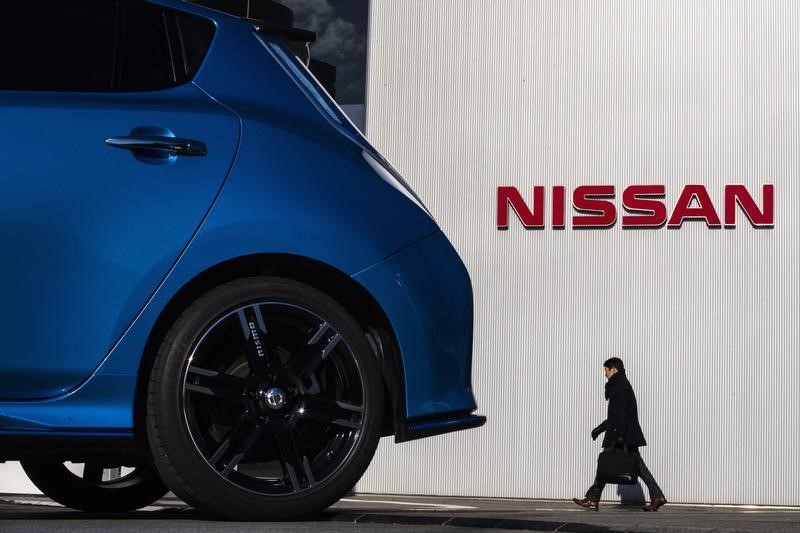
Nissan swung to a full-year operating profit forecast of 50 billion yen for FY ending March 2026, versus a prior 60 billion yen loss estimate, helped by U.S. emissions regulation changes, cost cuts, and FX tailwinds. It also raised revenue guidance to 12 trillion yen from 11.9 trillion yen and narrowed expected net loss to 550 billion yen from 650 billion yen. Shares rose as much as 6.5% intraday, reflecting improved profitability and cash flow outlook.
This is less a clean operating inflection than a balance-sheet repair story with a temporary regulatory kicker. The market is likely reacting to the optics of a return to profit, but the more important signal is that management is buying time: FX and emissions-rule changes can bridge liquidity, yet they do not by themselves fix structural competitiveness in pricing, product mix, or China exposure. The near-term winner is Nissan equity holders who get reduced bankruptcy probability, while suppliers and creditors benefit from a lower probability of forced renegotiation over the next 2-3 quarters.
Second-order, the upgrade should modestly support Japanese auto parts names with Nissan exposure, but the benefit is asymmetric: a stronger Nissan can delay balance-sheet stress transfer to suppliers, yet it also preserves a weaker competitive equilibrium in the industry. If margins are being rescued by one-off regulatory effects, peers with cleaner EV/hybrid portfolios and stronger U.S. pricing power may actually be underappreciated beneficiaries because a stabilized Nissan prevents a disorderly share shift that would otherwise force sharper industry price cuts.
The key risk is that this is a classic consensus trap: investors extrapolate a single-year profit swing into a durable turn, when the underlying cash flow inflection may still be fragile. Any yen re-strengthening, reversal of regulatory benefits, or weaker North American demand could re-open the loss narrative quickly, especially if the company needs to lean on promotions to defend volume. The real catalyst window is the next 1-2 earnings prints; if automotive free cash flow does not inflect by mid-fiscal year, the equity rerates back to a restructuring option value rather than a normalcy multiple.
AI-powered research, real-time alerts, and portfolio analytics for institutional investors.
Overall Sentiment
mildly positive
Sentiment Score
0.48
Ticker Sentiment
