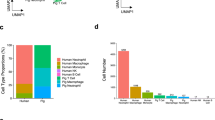
A recent study detailed a successful 61-day xenotransplantation of a minimally gene-edited pig kidney into a brain-dead human, achieving dialysis independence and stable physiological function. Despite encountering and reversing antibody-mediated rejection and T-cell expansion, the research underscores significant progress in addressing organ scarcity while highlighting persistent immunological challenges. This development signals potential long-term viability for xenotransplantation, offering insights for investors monitoring advancements in the biotech and medical device sectors focused on organ replacement therapies.
The recent study details a successful 61-day xenotransplantation of a minimally gene-edited pig kidney into a brain-dead human, demonstrating sustained physiological function and dialysis independence. This marks a significant advancement in addressing organ scarcity, showcasing the potential for long-term viability of xenografts. The procedure utilized clinically approved immunosuppression without additional genetic modification beyond alpha-Gal knock-out. Despite the initial success, the xenograft experienced antibody-mediated rejection on post-operative day 33, characterized by increased serum creatinine and donor-specific IgG. This rejection was effectively reversed through plasma exchange, C3/C3b inhibition, and rabbit anti-thymocyte globulin (rATG), allowing for continued stable renal function. The study also identified progressive expansion of pre-existing donor-reactive T cell clones, which acquired an effector transcriptional profile. This research underscores that while minimally gene-edited pig kidneys can support life-sustaining functions, pre-existing xenoreactive T cells and induced antibodies remain major immunological challenges. However, the successful reversal of rejection and the sustained function for 61 days indicate substantial progress in managing these complexities. The overall sentiment is moderately positive, suggesting a moderate market impact for the healthcare and biotech sectors focused on organ replacement therapies.
AI-powered research, real-time alerts, and portfolio analytics for institutional investors.
Request DemoOverall Sentiment
moderately positive
Sentiment Score
0.50
