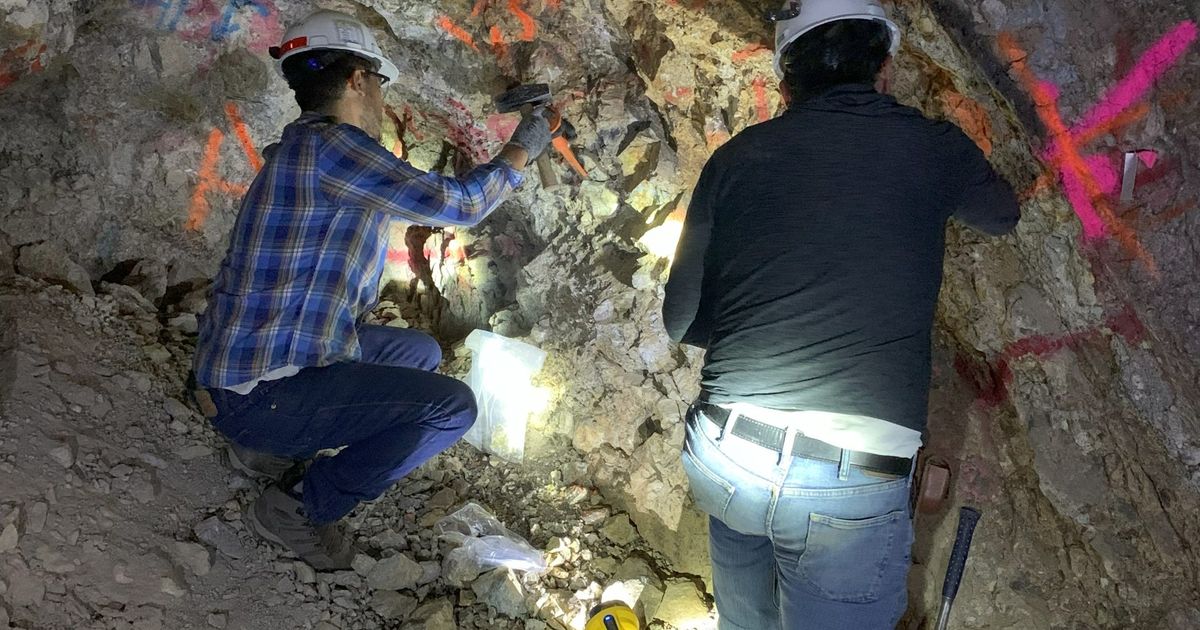
Pinnacle Silver & Gold has commenced a 12-hole underground drill program at its El Potrero project in Mexico, leveraging historic underground workings to gain immediate access to mineralized breccia zones where surface sampling has returned very high gold and silver grades. The program aims to delineate three known zones, define grade distribution and geometry to support a preliminary mine plan (including head grade and mining approach), with a subsequent surface drill program planned to test untested veins (El Capulin, La Estrella and Dos de Mayo) and gaps between workings.
Market structure: A successful underground drill program chiefly benefits Pinnacle Silver & Gold (TSXV:PINN, OTCQB:PSGCF), local service contractors and boutique junior-metals financings; it is unlikely to affect global gold/silver supply or majors' pricing power. Competitive dynamics favor juniors with pre-existing underground access because they can materially shorten timelines and capex — this creates a niche re-rating vector for similar assets but displaces little market share from producers. Cross-asset impact is muted: expect idiosyncratic equity moves, possible 3–15% re-ratings in small-cap silver juniors and 1–3% short-term lifts in SIL/GDXJ on positive assays, while rates and FX remain insensitive absent broader metal-price moves.
Risk assessment: Key tail risks are failure of continuity/metallurgy, collapse or access issues in historic workings, community/permitting delays, and equity dilution — expect 20–40% potential share issuance within 6–12 months to fund surface drilling or development. Timing: immediate (days) volatility around drill/assay headlines, short-term (1–6 months) material directional moves as underground assays and surface drill plans arrive, long-term (6–24 months) conversion into a maiden resource or mine plan. Hidden dependencies include metallurgical recovery variability and the need for surface holes to close gaps (120–150m), which could flip economics. Catalysts: assay batches (next 6–12 weeks), surface drill results (Q1–Q2 2026), and financing announcements.
Trade implications: Direct speculative play — establish a small sized position in PINN ahead of assays but size to portfolio risk (see decisions). Use pair trades to isolate exploration re-rating (long PINN vs short a mid-tier silver miner such as First Majestic AG) and express broader upside via 3–6 month call spreads on SIL/GDXJ capped to 1–2% NAV. Entry: initiate partial position pre-assays; scale up only if drilling shows continuous intercepts exceeding ~3 g/t AuEq over >=5m or multiple >5 g/t over >=2m; exit/trim on failure to meet continuity or if company issues >C$5M equity within 90 days.
Contrarian angles: Market may underprice the value of immediate underground access — converting visible workings into a drill-defined resource can compress timelines and materially de-risk capex versus greenfield peers, creating asymmetric upside if continuity is demonstrated. Conversely the market can also underreact to dilution and metallurgical risk; historical parallels show both rapid re-ratings (+50–150%) on converted resources and severe drawdowns when metallurgy/continuity fail. Unintended consequences include a need for costly surface infill (120–150m gaps) and accelerated dilution; therefore the binary outcome (success vs continuity failure) favors small, event-driven sizing rather than large generalist positions.
AI-powered research, real-time alerts, and portfolio analytics for institutional investors.
Request DemoOverall Sentiment
mildly positive
Sentiment Score
0.28
