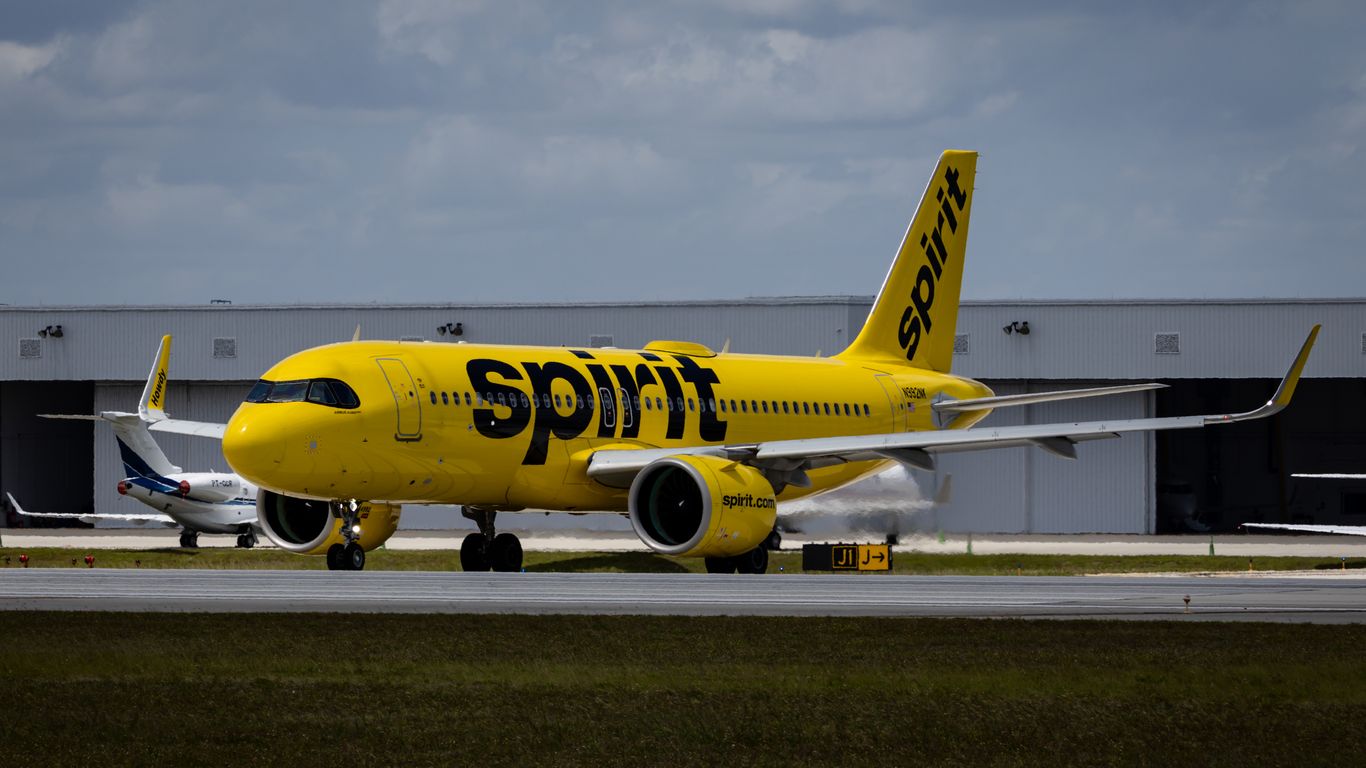
Spirit Airlines said it will immediately wind down operations, cancel all flights, and refund most card-based bookings as the company enters bankruptcy liquidation. The carrier cited a sudden rise in fuel prices and said it needed hundreds of millions of dollars of liquidity it could not secure; it lost nearly $5.9 billion from 2020 through 2025 and last turned profitable in 2019. The shutdown is likely to lift fares in competitive U.S. routes and may benefit rival airlines such as United, American, Frontier, and Southwest.
Spirit’s shutdown removes the last meaningful price-disruptor in several domestic leisure corridors, which matters more for industry pricing than for industry capacity. The second-order effect is that surviving ULCCs and even legacy carriers can now quietly widen fare spreads without provoking immediate share loss, especially on short-haul VFR and leisure routes where Spirit had forced discipline. That should support yield, but it also shifts demand risk onto lower-income travelers first, meaning incremental traffic can soften before headline fares fully reprice.
The market implication is asymmetric: the clear beneficiary is Southwest, which already has a lower-friction customer proposition and can selectively absorb stranded demand while protecting pricing with airport-counter fares. But the bigger medium-term winner may be the network carriers with strong domestic pricing power, because every seat Spirit exits raises the implicit floor across competitors’ basic economy products. That said, the benefit should show up over quarters, not days, because fare buckets re-optimize gradually and some displaced demand will leak to remaining ULCCs, not vanish entirely.
The contrarian read is that this is not purely bullish for airline equities because the real constraint has shifted from capacity to demand elasticity. If fuel stays elevated, the industry could enjoy a temporary yield tailwind while simultaneously crossing into a zone where discretionary travel gets rationed, especially among budget-conscious consumers. Also, the bankruptcy process may allow Spirit assets, gates, and aircraft to be re-deployed into new capacity over 6-18 months, which means today’s competitive repricing may prove transitory rather than structural if a buyer rebuilds the same network with a lower cost base.
AI-powered research, real-time alerts, and portfolio analytics for institutional investors.
Request DemoOverall Sentiment
extremely negative
Sentiment Score
-0.95
Ticker Sentiment
