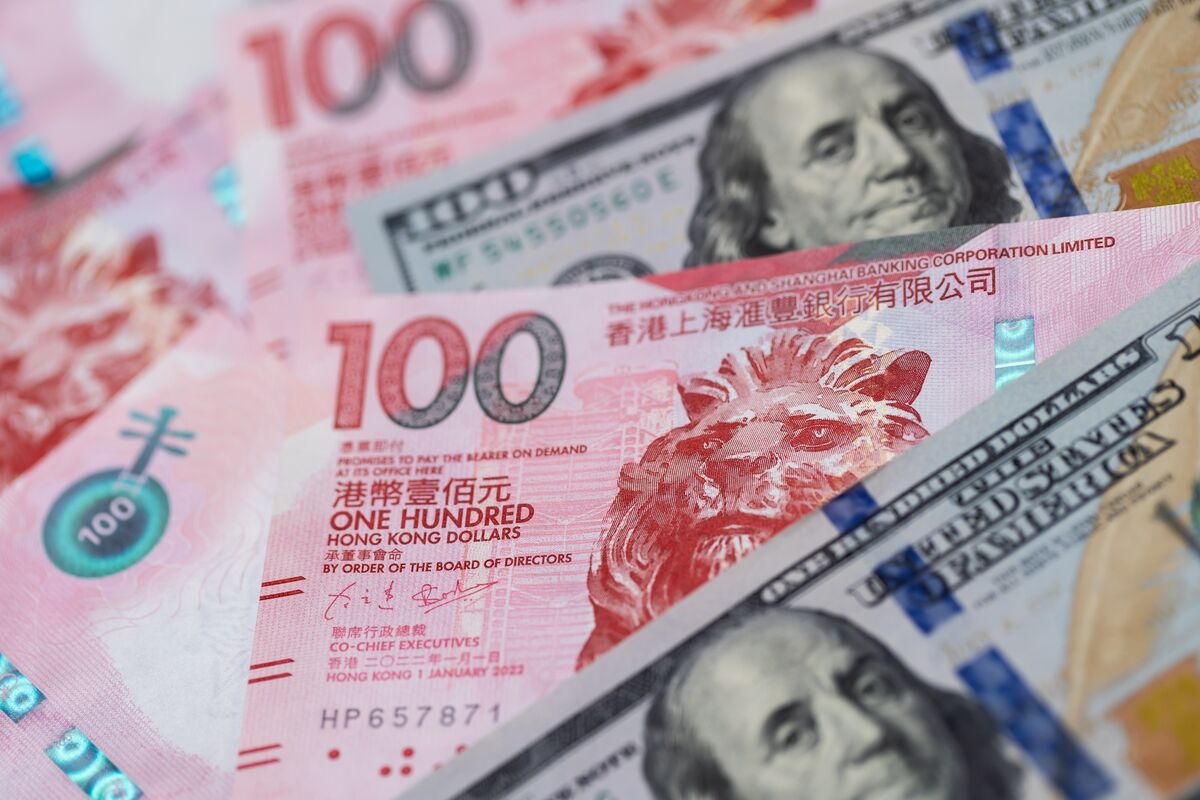
The Hong Kong dollar fell to HK$7.8417 per US dollar, its weakest level since August 2025 and about a 10-month low, as a stronger greenback and expectations for further Fed rate hikes pressured Asian currencies. The move leaves the HKD on track for a third straight week of losses. The article points to a broader dollar-strength/risk-off FX backdrop rather than a Hong Kong-specific shock.
The move in HKD is less about Hong Kong idiosyncrasy than a test of the peg’s operating regime: when US rates reprice higher, the forward carry of shorting the currency improves while the HKMA is forced to defend the band through tighter local liquidity. That creates a second-order squeeze on Hong Kong banks and rate-sensitive property exposures, because defending the currency often means allowing domestic funding costs to stay elevated longer than the local economy can comfortably absorb.
The bigger loser is not just HKD itself, but any Asia-facing balance sheet that has implicitly treated the peg as a low-volatility funding anchor. If USD strength persists for several weeks, corporates with unhedged USD liabilities in emerging Asia will see translation pressure and tighter refinancing conditions, especially where trade margins are already thin. The market is likely underestimating how quickly this can morph from a FX story into a credit-spread story if local interbank liquidity tightens.
The key catalyst is whether the Fed repricing continues to widen the US-HK rate differential enough to keep speculative pressure one-way. Near term, the risk is a disorderly move toward the weak side of the band that forces the HKMA to drain liquidity more aggressively, which would hit equities via higher discount rates and weaker property transaction volumes. Over a multi-month horizon, the trend reverses only if US yields fall meaningfully or if the market starts pricing a slower Fed path; absent that, the carry and technicals favor remaining long USD versus Asian FX.
Contrarian view: this may still be an orderly rather than imminent stress event. The peg has substantial institutional credibility, so the better expression is not a collapse scenario but a prolonged period of elevated local rates and equity underperformance. That means the opportunity is less in outright FX and more in the knock-on effects—bank net interest margin vs credit quality, and property valuation compression versus exporters with USD revenue.
AI-powered research, real-time alerts, and portfolio analytics for institutional investors.
Request DemoOverall Sentiment
mildly negative
Sentiment Score
-0.25
