
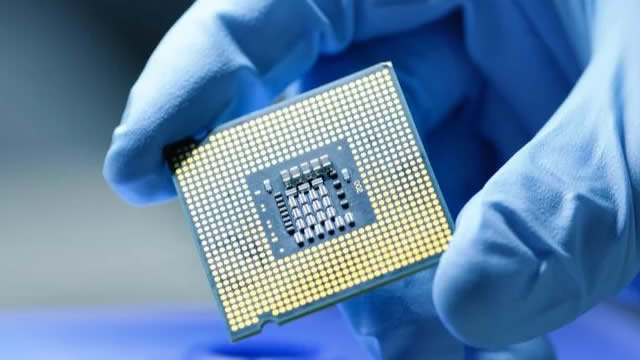
ASML raised its 2026 financial guidance after stronger-than-expected Q2 earnings and announced plans to increase capacity. Management attributed the outperformance to continued robust demand for AI chips, supporting broader semiconductor capex. The guidance increase and capacity expansion signal a sustained demand environment, likely supporting sector sentiment.
The key signal is not the printed quarter; it is that ASML is still being pulled forward by customer capex rather than managing a digestion phase. That matters because lithography spend tends to be a lagging confirmation of AI demand, so the cleaner read-through is to AMAT, LRCX, KLAC, and the broader SMH/SOXX basket over the next 1-3 months. In other words, the market should price this as evidence that the semiconductor equipment cycle has room to extend, not as a one-day EPS beat.
Second-order, the beneficiaries are the tool vendors and the foundry/logic customers willing to prepay for capacity; the losers are any semi names whose valuations depend on a near-term capex pause. If capacity additions at ASML are translating into shorter lead times, that reduces scarcity risk in the supply chain and supports higher shipment volumes into 2025-26, but it can also cap the premium investors assign to "unconstrained" growth. The more interesting long is not the company with the headline, but the ecosystem names that benefit from a multi-quarter ordering tailwind without ASML's single-name concentration risk.
Contrarianly, consensus may be extrapolating this into a straight-line AI supercycle when the more relevant question is whether hyperscaler spend broadens beyond a few buyers. The main falsifiers are a slowdown in 2026 booking growth, any negative guidance from TSM/NVDA/cloud capex, or tighter export controls on China that offset AI demand. Six to eighteen months out, if monetization of AI lags infrastructure buildout, semicap multiples can compress even if orders remain healthy, so the trade should be sized for valuation risk, not just fundamentals.
AI-powered research, real-time alerts, and portfolio analytics for institutional investors.
Overall Sentiment
strongly positive
Sentiment Score
0.60
Ticker Sentiment
