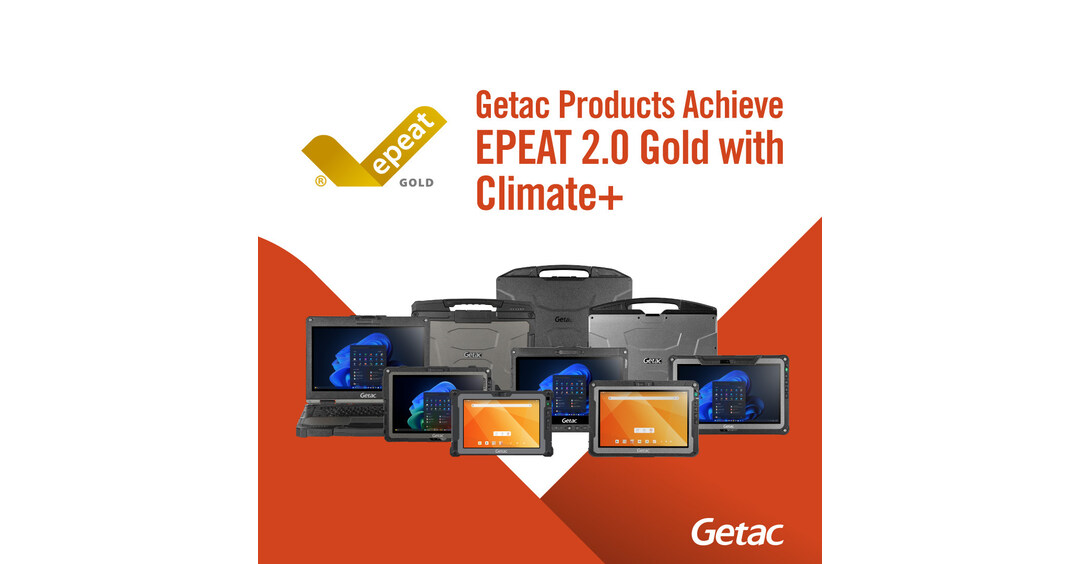
Getac announced nine rugged computing products achieved EPEAT 2.0 Gold with Climate+ (scoring 54/65, or 83% of optional points), and the company is now an EPEAT 2.0 Launch Partner. The news highlights verified climate and Scope 3 emissions reduction criteria plus stronger supply-chain transparency and circularity measures (disassembly/repair, more PCR materials). While not financial, it supports Getac’s sustainability positioning and procurement appeal versus rugged peers that largely secured Bronze/Silver under EPEAT 2.0.
This is primarily a procurement-signaling event, not a near-term revenue catalyst. The economic value sits in win-rate optionality on slow-moving RFP cycles in public sector, utilities, and defense: a higher-tier sustainability label can help protect incumbent accounts and reduce procurement friction, but it rarely changes budget size or unit demand by itself. In the liquid public-market universe, ZBRA and DELL are the closest proxies, but even there the impact is more likely to show up as modest competitive differentiation than as a step-function in top-line growth.
The second-order effect is cost and compliance pressure on the rest of the rugged/field-device supply chain: supplier audits, recycled-content sourcing, repairability, and carbon documentation all add overhead. That can compress gross margin a bit for laggards or force them to pass through costs into already price-sensitive bids, which may push share toward vendors with cleaner compliance infrastructure. The real winner is not sustainability branding per se; it is the OEM with the best ability to turn ESG paperwork into bid eligibility without sacrificing service reliability.
Timing matters: this is a 6-18 month story, not a day-trade. The thesis fails if buyers continue to optimize almost entirely on durability, service uptime, and price, with sustainability treated as a checkbox. The key watch item is whether upcoming channel checks or public-sector awards show any measurable conversion uplift for certified vendors; absent that, this is mostly a marketing moat, not an earnings moat.
AI-powered research, real-time alerts, and portfolio analytics for institutional investors.
Overall Sentiment
mildly positive
Sentiment Score
0.35
Ticker Sentiment
