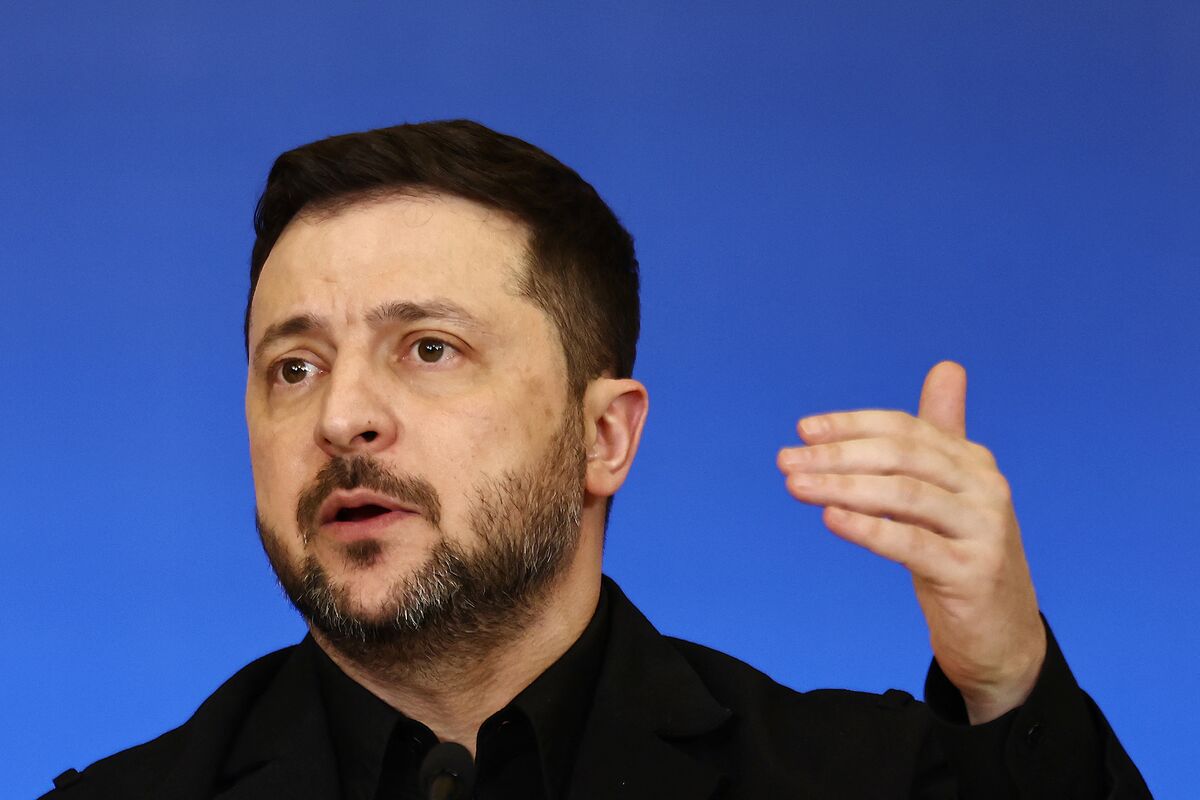
Ukraine asked Turkey to help arrange a summit between President Volodymyr Zelenskiy and Vladimir Putin as part of a renewed effort to end the war. Foreign Minister Andrii Sybiha said Kyiv would attend a meeting organized by any capital other than Moscow or Belarus, signaling continued diplomatic engagement. The report is geopolitically significant, but it contains no immediate market or economic figures.
A renewed negotiation channel is less important for immediate peace probability than for how it can reprice duration of war risk. The first-order market effect is on the probability-weighted tail, not the base case: even a modest increase in ceasefire odds can compress risk premia in frontier EM assets, reduce defense-order urgency, and ease logistics bottlenecks in Black Sea-adjacent trade over a 3-6 month horizon. The market is likely to overreact on headlines, but sustainable repricing usually requires either a verified summit date or a concrete prisoner/exchange or corridor framework that proves the talks are operational rather than symbolic.
The most interesting second-order beneficiaries are not obvious peace proxies but sectors tied to war-duration assumptions. European industrials with heavy energy intensity, Baltic/Nordic shipping, and select CEEMEA sovereign/corp spreads would benefit if the market starts discounting a lower probability of escalation or infrastructure attacks. Conversely, defense names that have been trading on an elongated procurement cycle can soften if investors start extrapolating a peace premium too early; that set-up tends to be transient unless budget commitments are explicitly revoked, which is unlikely over the next 12 months.
The contrarian read is that diplomatic noise can actually be bearish for the most crowded short-duration peace trades if expectations get ahead of execution. A failed summit attempt after a visible public push can harden positions, reduce optionality, and leave implied volatility too low for the next escalation shock. In other words, the right way to trade this is not to bet on peace, but to own convexity around the binary risk that the market is mispricing: either a real de-escalation path emerges, or the failure itself becomes a catalyst for renewed military intensity and higher energy/logistics risk.
The key reversal factor is whether third-party hosts can convert access into guarantees on agenda, security, and enforcement. Without that, this remains a headline-driven catalyst with a short half-life measured in days, while any credible framework shifts the regime over months. The asymmetry favors optionality: downside in war-risk assets is gradual, but upside from a true diplomatic breakthrough can be abrupt and under-owned.
AI-powered research, real-time alerts, and portfolio analytics for institutional investors.
Request DemoOverall Sentiment
neutral
Sentiment Score
0.00
