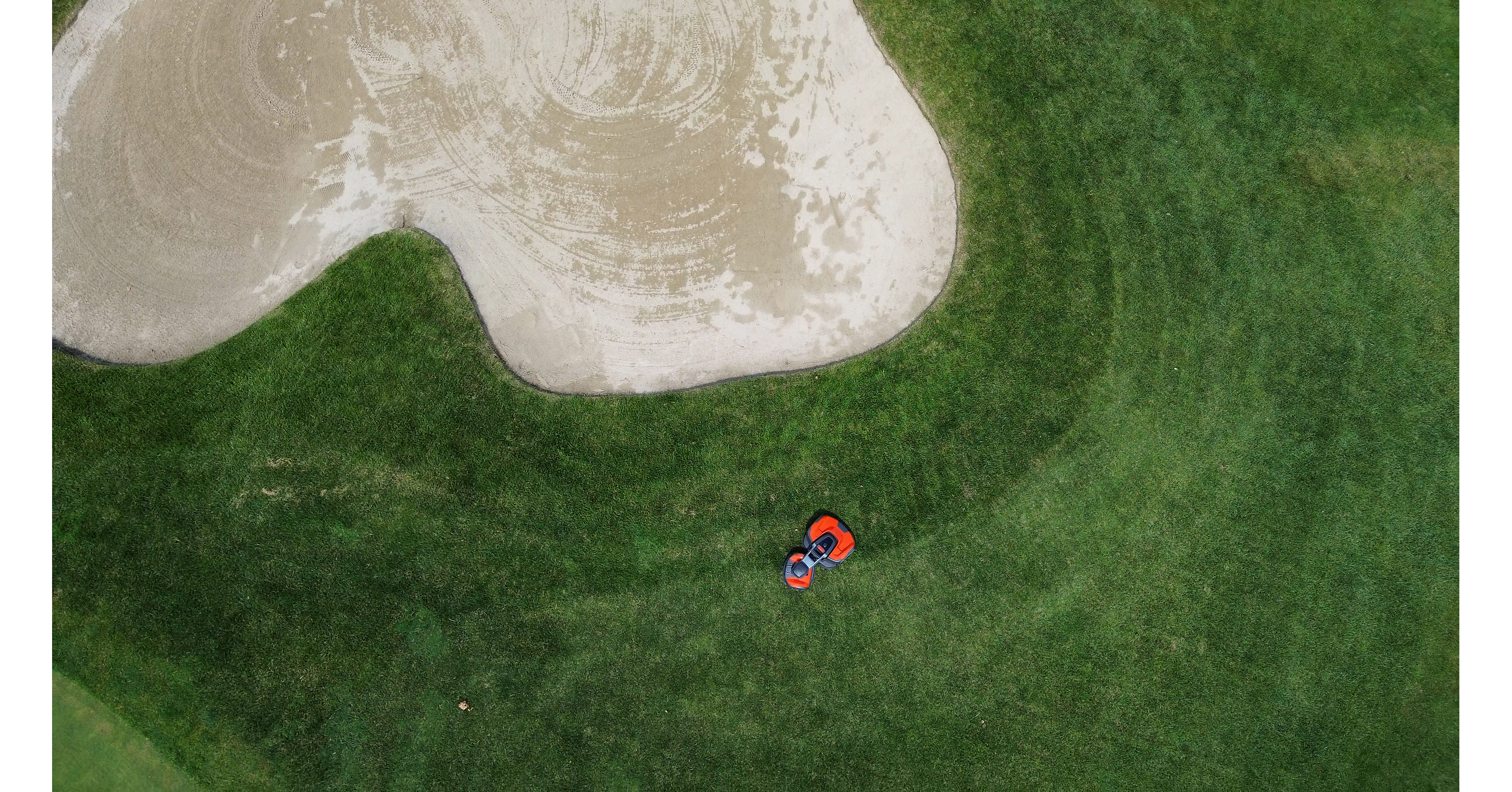
Husqvarna will showcase robotic mowers at the Aug. 20–23, 2026 U.S. Senior Women’s Open at Barton Hills Country Club in Ann Arbor, with the tournament noted as among the first official USGA events to incorporate robotic mowing. The club plans to maintain select course areas using a fleet of 30 mowers, including newer Automower 580L EPOS and 535 AWD EPOS models, after adopting Husqvarna robotics in 2022 to improve turf consistency. The announcement is largely promotional/industry adoption-focused, implying limited near-term financial impact.
This is more important as a credibility event than as an immediate earnings catalyst. For Husqvarna, the payoff is that robot mowing moves from pilot status to a referenceable operating model in a premium, high-visibility venue, which should reduce perceived adoption risk for other golf superintendents and strengthen dealer-led selling into a labor-constrained market. The near-term revenue impact is likely immaterial, but the strategic value is in mix: autonomous turf systems can pull through higher-margin hardware, service, and replacement cycles if installed base growth compounds.
The second-order winner is the channel ecosystem, especially integrators and specialty dealers that can bundle install, mapping, service, and software support. That argues for a gradual share shift away from legacy mower OEMs whose product differentiation is mostly mechanical; Toro (TTC) is the cleaner public-market read-through than Deere (DE) because its turf franchise is more directly exposed to course maintenance budgets. The loser is not traditional equipment demand immediately, but the replacement cycle for gas and ride-on equipment could be extended if autonomous fleets take over fairway/rough maintenance over the next 6-18 months.
The contrarian risk is that this is still a niche validation story, not broad-based adoption. If course budgets tighten, or if early adopters run into service, turf-quality, or reliability issues, the category can stall quickly and the stock reaction will fade within 1-3 months. Watch for dealer commentary and Q4 backlog in professional turf; if adoption does not show up in repeat orders, the thesis is mostly marketing, not monetizable demand.
AI-powered research, real-time alerts, and portfolio analytics for institutional investors.
Request DemoOverall Sentiment
mildly positive
Sentiment Score
0.12
Ticker Sentiment
