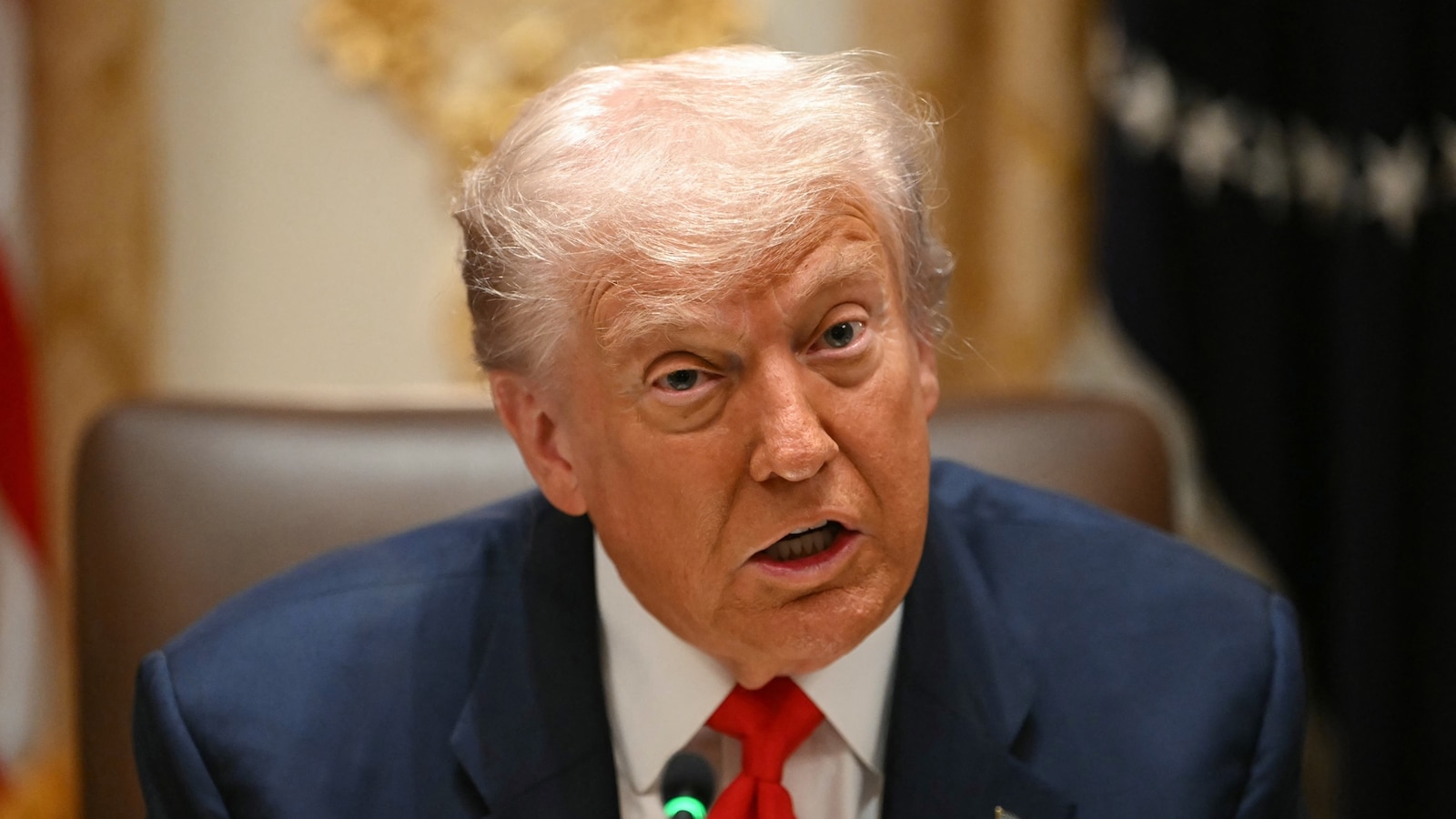
Former President Trump, following a ceasefire deal between Israel and Hamas, emphasized the need for Hamas disarmament and the reconstruction of Gaza, which the United Nations estimates could cost upwards of $70 billion. While Trump did not detail specific funding mechanisms or a comprehensive plan, he indicated that 'seriously rich countries' participating in regional talks would bear the financial responsibility, leaving the precise economic implications and potential investment opportunities for this substantial reconstruction effort largely undefined.
The recently brokered ceasefire between Israel and Hamas, facilitated by President Trump, achieved an initial diplomatic success with the exchange of hostages and prisoners. However, the agreement's fragility was immediately evident, as Israel accused Hamas of a "blatant violation" regarding deceased hostages, leading to a reduction in aid trucks to Gaza and underscoring the "uncertain" tone surrounding the peace process.
A critical unresolved issue is the disarmament of Hamas, with President Trump asserting they "will disarm or we will disarm them," implying potential "violent" enforcement without detailing the mechanism. This aggressive stance, coupled with the lack of a clear deadline beyond "pretty quickly," introduces significant geopolitical risk and uncertainty regarding regional stability.
The reconstruction of Gaza is projected to cost upwards of $70 billion by the United Nations, presenting a substantial capital allocation challenge. While Trump indicated "seriously rich countries" would bear the financial responsibility, a specific vision or funding plan remains undefined. This lack of clarity on economic specifics and governance for Gaza creates both potential opportunities and considerable execution risk for any large-scale investment.
AI-powered research, real-time alerts, and portfolio analytics for institutional investors.
Overall Sentiment
mixed
Sentiment Score
0.00
