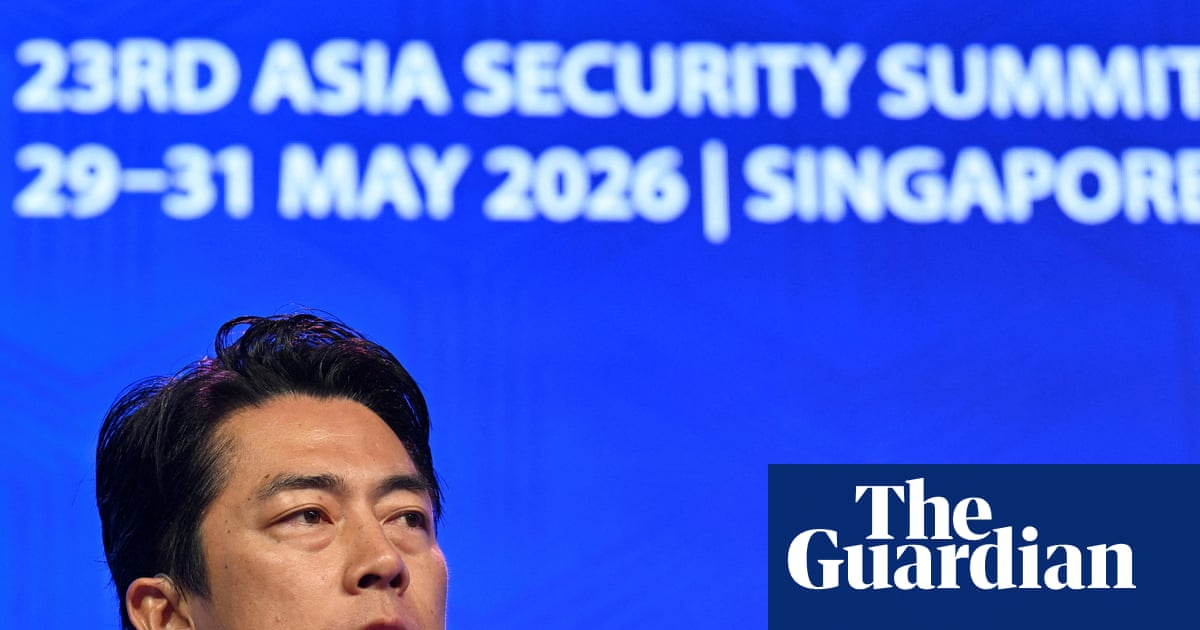
Japan’s defence minister reaffirmed that Tokyo will steadily build up its defense capabilities despite China’s criticism, including new investment in AI, uncrewed systems, cyber, and space defense. The remarks underscore escalating Japan-China tensions after Tokyo suggested it could intervene if China moves on Taiwan. The article is geopolitically significant, but it contains no direct market-moving policy announcement or economic data.
Japan’s shift is not just rhetoric; it is a procurement and industrial-policy catalyst that should extend the runway for domestic prime contractors, electronics suppliers, and dual-use software vendors. The more important second-order effect is that “transparency” plus AI/cyber/space emphasis lowers political friction for budget growth while steering spend toward higher-margin, faster-cycle programs versus legacy platforms. That favors firms with software content, sensor fusion, autonomous systems, and command-and-control exposure more than pure metal-bending names.
The regional spillover is a slow-burn but meaningful compression of the strategic discount on Asia defense assets. If Japan sustains a multi-year rearmament path, it increases demand for joint-development, missile defense interoperability, satellite resilience, and undersea surveillance across the broader Indo-Pacific, which should benefit US primes with alliance leverage and select Korean and Australian suppliers tied into Japanese procurement. The loser is China-linked regional risk assets: the marginal premium on Taiwan, Korean peninsula, and Japan-sensitive supply chains rises even without an immediate kinetic escalation.
Near term, the catalyst stack is political rather than operational: next budget cycle, coalition durability, and any fresh Taiwan-related statements will matter more than forum theatrics. The main tail risk is a diplomatic de-escalation that caps the pace of spending growth, but the base case still points to incremental defense outlays over 12-36 months. The market may be underpricing the extent to which cyber, space, and uncrewed systems become the real budget winners, not traditional shipbuilding or munitions.
Contrarian view: the obvious long-defense trade may already be crowded at the headline level, while the better risk/reward is in enablers and software-centric beneficiaries that can re-rate on mix shift rather than absolute spending growth. If Beijing responds with asymmetric pressure instead of overt escalation, the practical benefit could accrue more to intelligence, EW, and resilient communications vendors than to platform OEMs.
AI-powered research, real-time alerts, and portfolio analytics for institutional investors.
Request TrialOverall Sentiment
neutral
Sentiment Score
-0.05
