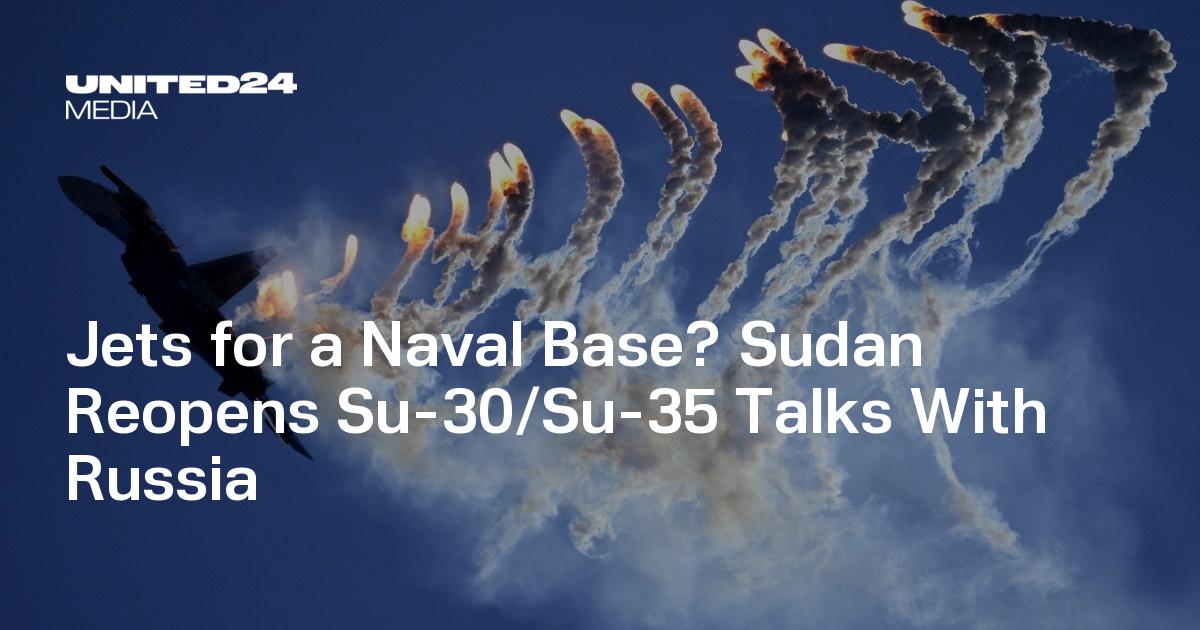
Sudan has reopened talks with Russia to acquire Su-30 or Su-35 fighters to restore long-range strike capability after RSF raids destroyed or captured key combat aircraft, with analysts saying any purchase is likely to be a geopolitical barter tied to Moscow securing a naval foothold at Port Sudan. Sudan’s air force was severely degraded after April 2023 losses (including MiG-29s), and the country’s prewar annual defense budget was roughly $500 million, making cash procurement unlikely; the Su-35S is noted for a ~400 km Irbis-E radar and ~8,000 kg weapons load. The negotiations unfold amid improved RSF air defenses (including reported Chinese FK-2000/FB-10A deliveries) and RSF claims of downing an Il-76, raising regional security risks that could affect Red Sea logistics if a Russian base deal proceeds.
Market structure: A jets-for-bases outcome favors defense primes (Lockheed LMT, Raytheon RTX, General Dynamics GD) via higher regional procurement budgets and aftermarket MRO demand, and tanker/shipping names (Frontline FRO) from higher Red Sea insurance premia and rerouting. Losers are Sudan sovereign and frontier-EM credit (higher spreads), local African suppliers, and any firms exposed to sanctions risk. The marginal pricing power shifts to manufacturers and marine insurers because supply of advanced 4+ generation jets is constrained by export controls and inventory scarcity. Risk assessment: Tail risks include abrupt escalation (Russian naval base formalized → NATO/US sanctions on shipping lanes), which could spike Brent +5–15% and Baltic/TC rates +30% within weeks; low-probability but high-impact. Immediate window (days–weeks): shipping/insurance vol and FX shocks; short-term (1–6 months): EM credit widening and defense stock re-ratings; long-term (1–3 years): permanent increase in regional MRO/logistics spend if a base is established. Hidden dependencies: Chinese/Wagner supply lines, reinsurance repricing, and US export control responses. Trade implications: Tactical longs in defense primes (LMT, RTX, GD) and selective tanker exposure (FRO) to capture higher defense and shipping premiums; hedge EM-credit exposure by shorting EMB or buying EMB puts. Use capped-cost options (call spreads on RTX/LMT) to express upside while limiting sanction tail risk. Act within 2–6 weeks; reassess on any formal Russia–Sudan MOU or UN sanctions vote. Contrarian angles: Consensus overestimates immediate OEM order flow—barter deals often bypass Western suppliers and may not translate to cash revenue for LMT/RTX in 6–12 months, so upside is likely muted; market may underprice insurer/reinsurer benefit from sustained higher premia. Historical parallel: 1970s basing deals increased geopolitics but not short-term revenues for Western primes. Trade must therefore be size-limited and hedged against sanction-triggered drawdowns.
AI-powered research, real-time alerts, and portfolio analytics for institutional investors.
Request DemoOverall Sentiment
moderately negative
Sentiment Score
-0.40
