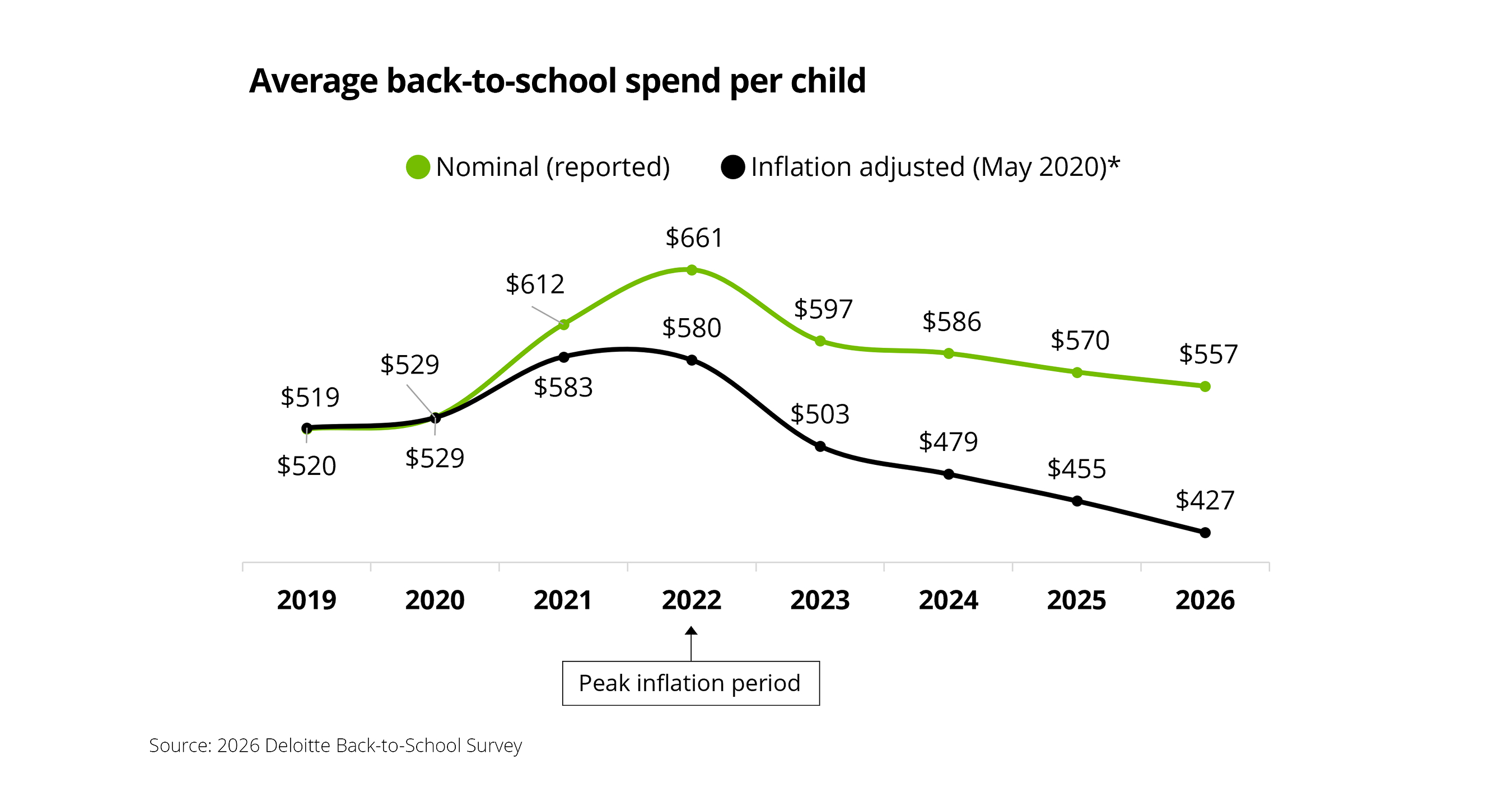
Deloitte’s 2026 Back-to-School survey projects K-12 spending of $30.4B (~$557 per student), essentially flat, but down 6% YoY in real terms after inflation. Economic uncertainty is elevated (57% expect the economy to worsen; 24% are concerned about upcoming payments), driving selective “value-seeking” behavior and a mix shift from tech (-16%) to clothing/accessories (+22%). Parents also signal an AI-related opportunity and concern: 49% worry kids rely on AI too much, while 13% plan to pay for AI tutoring or camps.
This reads less like a demand-growth signal and more like a channel-mix warning. The incremental dollar is shifting toward apparel, off-price, private label, and mass merchants, which supports traffic but usually comes with lower gross margin realization and heavier promo intensity. That is constructive for WMT, TJX, ROST and club formats, but it is not a clean positive for brand-heavy specialty retail; the winner is whoever can capture the basket without needing to finance it with markdowns.
The timing shift into late July/August matters more than the aggregate spend number. Retailers with tight inventory, fast replenishment, and strong digital targeting can manage receipts and avoid excess stock; those that pre-bought for an earlier season risk a margin reset if parents wait for promotions. PLCE can get a short-term unit lift from the clothing reallocation, but the bigger risk is share leakage to private label and mass merchants, so the upside is likely in traffic, not in earnings quality.
The contrarian point is that the AI angle is being overread: 13% paid adoption is too small to move the category, and school-policy uncertainty suggests this is more of a niche wallet-share event than a broad new demand leg. The more durable effect is on retailers with better search/social/genAI tooling, because multi-tool shoppers spend more; that favors companies with strong app ecosystems and first-party data, while pure-play brick-and-mortar names without digital leverage may see only the margin squeeze. Falsifiers are a meaningful rebound in consumer confidence, an August comp beat without incremental discounting, or evidence that tech spend deferral is being offset by early laptop/tablet replacement cycles.
AI-powered research, real-time alerts, and portfolio analytics for institutional investors.
Request DemoOverall Sentiment
mildly negative
Sentiment Score
-0.18
Ticker Sentiment
