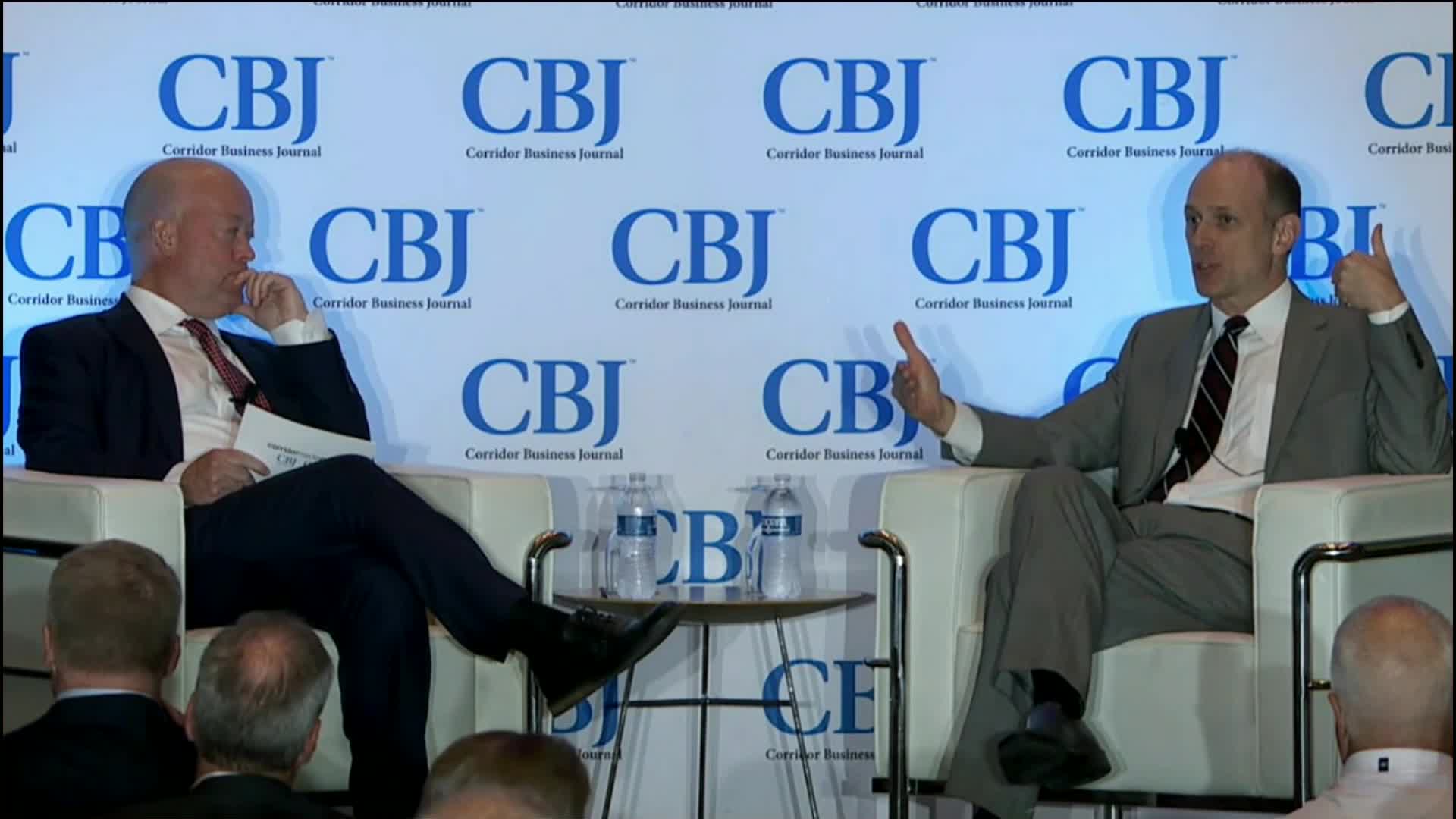
Chicago Fed President Austan Goolsbee stated that the central bank needs to observe the impact of trade tariffs on inflation, despite inflation nearing the Fed's 2% target. Goolsbee's comments, made at the Corridor Business Journal Mid-Year Economic Review, suggest a cautious approach to monetary policy as the Fed assesses potential inflationary pressures from trade policies.
Federal Reserve Bank of Chicago President Austan Goolsbee has articulated a cautious monetary policy outlook, emphasizing the need to observe the potential inflationary consequences of trade tariffs before making further decisions, even as inflation approaches the Federal Reserve's 2% objective. Speaking at the Corridor Business Journal Mid-Year Economic Review, Goolsbee's "wait and see" stance suggests that while progress on inflation is acknowledged (contributing to a mildly positive sentiment score of 0.25), new uncertainties, particularly from trade policy, are significant considerations. This introduces a degree of complexity for the central bank, as tariff-induced price pressures could counteract the disinflationary trend. The market impact score of 0.55 and the "Uncertain" tone associated with these remarks highlight that investors are attuned to factors that could delay or alter the expected path of monetary easing, with trade policy now emerging as a key variable to monitor.
AI-powered research, real-time alerts, and portfolio analytics for institutional investors.
Request DemoOverall Sentiment
mildly positive
Sentiment Score
0.25
