
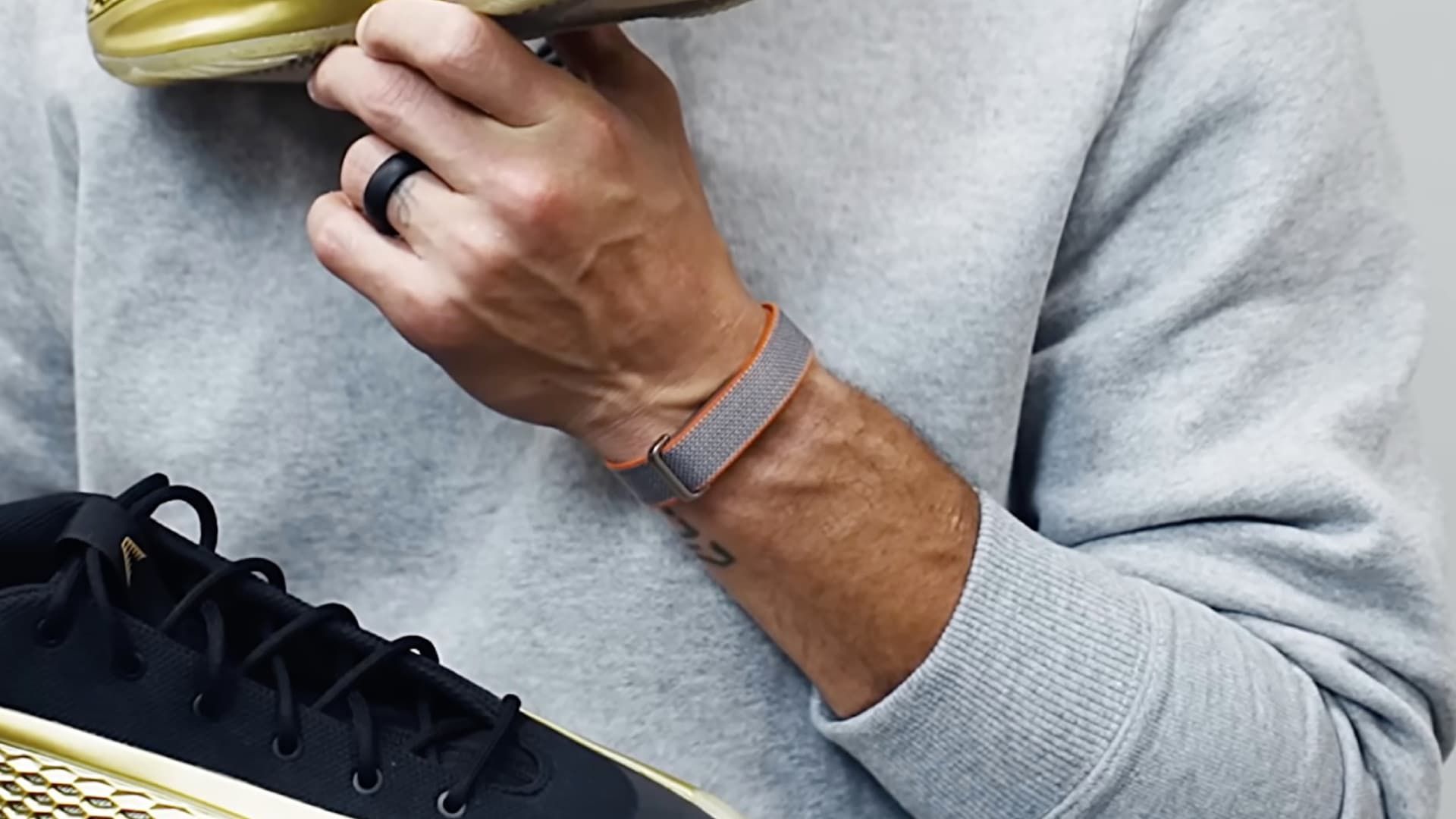
Fitbit’s unreleased screenless wearable, teased with Steph Curry, appears to be nearing launch after multiple public sightings and leaked images. The device may complement a modified Fitbit app with live sport tracking, suggesting a new product direction for Google-owned Fitbit. The news is encouraging for Fitbit’s product pipeline but remains largely speculative pending official name, pricing, and launch details.
This looks less like a standalone hardware launch and more like a strategic attempt to reframe Fitbit as a software-plus-services layer inside Google’s ecosystem. If the new device is truly screenless and athlete-led, the economic upside is not the device margin itself but higher engagement in the Fitbit app, better retention for subscriptions, and a cleaner path to cross-sell Pixel/watch adjacent health features. That matters because Google has historically struggled to create a must-have consumer hardware narrative outside Pixel; a credible recovery in wearable relevance could modestly improve the market’s confidence in its consumer device roadmap.
The second-order competitive effect is on the screenless, recovery-focused wearable niche rather than on Apple Watch directly. Whoop and Oura would be the cleanest reads, because the pitch is not notifications or smartwatch utility but passive health capture and performance analytics; if Google can bundle hardware with a familiar app and broad Android distribution, it can pressure premium subscription pricing and raise customer acquisition costs for private competitors. The main bottleneck is not launch hype but whether the product can deliver enough differentiated data quality and coaching to justify a recurring relationship after the novelty fades.
Near term, this is mostly a catalyst for sentiment rather than earnings, with the key window being the next 1-3 months around announcement, pricing, and whether a subscription tier is attached. The bear case is that this becomes another Google consumer gadget with strong initial press but low follow-through, in which case the market will quickly re-rate it as immaterial. The upside scenario is more durable if Google positions it as a loss-leader into services, because even modest hardware volumes can become strategically important when they feed recurring software revenue and ecosystem stickiness.
The contrarian read is that the market may underappreciate how little direct hardware success Google needs for this to matter. A small attach-rate product can still be meaningful if it expands Fitbit’s active user base and creates a new channel for health data monetization, whereas investors tend to focus only on unit sales. That said, if launch details show no subscription bundle or app differentiation, the entire thesis compresses quickly.
AI-powered research, real-time alerts, and portfolio analytics for institutional investors.
Request TrialOverall Sentiment
mildly positive
Sentiment Score
0.18
Ticker Sentiment
