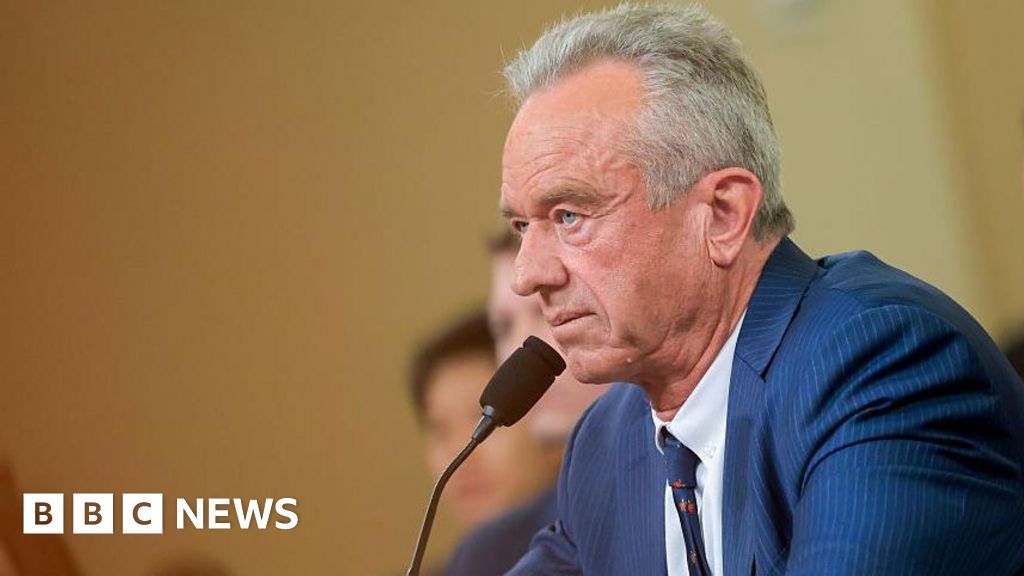
RFK Jr. faced congressional criticism over the worst U.S. measles outbreak in decades, with lawmakers attacking his handling of the crisis and his vaccine policy changes. The Trump administration is also proposing a roughly $16bn cut to HHS’s budget, a 12.5% reduction from last year, while Kennedy continues to push changes to childhood immunization policy and health research priorities. The article is politically significant for healthcare and public health policy, but it is unlikely to drive broad market moves.
The market implication is less about one hearing and more about the increasing probability of sustained policy drift at HHS: budget compression, staff attrition, and a weaker advisory process all raise execution risk across the public-health stack. That is a medium-term negative for vaccine manufacturers and diagnostics that depend on predictable federal guidance, but a near-term positive for litigation-heavy sectors because every inconsistent statement or procedural misstep increases the odds of court challenges and state-level fragmentation.
The second-order effect is a widening split between federal policy and commercial adoption. If CDC/HHS recommendations become less credible, uptake decisions will shift further toward employers, insurers, pediatric groups, and state health departments; that generally slows reimbursement clarity and increases sales-cycle friction for vaccine and preventive-care products. In contrast, consumer health names and OTC therapies are better insulated because they can benefit from “self-directed” healthcare behavior when trust in institutions weakens.
The bigger contrarian point is that a lot of bad news may already be discounted in healthcare equities, but not in the budget-dependent research ecosystem. The more durable casualty is not a single vaccine franchise; it is NIH/HHS-grant-adjacent services, university research contractors, and smaller biotech platforms reliant on federal funding continuity. If the administration’s fiscal discipline survives legal and congressional pushback, the pressure could persist for months; if courts continue to block changes or Congress softens the cut, a tactical relief rally is likely.
Tail risk is a second major outbreak or high-profile adverse event tied to guidance confusion, which would instantly reprice political and liability risk across the group. Over a 1-3 month horizon, headline volatility should stay high; over 6-12 months, the more important catalyst is whether the appeal/litigation process restores a stable vaccine-policy framework or cements a patchwork regime.
AI-powered research, real-time alerts, and portfolio analytics for institutional investors.
Request DemoOverall Sentiment
mildly negative
Sentiment Score
-0.25
Ticker Sentiment
