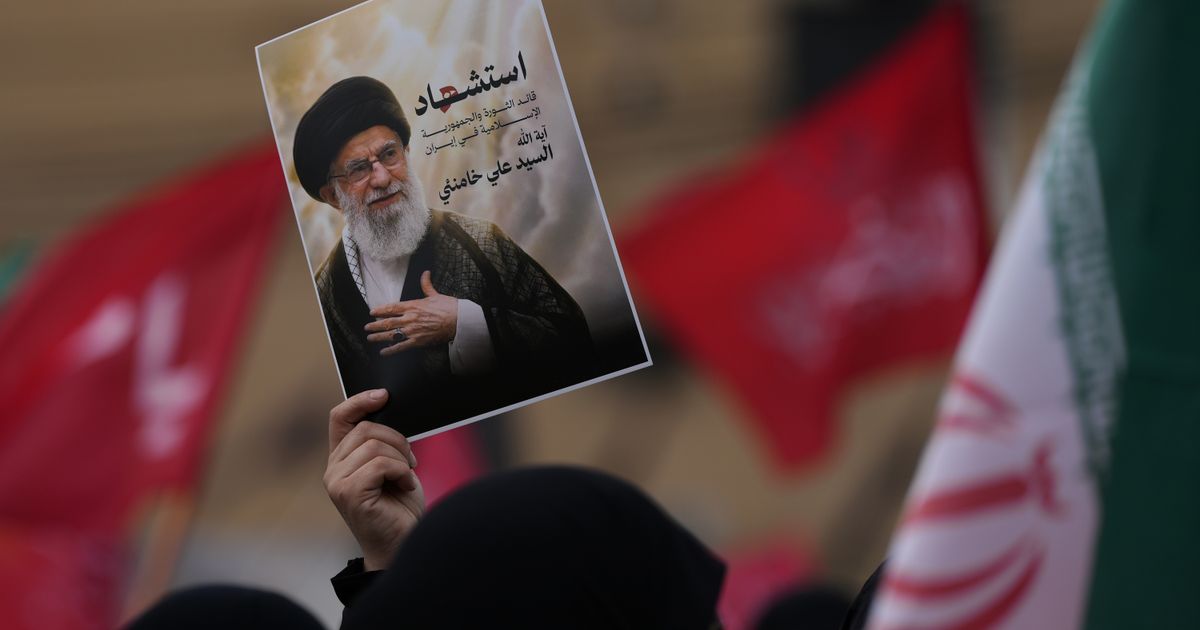
After Hamas's Oct. 7 assault (about 1,200 killed and 251 hostages), Israel has pursued a sustained campaign that has substantially degraded Iran's regional influence and proxy networks, culminating in coordinated U.S.–Israeli strikes this weekend that the piece says killed Iran’s supreme leader Ayatollah Ali Khamenei and caused widespread destruction. The campaign has included a June offensive that struck Iran's energy industry and Defense Ministry, heavy damage to Hezbollah's leadership and arsenal, Red Sea attacks on shipping by Houthi forces, and a Kurdish-region gas-field shutdown that produced widespread power outages—factors that materially elevate regional geopolitical risk, threaten energy and shipping flows, and increase the probability of further retaliatory actions affecting markets and regional assets.
Market structure: Immediate winners are US defense primes (LMT, NOC, RTX) and integrated oil majors (XOM, CVX) which can capture higher crude prices and government defense spending; direct losers include commercial airlines (DAL, UAL, AAL), regional banks with EM exposure, and EM sovereign credit. Expect a 10–30% spike in near-term Brent volatility and a temporary 200–500bp widening of Middle East shipping war premiums; USD and Treasuries will act as safe-havens while gold rallies.
Risk assessment: Tail risks include Strait of Hormuz closure producing a 3–6 mb/d supply shock driving Brent toward $120–150 within weeks, major cyberattacks on energy infrastructure, and uncontrolled escalation drawing in global powers — low probability but >$100bn market impact. Time horizons: days = liquidity shock/FX moves, weeks–months = commodity re-pricing and defense order flow, quarters+ = capex reallocation and persistent higher insurance/shipping costs. Hidden dependencies: reinsurance repricing, LNG contract pass-throughs, and bank loan lines to Gulf counterparties.
Trade implications: Favor short-dated tactical longs in XOM/CVX via 3-month call spreads and 6–12 month core positions in LMT/RTX for exposure to expected defense spend; hedge with 1–2% GLD and 1–2% TLT allocations. Use pair trades: long RTX vs short DAL to capture relative resilience; employ options to buy oil call spreads (e.g., 3-month Brent 85/120) and airline put spreads to limit decay risk. Entry/exit: open positions within 3 trading days; add on Brent >$95, reduce by 50% if Brent < $85 for 7 consecutive trading days.
Contrarian angles: Consensus assumes prolonged regional conflagration; article signals proxies are degraded — if proxies stay restrained the oil/defense volatility premium is likely overstated and mean reversion trades will pay off (historical parallels: 1990–91 and 2019 tanker incidents). A disciplined short of front-month oil straddles after >25% intraday spikes could harvest premium, but size conservatively (<=0.5% portfolio) because tail risk remains asymmetric.
AI-powered research, real-time alerts, and portfolio analytics for institutional investors.
Request TrialOverall Sentiment
strongly negative
Sentiment Score
-0.70
