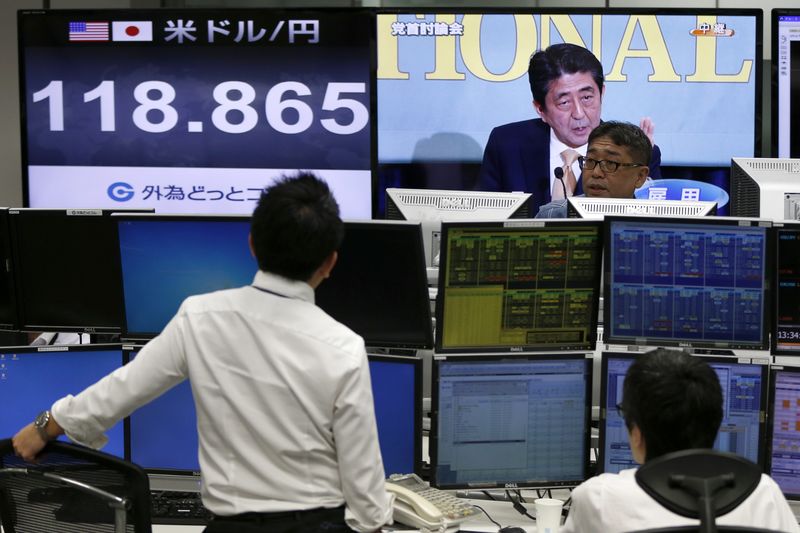
Japan's Nikkei 225 rose 3.04% to a new all-time high above 65,000, led by gains in Real Estate, Banking and Textile stocks. Risk sentiment improved on Iran peace hopes, while commodities fell sharply with crude down 5.42% to $91.36 and Brent down 4.81% to $95.39. The yen weakened slightly, with USD/JPY down 0.16% to 158.94, and Nikkei volatility was unchanged at 28.35.
The move is less about “peace” as a headline and more about a fast unwind of geopolitical risk premium that had been embedded across Japan’s cyclicals, energy importers, and rate-sensitive balance sheet stories. When crude drops this hard in one session, the immediate winners are not just consumers but any Japan-listed company with high fuel, freight, or input-cost sensitivity; that tends to favor retailers, airlines, and selected industrials over exporters, especially if the yen stays firm or even appreciates further on lower risk-off demand for USD. The fact that implied vol stayed pinned while equities surged suggests dealers may have been under-hedged into the breakout, which can extend the rally for 1-3 sessions via systematic chasing.
The more interesting second-order effect is on Japanese financials. If energy inflation cools, the market can price a cleaner path for real incomes and domestic demand, but if the yen strengthens too much, the export complex loses the macro tailwind that has powered much of the index’s re-rating. That creates a late-cycle leadership rotation: banks can still outperform if the curve stays steep and credit stress remains contained, but property and retailers likely become the first place where a higher real-wage narrative gets monetized. The sharp underperformance in defensives with domestic consumption exposure suggests investors are already rotating away from “quality at any price” into higher-beta reflation beneficiaries.
The contrarian risk is that this is a one-day geopolitical reflex rather than a durable reset. If the peace narrative fades or shipping/security headlines reappear, crude can retrace quickly and the market’s breadth will likely deteriorate because the rally is concentrated in a narrow set of crowded longs. Also, a stronger yen can turn this from a broad index melt-up into a factor rotation that hurts exporters and caps Nikkei upside unless overseas equity flows keep accelerating.
From a positioning standpoint, this is a good setup for relative-value rather than outright beta chasing. The index can grind higher, but the cleaner expression is long domestic beneficiaries vs. short energy/input-cost exposed names, with a close stop if crude reclaims the prior intraday range. For single-name momentum, the move in memory/semicap hardware can persist for a few sessions, but after a gap like this the better trade is usually to fade late-day strength unless there is follow-through volume.
AI-powered research, real-time alerts, and portfolio analytics for institutional investors.
Request DemoOverall Sentiment
moderately positive
Sentiment Score
0.55
Ticker Sentiment
