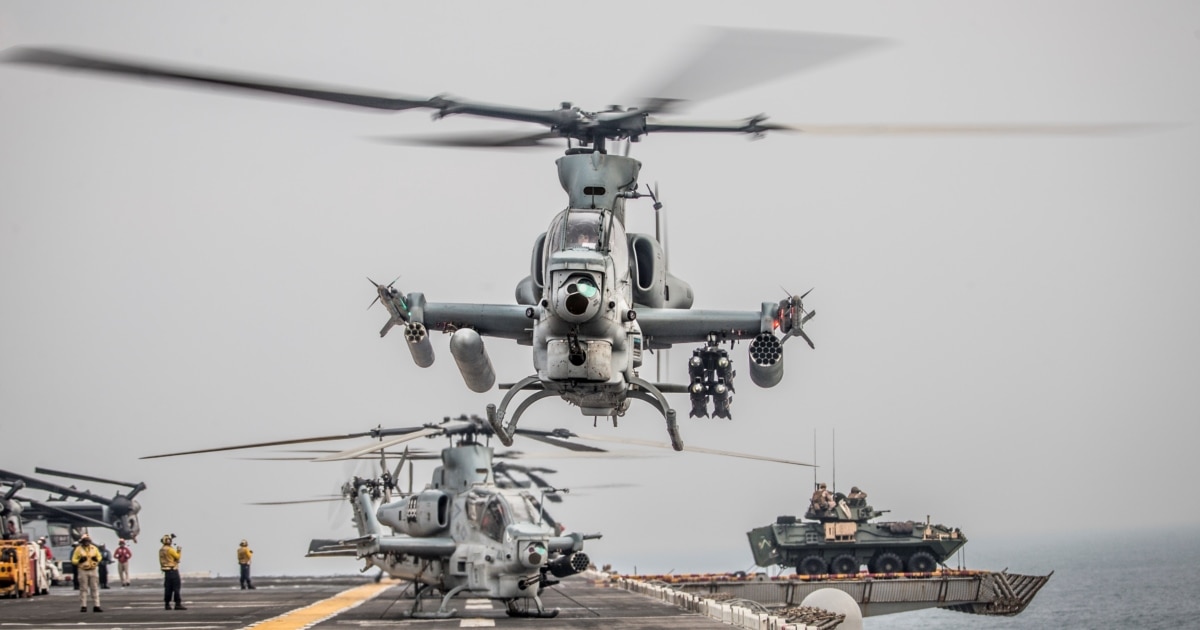
Reports indicate the US is considering deploying thousands of additional ground troops to the Middle East, with Newsmax citing an accelerated deployment of ~2,500 Marines (bringing roughly 4,000 service members aboard three amphibious vessels). Operations discussed include securing Kharg Island (handling ~90% of Iran's oil exports) and protecting tanker passage through the Strait of Hormuz — actions that could materially shock oil markets and drive volatility; the conflict has already seen 13 US troops killed and ~200 injured.
An escalation-tail risk centered on kinetic operations along Iran’s coastline is a high-volatility shock to oil and insurance-sensitive real-economy flows that can move within days and reverberate for quarters. With global spare crude and refining flexibility limited relative to demand, a Gulf-centric supply scare can produce an immediate 5–15% spike in Brent that erodes discretionary cash flow for consumers and raises input costs across industrial supply chains over a 1–3 month window.
Defense primes that supply amphibious lift, air superiority, ISR, and missile-defense munitions are positioned to see accelerated demand and near-term contract rephasing; incremental sales and expedited sustainment work can be booked within 1–4 quarters and support margins because war-time procurement tilts toward prime suppliers with existing platforms. Conversely, sectors that face route disruption and higher fuel insurance — passenger airlines, Gulf-dependent logistics, and select container lines — will see ticket pricing power collapse and unit costs rise before any revenue pass-through can occur.
Second-order winners include specialty insurers/reinsurers (short-term premium re-rating) and liquid midstream oil service equities that benefit from higher dayrates and urgent maintenance work; losers include EM sovereigns with large fuel import bills and high FX short positions, which see financing spreads widen in weeks. The key reversal catalyst is political: a rapid de-escalation or a constrained, non-occupational US posture would remove most of the risk premium in 2–6 weeks and collapse the oil/defense uplift, so trade sizing must respect binary outcome risk.
A disciplined way to express views is to buy convexity in defense and oil while hedging event downside — a blend of short-dated options and pairs that monetize near-term fear but cap losses if the situation normalizes. Monitor tanker insurance (P&I) rates and Gulf throughput reports as 48–72 hour alpha signals that precede price moves in oil and regional equities.
AI-powered research, real-time alerts, and portfolio analytics for institutional investors.
Request DemoOverall Sentiment
strongly negative
Sentiment Score
-0.70
Ticker Sentiment
