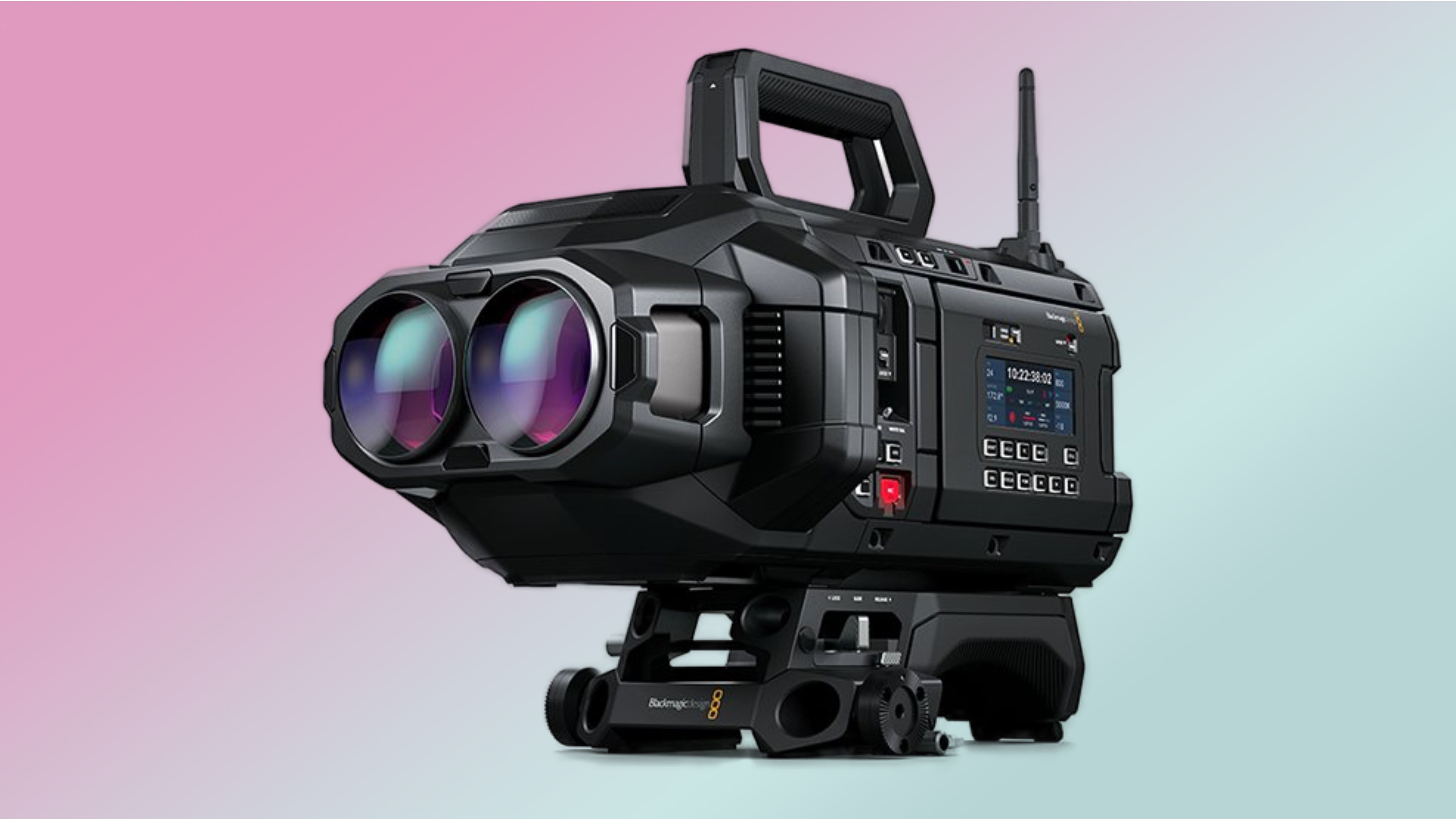
Blackmagic unveiled the URSA Cine Immersive 100G, adding 100G Ethernet to its immersive camera system to enable live 3D video output for Vision Pro workflows for the first time. The new Blackmagic URSA Cine Live Encoder is priced at $1,645, while the camera itself costs $29,145 and is slated for availability in Q3 2026. The update strengthens Blackmagic’s position in immersive production, though the news is primarily a product refresh with limited near-term market impact.
This is less about a single camera SKU and more about the industrialization of spatial-video workflows. The meaningful shift is the move from boutique, offline capture toward live, IP-routable immersive production, which lowers the friction for broadcasters, venues, and premium event owners to test 3D/VR distribution without building a bespoke pipeline. The near-term winner is not necessarily Blackmagic on units alone, but the broader live-production ecosystem that can monetize a higher-frequency use case if 100G becomes the new bottleneck standard. The second-order beneficiary is likely to be infrastructure vendors that sit around the content edge: high-speed optical networking, IP switches, codecs, and post-production storage. The catch is that adoption should be lumpy; at this price point the installed base will stay niche until there is a clear monetization path for immersive rights, subscription upsells, or differentiated sponsor inventory. That means any revenue uplift from this product line is probably back-end loaded by 12-24 months, with the first proof point coming from a small set of flagship productions rather than broad-based demand. The contrarian read is that this does not validate mass consumer demand for headsets; it validates premium-content scarcity. If immersive capture scales before headset penetration, the value accrues to the content pipeline, not the device layer. Conversely, if Apple’s ecosystem does not convert high-end immersive footage into repeat viewing behavior, this remains an expensive technology demo and the addressable market stays constrained. From a risk perspective, the main failure mode is that 100G live immersive becomes technically feasible but economically unattractive: high capex, heavy workflow complexity, and limited rights economics. The catalyst window is months, not days, because the market needs evidence of recurring live use cases in sports, concerts, and marquee events before repricing the category. Any hint of production delays, limited compatibility with broadcast tooling, or weak audience engagement would quickly cap enthusiasm.
AI-powered research, real-time alerts, and portfolio analytics for institutional investors.
Request DemoOverall Sentiment
mildly positive
Sentiment Score
0.18
