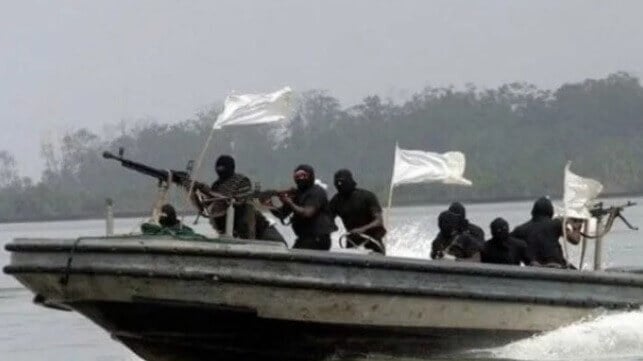
EUNAVFOR says it is monitoring three ongoing piracy incidents off Somalia, including the hijacking of the 8,500 dwt cargo ship Sward about 6 nautical miles northeast of Garacad and the seizure of the tanker Honour 25 on April 21. The incidents are disrupting Red Sea/Indian Ocean shipping lanes, with vessels warned to stay within 150 nautical miles of the Somali coast and one failed boarding also reported last week. The elevated piracy risk is negative for maritime security and could raise freight, insurance, and routing costs for regional trade.
This is less an isolated security flare-up than a pricing shock to the Red Sea / Gulf of Aden risk stack. The immediate market impact is not just on eastbound container lines; it is on every operator with optionality to reroute via the Cape, where incremental steaming days, bunker burn, and schedule unreliability all compound into working-capital drag and weaker asset utilization. The first-order winners are marine security providers, satellite/AIS monitoring, and select defense names with maritime ISR exposure; the second-order losers are insurers and any freight-linked EM importers that rely on East Africa/Pakistan corridor continuity.
The key distinction is duration: a few weeks of incidents mainly widen war-risk premia and prompt temporary schedule changes, but a multi-month persistence can force contract repricing across charter markets. That would be especially painful for smaller tramp operators and cargo owners with low bargaining power, while helping larger liners that can push through surcharges. A sustained piracy cycle also raises the value of private security and escort capability, which is a small but real profit pool that tends to accrue faster than the broader shipping complex reprices.
The market is likely underestimating the asymmetry between operational disruption and actual tonnage at risk. Even a small number of successful boardings can trigger outsize behavioral changes: more self-help armed teams, delayed sailings, and a higher probability of defensive routing that tightens effective capacity. The main reversal catalyst is a visible, credible suppression response—detentions, escorted convoys, or a few failed attempts that break the copycat dynamic—because piracy economics depend heavily on perceived softness and low-cost access to targets.
Contrarian view: the headline may be overstated for global shipping equities if routing through the Cape stays orderly and insurance remains a surcharge rather than a dislocation. The cleaner trade is not “short shipping” but long the picks-and-shovels of maritime security and defense ISR, while fading the assumption that every security event translates into durable freight inflation. If the incidents stay geographically narrow and no high-value liner is taken, the broader market impact should decay within days to a few weeks.
AI-powered research, real-time alerts, and portfolio analytics for institutional investors.
Request DemoOverall Sentiment
moderately negative
Sentiment Score
-0.45
