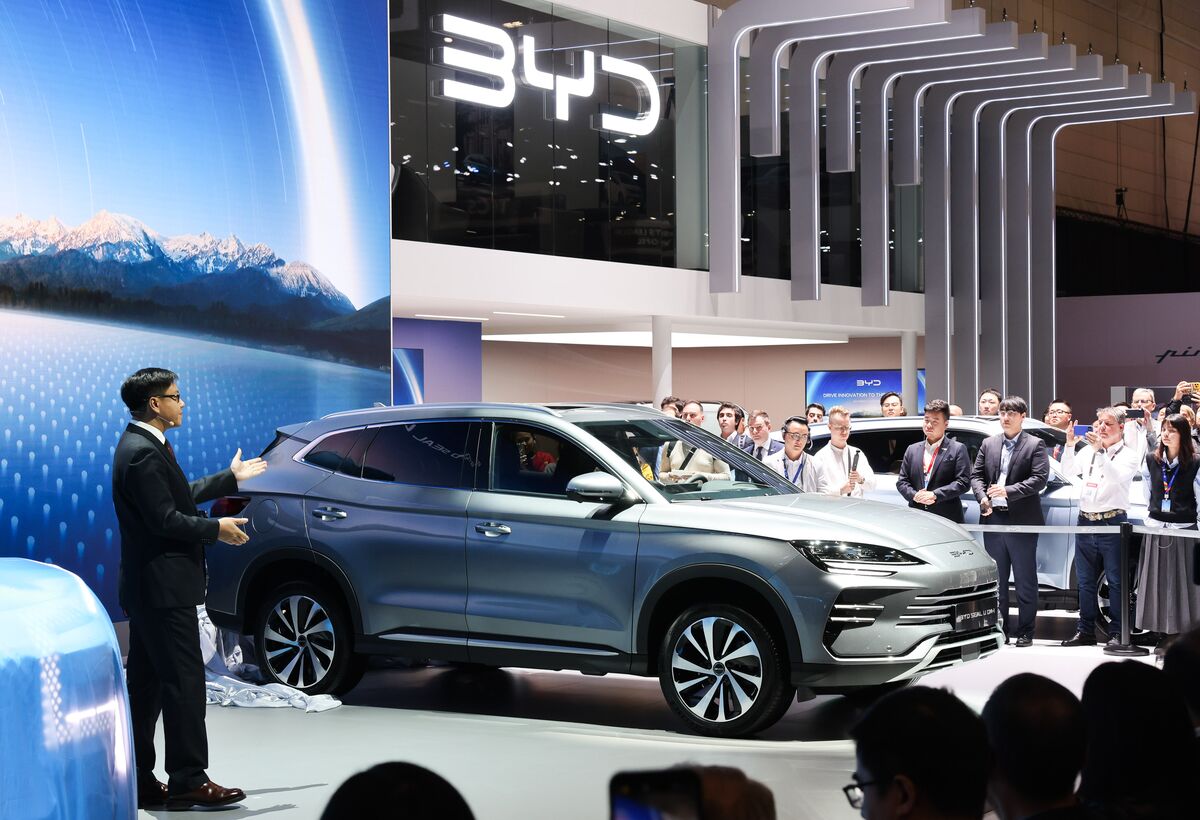
Chinese automakers captured nearly 30% of Europe’s plug-in hybrid market in March, with sales of Chinese-branded plug-in hybrids rising more than four-fold year over year. The gains were led by BYD and were driven by consumer demand for more affordable models. The report signals continued competitive pressure on European automakers, but the immediate market impact is likely limited to the auto sector.
The near-term winner is not just the Chinese OEMs, but the financing and distribution stack behind them. A rapid mix-shift into plug-in hybrids suggests European buyers are still optimizing for monthly payment and range anxiety rather than pure electrification, which is a headwind for legacy European OEMs that have heavier BEV exposure and structurally higher cost bases. That matters because PHEVs are a bridge product: they let Chinese brands gain dealer shelf space, service relationships, and brand familiarity before tighter EV regulation and tariff responses fully bite.
The second-order loser is likely the incumbent supplier ecosystem in Europe. If Chinese PHEV share keeps rising, pressure shifts to battery packs, power electronics, and lower-tier combustion components, while domestic OEMs may be forced into deeper discounting to defend share, compressing margins faster than unit volumes fall. Over the next 3-9 months, the key catalyst is whether European policymakers move from rhetoric to targeted trade actions on PHEVs specifically; if they do, the growth curve can flatten quickly because this segment is more tariff-sensitive than premium BEVs.
The contrarian point is that this may be less about a structural Chinese invasion than a temporary affordability trade. PHEVs are benefiting from a narrow economic window: cheaper upfront price, lower perceived charging risk, and promotional inventory flushes. If financing conditions ease for Europeans or legacy OEMs respond with aggressive PHEV pricing, the share gains could mean-revert, but if Chinese brands hold share through repeat purchase and fleet sales, the competitive damage becomes much more durable than the headline suggests.
AI-powered research, real-time alerts, and portfolio analytics for institutional investors.
Overall Sentiment
moderately positive
Sentiment Score
0.45
