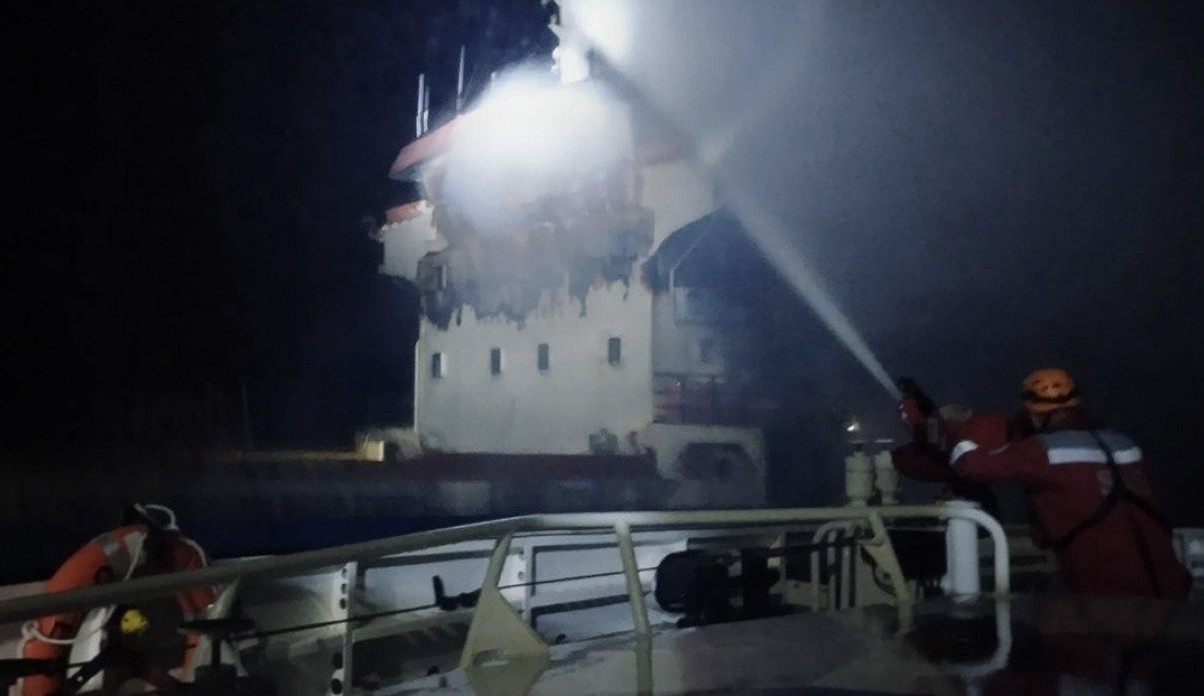
Russian drone strikes hit a Vanuatu-flagged cargo ship traveling from Ukraine’s Odesa region to Turkey, injuring 2 crew members and damaging the vessel’s superstructure and cargo-route operations. The attack followed separate drone hits on 3 Russia-linked tankers near Turkey’s northern coast, highlighting escalating Black Sea shipping risks. The vessels were tied to Russia’s shadow fleet, a network HUR says handles up to 30% of Russia’s seaborne oil trade and has already been sanctioned by Canada, the EU, the UK, and Switzerland.
This is a meaningful escalation in Black Sea freight risk because it shifts the market from a one-off logistics nuisance to an explicit threat against the export corridor itself. The immediate second-order effect is not just higher insurance and war-risk premia; it is route optionality decay, where shippers, charterers, and traders start pricing a persistent probability of delay, diversion, or vessel idling rather than a single incident. That typically shows up first in spot freight and marine insurance, then in wider spreads for regional commodities as exporters embed a higher execution discount.
The more important medium-term implication is that Russia and Ukraine both now have incentives to expand maritime disruption, which raises the probability of retaliatory tit-for-tat around a narrow chokepoint. Even if the Bosphorus remains physically open, the relevant market question is whether cargo owners believe a passage is insureable at scale; if that confidence cracks, the bottleneck becomes economic before it becomes legal. That would be bullish for alternative export lanes and storage, but bearish for any names exposed to Black Sea grain, crude, refined products, or Turkey-linked shipping throughput.
The contrarian point is that the market may overreact on headline risk while underpricing the ability of insurers and naval escorts to keep volumes moving with a higher cost structure. In other words, the first-order damage may be margin compression rather than volume destruction, which is often better for large incumbents than for smaller operators. The trade setup is therefore less about a broad panic short and more about relative-value positioning versus leveraged or asset-light shipping names that cannot pass through war-risk premiums quickly enough.
AI-powered research, real-time alerts, and portfolio analytics for institutional investors.
Request DemoOverall Sentiment
moderately negative
Sentiment Score
-0.45
