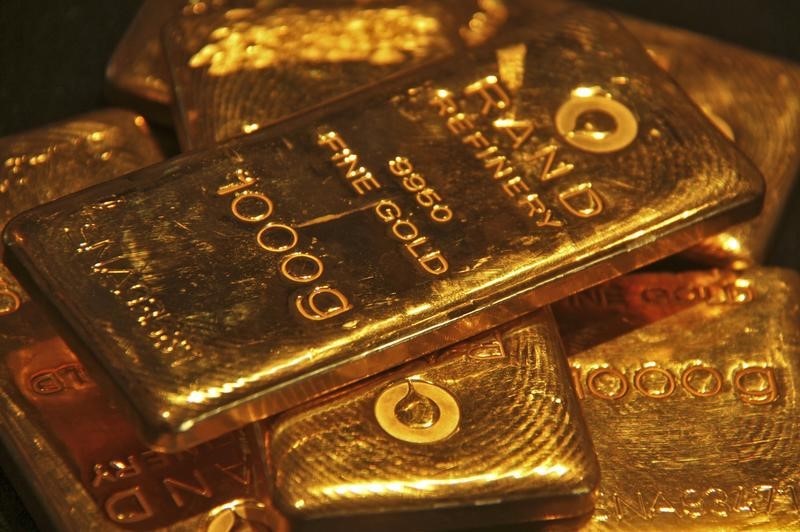
Spot gold slipped 0.2% to $4,529.62/oz and U.S. gold futures fell 0.7% to $4,559.22 as stalled U.S.-Iran ceasefire talks and renewed Middle East tensions kept risk sentiment cautious. Expectations for a Fed hike this year, along with a 0.2% rise in the U.S. Dollar Index and rebounding crude prices, are pressuring non-yielding assets like gold. Silver gained 0.3% to $75.53/oz and platinum rose 1.0% to $1,939.95/oz.
The market is starting to price a more persistent inflation impulse from energy rather than a one-off geopolitical shock. That matters because the marginal buyer of gold is no longer an inflation hedge allocator; it is the rate-cut/dollar debasement crowd, and that cohort gets weaker if front-end yields stay sticky. In that regime, bullion can underperform even while headline risk remains elevated, which is a classic setup for a slow-burn de-rating rather than an abrupt selloff.
The second-order winner is not gold itself but energy-linked cash flows and inflation-sensitive hedges with operating leverage to higher input costs. If crude stays bid, the real stress point is industrial margins and consumer discretionary spending over the next 1-3 quarters, especially for companies without pricing power. The dollar’s bid also tightens global financial conditions, which can suppress EM demand and keep a lid on broad commodity beta despite episodic geopolitical spikes.
The contrarian read is that gold may be getting too much macro credit for a risk premium that is still event-driven, not trend-driven. If ceasefire headlines improve or Fed speakers lean less hawkish, the move can reverse quickly because positioning in precious metals is likely crowded after the recent run. That creates a cleaner relative-value expression in short-duration rate sensitivity than in outright gold directionality.
Near term, the key catalyst is U.S. labor data and Fed commentary: any upside surprise in wages or jobs should reinforce the higher-for-longer narrative and pressure non-yielding assets for days to weeks. Over a 1-3 month horizon, the bigger risk is that geopolitical escalation pushes energy higher enough to force broader inflation repricing, which would hurt duration assets and support commodities. The asymmetry is that gold can fall on both easing geopolitical tension and hawkish macro prints, while upside requires both stress and a dovish Fed response.
AI-powered research, real-time alerts, and portfolio analytics for institutional investors.
Request DemoOverall Sentiment
mildly negative
Sentiment Score
-0.15
