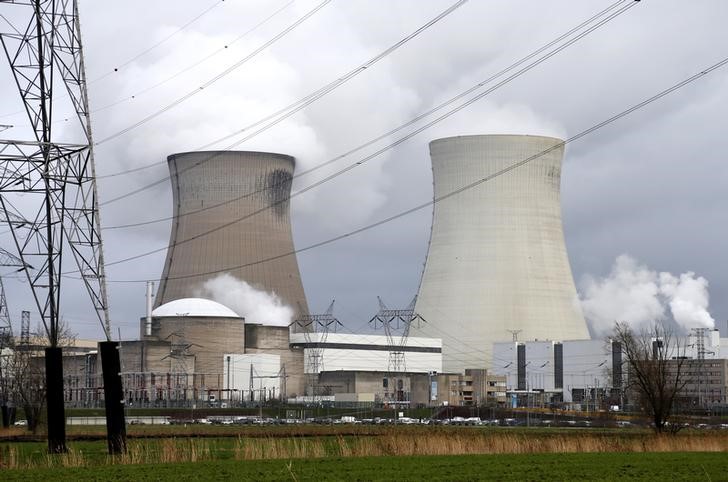
The U.S. Export-Import Bank advanced a $4.2 billion financing package (up to $2.4bn for Japanese utilities and $1.8bn for South Korean operators) to fund purchases of low-enriched uranium from General Matter, aiming to build a U.S. domestic enrichment 'moat' and secure nuclear fuel supply chains. The rollout also included backing for Delfin Midstream's LNG export project and a landmark 10-year Trafigura–Nth Cycle offtake for recycled lithium feedstock, signaling coordinated U.S. sovereign-backed efforts to insulate Indo-Pacific allies from fragmented global mineral markets.
Sovereign-backed financing that converts volatile commodity exposure into contracted revenue is a structural game-changer for capital allocation in fuel cycles and critical minerals. When governments underwrite offtake or financing, effective WACC for sanctioned projects drops by hundreds of basis points, which compresses implied risk premia and should drive valuation multiple expansion for firms with secured contracted volumes; expect most of this re-rating to play out over 12–36 months as contracts are drawn and capacity comes online.
A second-order shift: policy-driven preference for “domestic secure” feedstock favors asset-light recyclers and downstream integrators over upstream miners that compete on spot price. Over a 2–5 year horizon, this will redirect incremental capex into recycling, refining, and enrichment capacity rather than greenfield mining, creating an asymmetric upside for players that can demonstrate closed-loop supply chains and offtake-backed cashflows.
Key reversal risks are geopolitical thaw, technology schedule slippage, or a regulatory/political pushback on subsidized domestic supply that restores global spot pricing dynamics. Near-term catalysts to monitor are publication of contract price floors, announced output ramp schedules from new enrichment/recycling plants, and divergence between long-term contract spreads and spot — a persistent >20–30% spread would indicate market disbelief and a likely re-pricing window within 3–9 months.
AI-powered research, real-time alerts, and portfolio analytics for institutional investors.
Overall Sentiment
strongly positive
Sentiment Score
0.60
