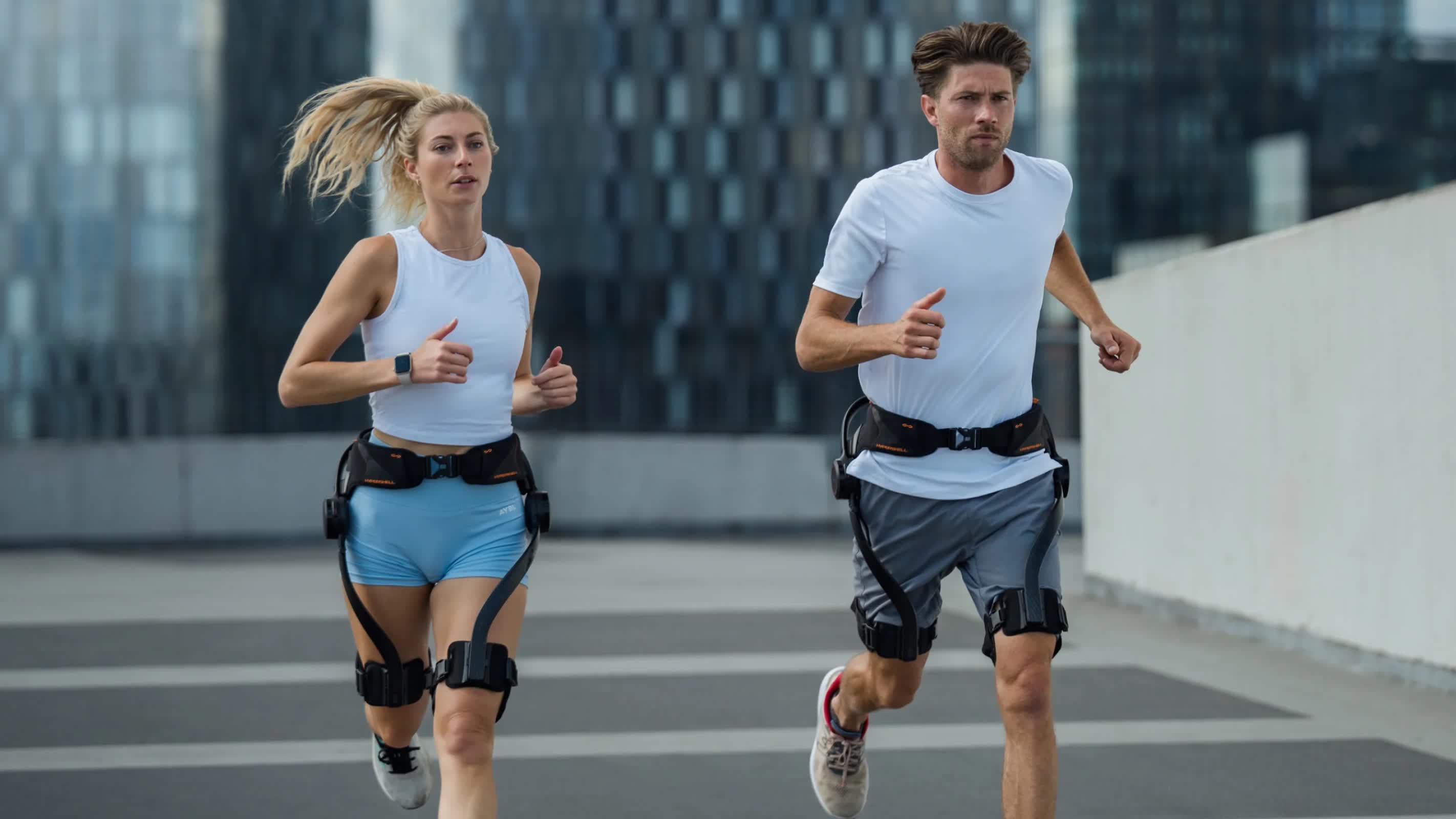
Hypershell's X Ultra S exoskeleton launches at $2,000, using an AI control system that adjusts hip-mounted motor output in real time to assist hiking and other physical activity. The product appears functional and potentially useful on inclines and rough terrain, but it still requires manual configuration, has an 18-mile battery-life rating, and carries safety limitations. The article frames it as an early-stage consumer technology with potential applications beyond recreation, but not yet seamless or mass-market.
The investable signal here is not “consumer exoskeletons” per se, but the validation of a broader category: AI shifting from advisory software into closed-loop physical actuation. That matters because the value capture is likely to accrue first to upstream enablers — compact motors, high-density batteries, lightweight composites, sensor fusion, and edge inference — long before a standalone exoskeleton brand becomes scalable. The earliest commercial win is likely in niche, high-pain use cases where willingness to pay is already proven: industrial fatigue reduction, logistics, and rescue, not casual recreation.
The key second-order effect is labor economics. If the device meaningfully extends endurance for certain worker cohorts, it could reduce the effective cost of strenuous labor without fully eliminating human labor — a “force multiplier” rather than automation. That creates a wedge for occupational safety budgets and productivity capex, but also raises adoption friction: any injury headline, liability claim, or ergonomic mismatch can freeze procurement cycles for quarters, even if the technology works technically. Expect the sales cycle to be pilot-heavy and reputation-sensitive over the next 6-18 months.
The contrarian read is that the market may be overestimating consumer adoption and underestimating operational constraints. A $2,000 wearable with battery limits, manual mode switching, and non-trivial safety risk is not a mass-market device; it is a premium accessory with a narrow addressable market unless employers subsidize it. The bigger opportunity is that this is a proof point for a future category where AI controls mechanical augmentation in real time — which should benefit companies exposed to human-assist robotics more than the brand that ships the first product.
AI-powered research, real-time alerts, and portfolio analytics for institutional investors.
Request DemoOverall Sentiment
mildly positive
Sentiment Score
0.25
