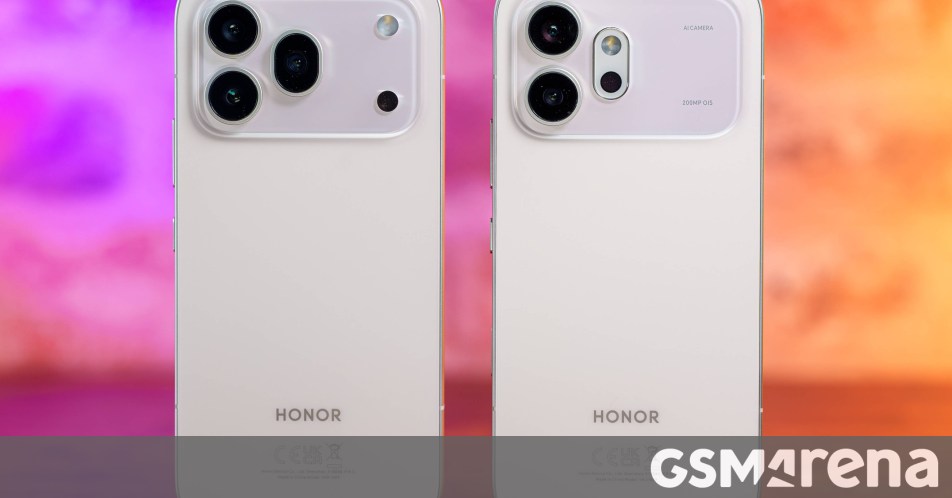
Honor has launched the Honor 600 and Honor 600 Pro in Europe, with the base model starting at €549.99 and the Pro at €999.99, alongside early-bird pricing of €499.99 and €799.99 respectively. European versions include a 6,400 mAh battery, six years of Android updates, and promotional bundles for the first 500 orders. The launch is a routine product announcement with limited near-term market impact.
This is less a handset story than a signal that premium Android OEMs are still competing on financing, bundles, and software longevity rather than pure hardware differentiation. The six-year update commitment matters because it shifts buyer psychology toward total cost of ownership, which compresses replacement cycles and favors brands that can keep users inside their ecosystem for a longer share-of-wallet period. The early-bird pricing is more important than the headline MSRP: it suggests the vendor is trying to force channel velocity and seed reviews quickly, which often front-loads demand but can leave inventory and margin pressure once the promotional window closes.
The second-order implication is for components and peripherals, not the handset nameplate itself. Longer software support and premium feature sets typically increase BOM discipline around memory, storage, cameras, and displays, while the aggressive bundle implies the maker is using lower-margin adjacent products to subsidize smartphone ASPs and protect rank in a crowded tier. That tends to be mildly negative for standalone accessory vendors and gray-market resellers, but constructive for integrated OEMs that can cross-sell tablets, headphones, and content into a single customer acquisition event.
From a competitive lens, this is an incremental pressure point for mid-premium Android peers that rely on spec-sheet parity without matching after-sales support. The risk is that if the promotional pricing converts too much volume, it may train consumers to wait for discounts, making normalized margins harder to recover over the next 2-4 quarters. Conversely, if early demand is weak despite the bundle, that would indicate premium Android demand is softer than management teams have been implying, which would matter more for broader handset/channel sentiment than for this specific launch.
The contrarian read is that six years of updates may be more valuable to carriers and upgrade-cycle management than to end demand today, meaning the market may overestimate immediate unit upside and underestimate the long-term cash drain from support obligations. The real tell will be whether the brand can sustain full-price sell-through after the first 500 orders; if not, this looks like a volume-defense move rather than a genuine share gain.
AI-powered research, real-time alerts, and portfolio analytics for institutional investors.
Request TrialOverall Sentiment
neutral
Sentiment Score
0.12
