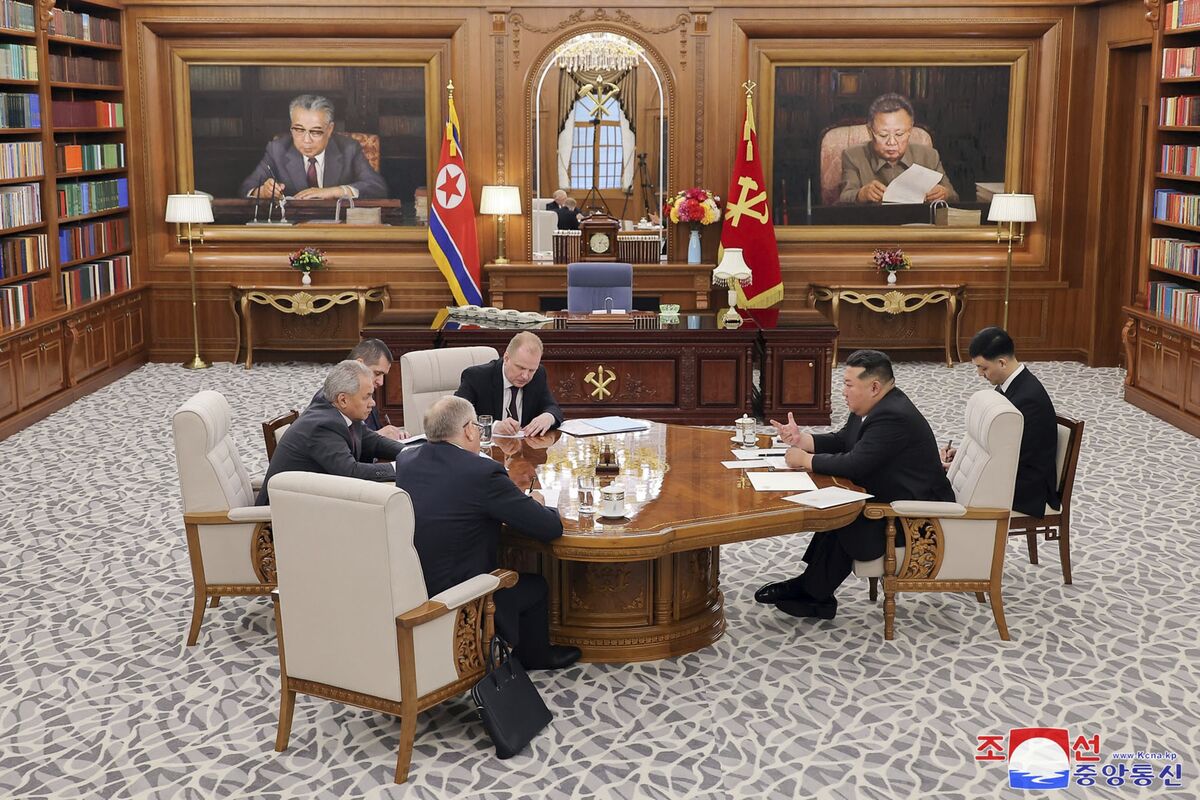
North Korean leader Kim Jong Un pledged "unconditional support" for Russia and its foreign policies in a meeting with Sergei Shoigu, a top security aide to President Putin, according to state media. This commitment reinforces the alliance between the two nations, which is already under scrutiny for defying international sanctions and raising security concerns in the region.
North Korean leader Kim Jong Un has formally reiterated an unconditional pledge of support for Russian President Vladimir Putin and Moscow's foreign policies, as reported by the Korean Central News Agency following a meeting in Pyongyang with Russian security aide Sergei Shoigu. This declaration signifies a deepening of the strategic alignment between North Korea and Russia, an alliance already under international scrutiny for defying existing sanctions. The explicit nature of this support, particularly concerning "all the crucial international political issues," amplifies regional security concerns and underscores the ongoing reconfiguration of geopolitical partnerships. The development carries a moderately negative sentiment, reflecting the potential for increased instability and further entrenchment of blocs operating outside established international norms, particularly concerning sanctions and export controls.
AI-powered research, real-time alerts, and portfolio analytics for institutional investors.
Request DemoOverall Sentiment
moderately negative
Sentiment Score
-0.50
