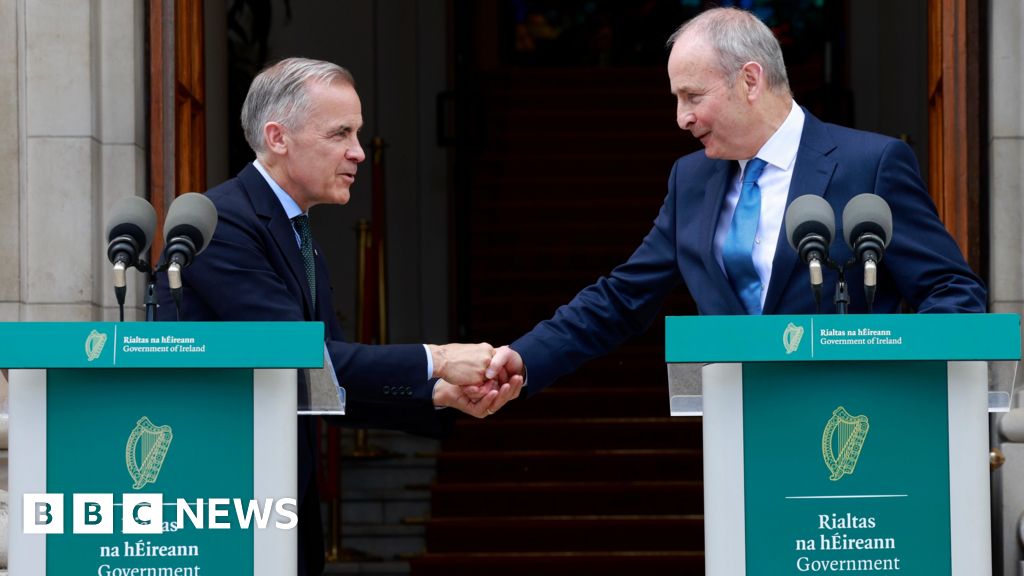
Canadian Prime Minister Mark Carney made the first bilateral visit by a Canadian PM to Ireland since 2017, announcing a new bilateral co-operation framework spanning trade and investment, life sciences, research and innovation, and security and defence. The trip highlighted strengthening Canada-Ireland ties and Carney’s Irish heritage, while official data showed bilateral goods and services trade rising from €3.2bn in 2016 to over €12bn in 2024 and Canadian investment in Ireland up 131% since 2016. The article is primarily diplomatic and relationship-focused, with limited immediate market impact.
This is less a ceremonial trip than a signal that Ottawa is trying to hard-wire a wider “friend-shoring” network across the North Atlantic. The incremental value is not the headline trade figure itself; it is the optionality around procurement, life sciences, and security alignment, where even modest policy convergence can redirect budget flows toward firms with cross-border compliance, regulatory, and research footprints. That favors incumbents with established Canadian-European operating platforms and disfavors smaller domestic-only vendors that cannot monetize the bilateral overlay.
The second-order winner is likely the innovation stack: universities, CROs, medtech, biotech, and dual-use cyber/security contractors that can translate political goodwill into grant access, pilot programs, and procurement preference over the next 6-18 months. The defense angle matters because Europe is still re-allocating spend from legacy platforms toward resilience, and Canada’s credibility as a bridge partner can help Irish institutions tap NATO-adjacent programs and North Atlantic supply chains. In practical terms, the transaction is about lowering friction for capital, data, and personnel movement more than about near-term goods trade.
The main risk is that the rhetoric outruns implementation. Bilateral frameworks often create a short-lived uplift in sentiment, but actual budget authority, procurement cycles, and regulatory changes lag by quarters; if elections, fiscal tightening, or U.S.-EU trade frictions absorb policy bandwidth, the impact can fade quickly. Over a 1-3 month horizon, this is mostly a sentiment and positioning trade; over 12-24 months, the catalyst becomes whether the framework translates into signed contracts, research funding, and defense tenders.
The contrarian view is that the market may be underpricing the durability of middle-power alignment in a fragmented global system. If investors are treating this as symbolic diplomacy, they may miss that cross-border industrial policy is increasingly being implemented through bilateral memoranda and procurement channels rather than grand treaties. The more important tell will be which sectors are invited into follow-on working groups; that is where the economic value will concentrate.
AI-powered research, real-time alerts, and portfolio analytics for institutional investors.
Request DemoOverall Sentiment
neutral
Sentiment Score
0.15
