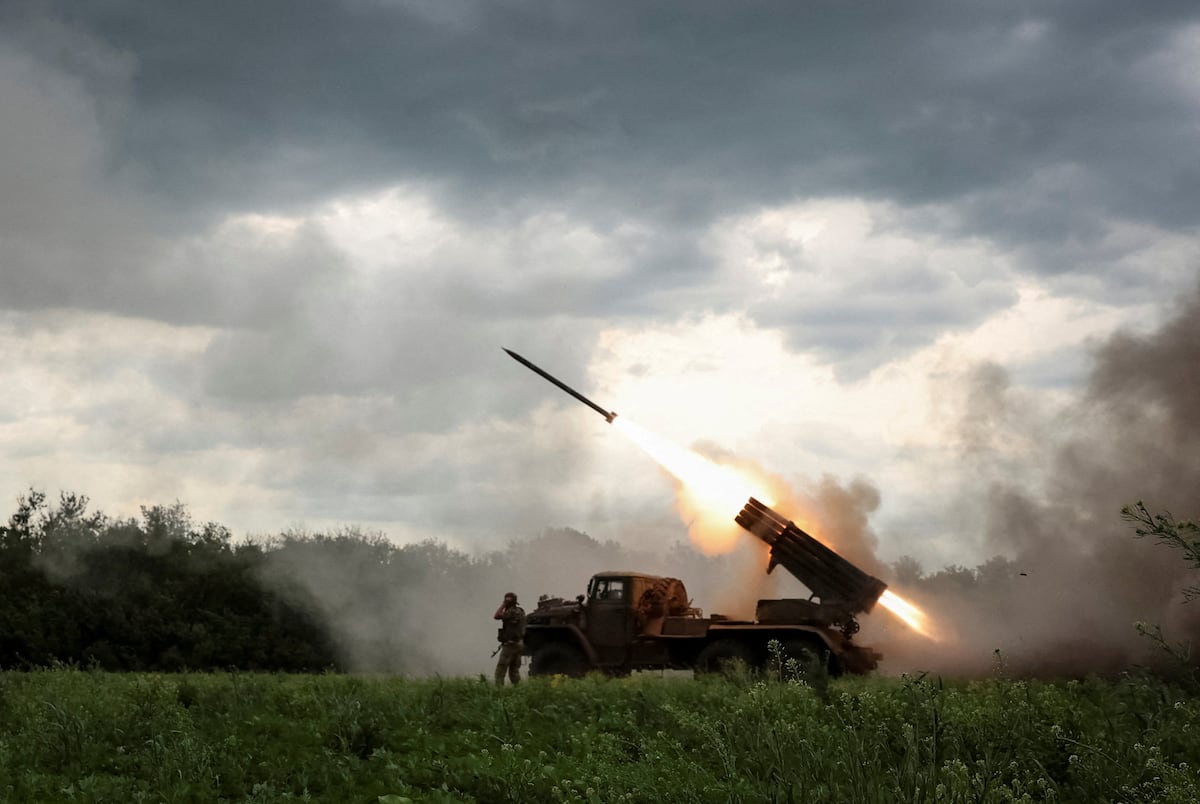
Ukraine's commanders say the next 6 months are the most critical in a possible battlefield turning point, with Brig. Gen. Andriy Biletsky arguing Russia is exhausted and unable to make major breakthroughs. The article highlights Ukraine's push using drones, UGVs, and longer-range strikes while Russia continues to hold almost one-fifth of Ukrainian territory and pressure the Donetsk 'Fortress Belt.' The piece is geopolitically significant and could affect defense and energy-related risk sentiment, but it contains no direct market or earnings data.
The market implication is less about a sudden end-state and more about a six-month sequencing window that could force reassessment of Europe’s defense spend mix. If Ukraine can sustain pressure, the beneficiaries are not only frontline munitions and drones, but also the logistics, EW, and battlefield software layers that become mandatory when a force is trying to substitute capital for manpower. That creates a second-order tilt toward systems that improve kill-chain latency, hardened comms, and autonomous resupply rather than legacy heavy armor alone.
The underappreciated risk is that a perceived “turning point” can widen rather than narrow the conflict premium if Moscow responds with deeper strikes on energy, rail, and telecom infrastructure. The fastest transmission channel for markets is not equities in Ukraine directly, but European gas pricing, drone-intercept demand, and satellite/comms resilience spending. Any interruption to low-cost battlefield connectivity also raises the strategic value of alternative mesh, optical, and on-premise command systems across NATO procurement.
Consensus may be overestimating how quickly battlefield momentum converts into negotiating leverage. Even if tactical gains improve Kyiv’s position, manpower remains the binding constraint, so the path to a durable advantage likely depends on force multiplication technologies that can be scaled within 12-18 months, not weeks. That argues for leaning into the vendors that monetize prolonged attrition and automation, while fading a simplistic “peace dividend” trade until there is evidence of enforceable ceasefire mechanics.
AI-powered research, real-time alerts, and portfolio analytics for institutional investors.
Overall Sentiment
neutral
Sentiment Score
0.10
