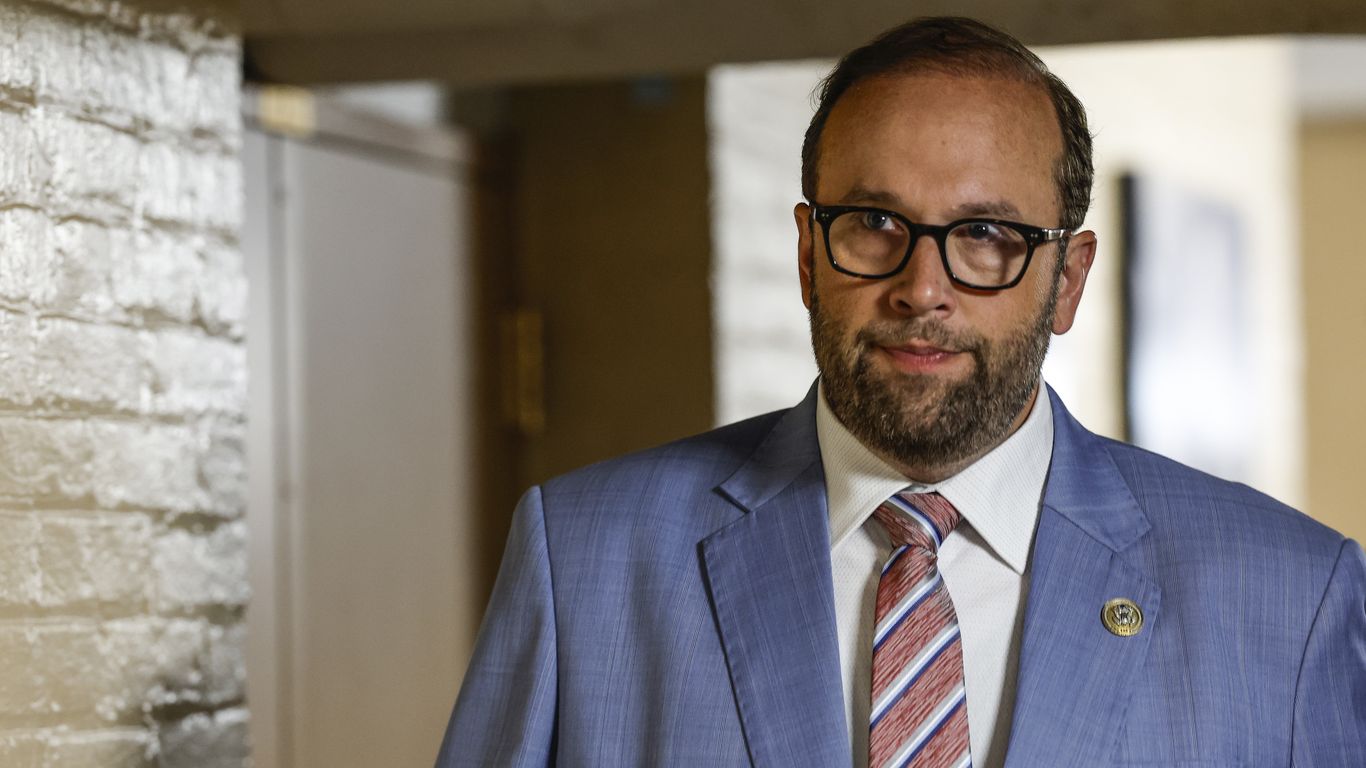
House Ways and Means Chair Jason Smith defended a proposed tax on foreign investment in Trump's tax bill, arguing it's necessary to counter unfair tax policies from other nations that disadvantage U.S. companies. The provision, Section 899, would increase tax rates on foreign direct investment from countries deemed to have unfair tax policies. Wall Street is concerned that this could deter foreign investors from buying U.S. assets, potentially impacting the U.S.'s ability to borrow and undermining investor confidence, according to financial advisory firm deVere Group.
The proposed Section 899 within a potential Trump administration tax bill, aiming to increase tax rates on foreign direct investment from countries deemed to have unfair tax policies, is generating significant concern among financial market participants. House Ways and Means Chair Jason Smith advocates for this measure as a defensive tool, stating it is a way to "help put them in check" regarding foreign governments' tax treatment of U.S. companies, while hoping it "will never take an effect." Conversely, Wall Street and financial advisory firm deVere Group, through its CEO Nigel Green, have expressed strong apprehension, warning that such a tax could "detonate investor confidence" and precipitate a "damaging pullback of foreign capital." These anxieties are heightened as they coincide with existing concerns over the U.S. assets' safe-haven status, potentially complicating the nation's ability to attract foreign capital and finance its debt. The reported "strongly negative" sentiment (score -0.6) and "high market impact" (score 0.75) associated with this development underscore the market's perception of substantial risk to U.S. asset valuations and capital inflows should this policy be implemented.
AI-powered research, real-time alerts, and portfolio analytics for institutional investors.
Overall Sentiment
strongly negative
Sentiment Score
-0.60
