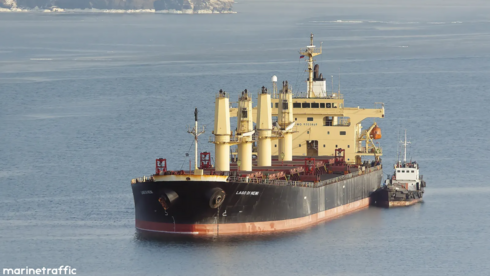
A Russian cargo ship reportedly carried 43,765 tons of wheat from occupied Ukrainian territory to Israel’s port of Haifa, triggering a дипломатic dispute between Kyiv and Jerusalem. Ukraine says the shipment would violate international law and its territorial sovereignty, and is urging Israeli authorities to investigate and block any unloading. The case highlights ongoing wartime grain diversion claims, with Ukraine estimating Russia exported more than 2 million tons of grain from occupied territories in 2025 worth about $400 million.
This is less about one vessel and more about the next marginal escalation in commodity provenance risk. If Israel is seen as a permissive end-market for sanctioned or occupied-territory grain, counterparties in the Eastern Mediterranean will demand heavier documentation, more physical inspection, and more insurance friction, which raises transaction costs for any trader touching Black Sea-origin cargoes. The immediate winner is anyone with clean origin chains and credible traceability; the loser set includes gray-market grain handlers, smaller shippers, and ports that rely on fast-turn bulk throughput.
The second-order effect is on freight and marine insurance, not wheat itself. Even a small increase in “documentation risk premium” can widen voyage-level spreads for cargoes routed through the Black Sea, Crimea-adjacent load points, or transshipment hubs in the Levant, because underwriters price the legal and reputational tail, not just collision or weather risk. This is particularly relevant for Mediterranean terminals and bulk carriers with exposure to higher-risk charterers; the market may underappreciate how quickly counterparties can shift from spot acceptance to embargo-like behavior once headlines turn political.
For commodities, the near-term price impact on global wheat is likely muted unless this expands into a broader enforcement campaign. But there is a real path to tighter regional basis differentials: if importers in Turkey, Egypt, and the Gulf start rejecting cargoes with ambiguous origin, Black Sea-linked wheat loses optionality and clean-origin exporters gain pricing power. The catalyst window is days to weeks for port behavior and months for sanctions/AML enforcement changes.
The contrarian view is that the market may overestimate the durability of this headline because grain is fungible and enforcement is inconsistent. That said, the more important trade is not directional wheat beta; it is the widening gap between compliant agricultural supply chains and opaque ones, especially where shipping, trade finance, and port services all have to sign their names to the transaction.
AI-powered research, real-time alerts, and portfolio analytics for institutional investors.
Request TrialOverall Sentiment
moderately negative
Sentiment Score
-0.45
