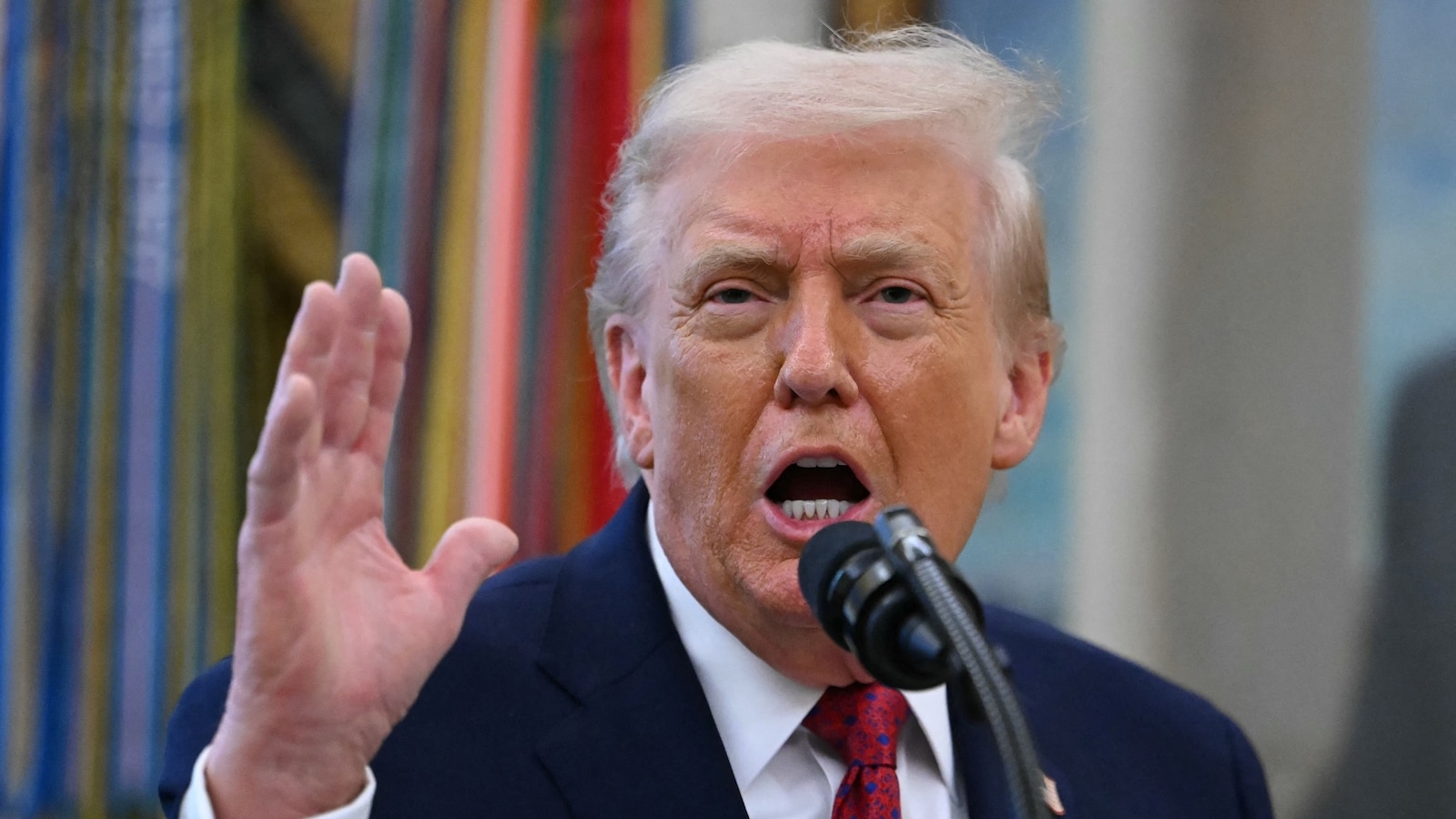
President Trump announced a “TOTAL AND COMPLETE BLOCKADE” of all sanctioned Venezuelan oil tankers, demanded the return of what he called stolen oil and assets, and reiterated his administration’s designation of Nicolás Maduro’s government as a foreign terrorist organization; the announcement follows last week’s U.S. seizure of a sanctioned tanker alleged to have moved oil between Venezuela and Iran and bound for Cuba. The U.S. currently has 11 warships in the Caribbean—its largest presence in decades—but even that force would likely be insufficient to seal Venezuela’s coastline in the traditional sense; Reuters and Tanker Trackers put the fleet of sanctioned ships at roughly 30 and more than a dozen are reportedly in Venezuelan waters. Caracas condemned the declaration as a reckless violation of international law, and the move—together with recent U.S. strikes on vessels accused of drug trafficking—represents a significant escalation with potential implications for Venezuelan oil flows, regional maritime security and legal/geopolitical risk for shipping and insurers.
President Trump announced a "TOTAL AND COMPLETE BLOCKADE" of all sanctioned Venezuelan oil tankers and demanded return of what he described as stolen oil and assets, following last week’s U.S. seizure of a sanctioned tanker alleged to have moved oil between Venezuela and Iran and bound for Cuba. The administration has previously designated Nicolás Maduro’s government a foreign terrorist organization and noted repeated naval actions against vessels accused of drug trafficking since September.
The U.S. currently has 11 warships in the Caribbean—its largest presence in decades—while Reuters and Tanker Trackers place the fleet of sanctioned vessels at roughly 30 and more than a dozen in Venezuelan waters respectively, highlighting a practical limit to sealing Venezuela’s coastline in the traditional sense. Caracas called the declaration a violation of international law, introducing legal and diplomatic risk that could constrain operational escalation and prompt rerouting or covert transfers by tanker networks.
Market implications include a rise in geopolitical risk premia for oil, higher freight rates and war-risk insurance for tankers, and increased uncertainty for regional trade and shipping firms; the article’s tone and the provided sentiment outputs flag a moderately negative, hawkish market reaction with a material market-impact score. Investors should treat this as a conditional supply-disruption event: outcomes hinge on follow-through actions (additional seizures, maritime interdictions, or legal constraints) that will drive volatility in energy, shipping, and emerging-market exposures.
AI-powered research, real-time alerts, and portfolio analytics for institutional investors.
Request DemoOverall Sentiment
moderately negative
Sentiment Score
-0.55
