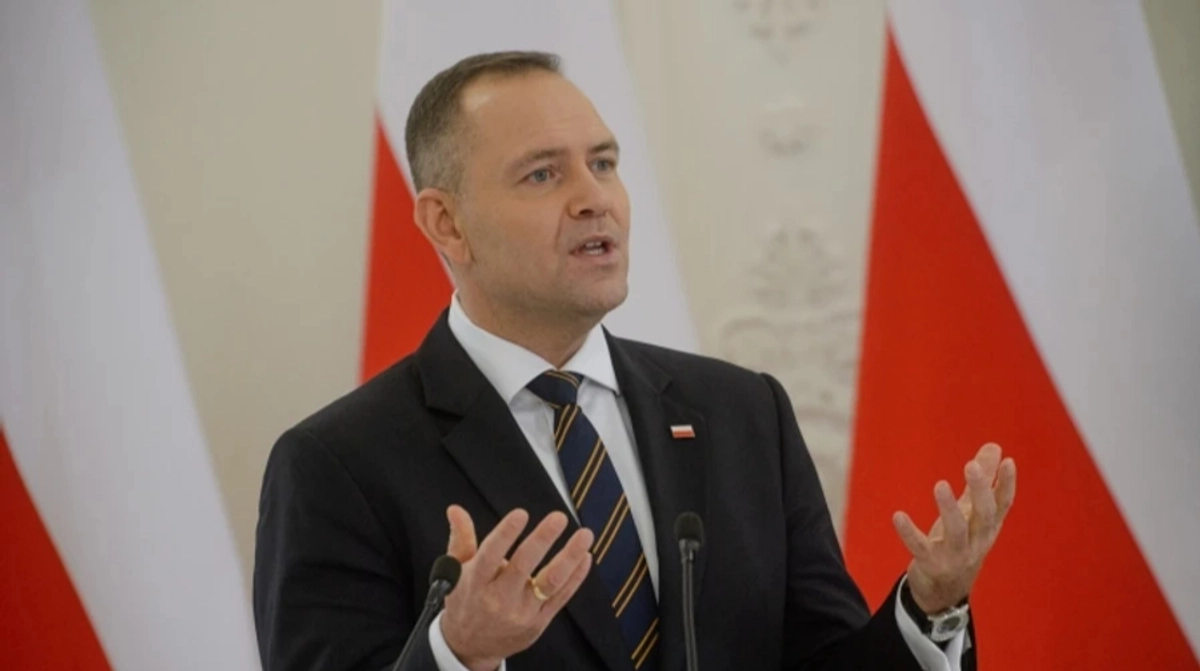
Polish President Karol Nawrocki said he will seek to strip Volodymyr Zelenskyy of Poland’s Order of the White Eagle after Ukraine named a Special Operations Forces unit after the Heroes of the UPA. Poland’s Foreign Ministry has already protested the decision, saying it is painful for Poles and gives Russian propaganda new material. The issue is politically sensitive but is unlikely to have meaningful direct market impact.
This is a low-grade but persistent deterioration in Poland–Ukraine political alignment, and the market impact is less about immediate asset repricing than about friction in the coalition that underpins Eastern European security spending and logistics. The key second-order effect is that symbolic disputes like this can spill into parliamentary messaging, border policy, and procurement cooperation, which matters for defense contractors with exposure to joint programs and cross-border sustainment rather than headline weapon sales.
The bigger risk is not a formal policy break, but gradual normalization of bilateral tension at exactly the wrong time: as U.S. attention is increasingly transactional and European fiscal space is constrained, even a small reduction in Polish enthusiasm can slow transit, maintenance, training, and refugee-related political support. That would be a headwind for Ukraine-linked reconstruction optionality and for the “Europe must spend more on defense now” narrative, especially if other frontline states start using historical grievances to justify domestic hardening.
On timing, the reaction window is days to weeks for rhetoric, but months for procurement and coalition effects. Any de-escalatory statement from the presidential chapter, the foreign ministry, or Kyiv walking back the symbolism would likely neutralize the issue quickly; absent that, the trade is toward higher political noise and more frequent execution risk in Eastern Europe defense logistics. The consensus likely underestimates how often identity disputes become budget disputes in coalition governments, especially when voters are already sensitive to war fatigue and sovereignty framing.
For now this looks more like an underappreciated volatility catalyst than a clean directional macro signal. The most plausible market expression is relative-value: favor Western European primes with diversified NATO demand over names heavily dependent on a smooth Poland–Ukraine operational bridge, and keep an eye on whether local infrastructure and rail/logistics proxies begin to price in a higher friction premium.
AI-powered research, real-time alerts, and portfolio analytics for institutional investors.
Request DemoOverall Sentiment
mildly negative
Sentiment Score
-0.20
