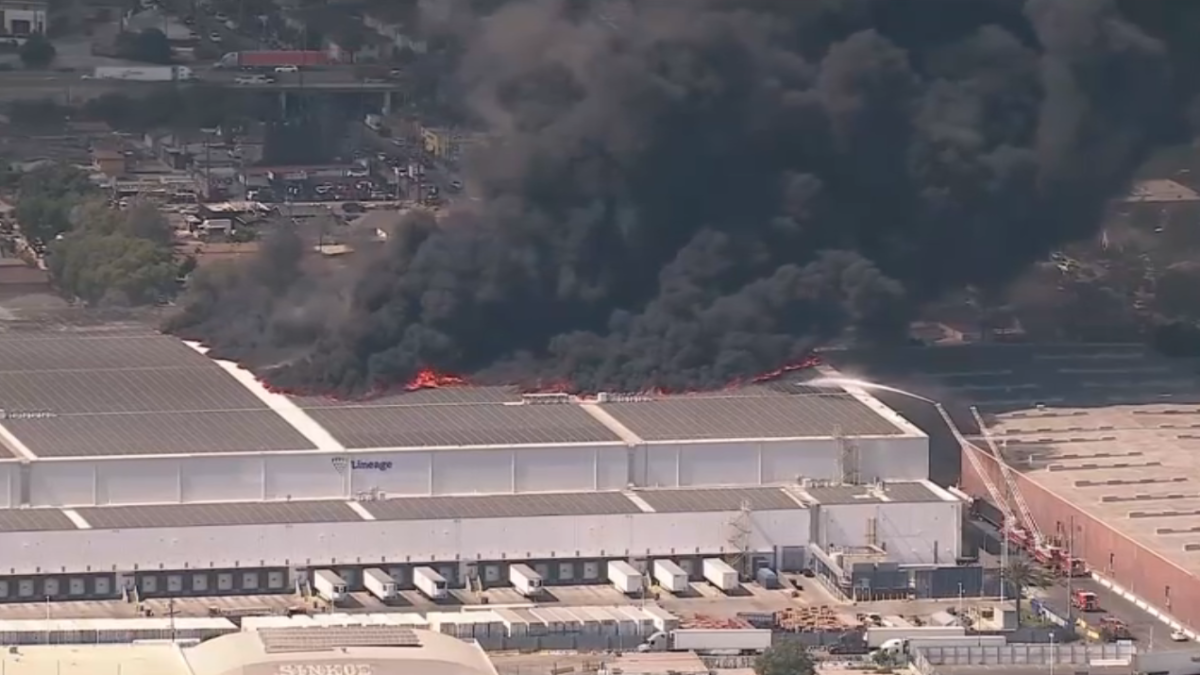
A fire at Lineage’s Boyle Heights cold-storage facility damaged rooftop solar panels and compromised an ammonia line, triggering a shelter-in-place order and evacuation of about 70 people. The ammonia leak was later contained, no injuries were reported, and officials said the fire was largely confined to the roof. The incident is operationally disruptive but appears localized, with limited broader market impact.
The immediate market impact is less about the incident itself and more about the operating model it exposes: high-density cold storage assets with rooftop solar and ammonia refrigeration create a compound failure mode that can turn a localized fire into an extended service interruption. For logistics and grocery supply chains, the first-order risk is not a total loss of inventory but a temporary capacity bottleneck, especially if the facility serves high-throughput regional distribution lanes where replacement cold-chain space is scarce on short notice.
Second-order beneficiaries are the nearest substitute warehouse operators and third-party logistics providers with excess refrigerated capacity in Southern California. If this site is offline even for days, spot rates for temperature-controlled storage and short-haul drayage can tighten faster than investors expect, while neighboring operators may gain incremental utilization without meaningful capex. The broader infrastructure takeaway is that rooftop solar on industrial roofs is becoming a liability stack item, not just an energy-saving feature, when paired with older electrical/chemical systems.
For LINE specifically, the risk is reputational and insurance-related more than near-term earnings, but the repeated-fire history raises the probability of higher premiums, deductible creep, and customer scrutiny on site resilience over the next 6-18 months. The key reversal catalyst is a fast return to full operations with no material inventory loss; absent that, expect a slower-moving overhang as tenants and insurers reassess the probability of downtime, especially across facilities with similar roof-mounted solar configurations.
The contrarian angle is that the selloff risk in the name may be overstated if the ammonia containment and limited structural spread cap the economic damage. However, the event may still trigger a broader re-rating of cold-storage REIT-like infrastructure assets that rely on single-site redundancy, because the market tends to underprice correlated tail risk until a repeat incident forces underwriting changes.
AI-powered research, real-time alerts, and portfolio analytics for institutional investors.
Request DemoOverall Sentiment
mildly negative
Sentiment Score
-0.25
Ticker Sentiment
