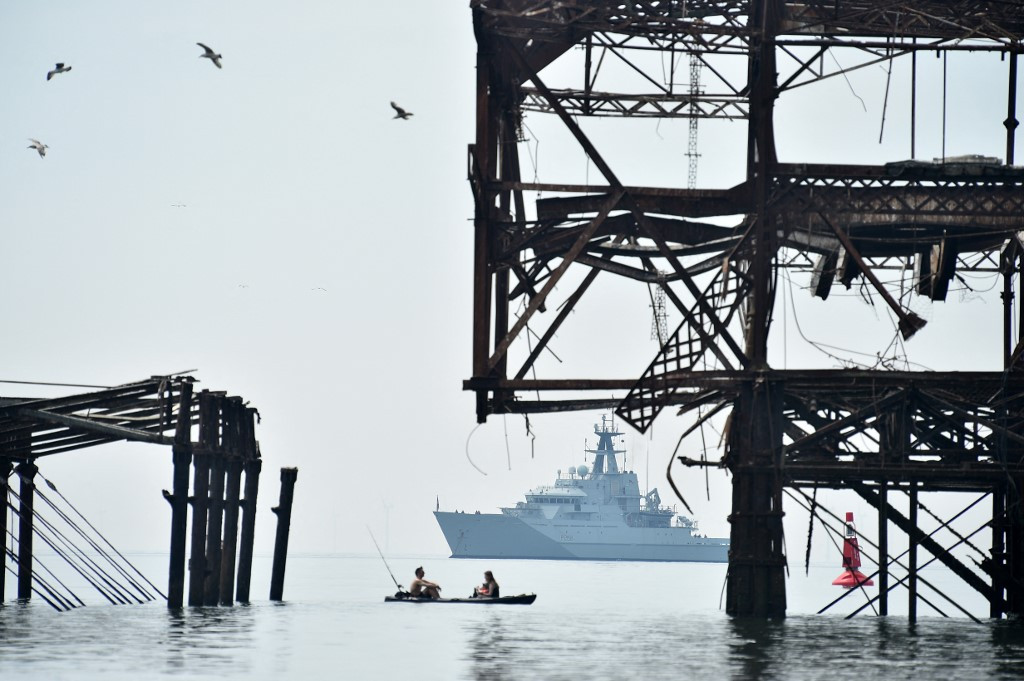
Russian naval activity near UK waters has surged roughly 30% over the past two years; HMS Severn intercepted and shadowed the corvette Stoikiy and tanker Yelnya in the English Channel before handing monitoring to a NATO ally. The intelligence ship Yantar recently re-entered British waters and was accused of using lasers against RAF aircrew, prompting revised Royal Navy rules of engagement, preparations of military options, and deployment of three Poseidon surveillance aircraft to Iceland; UK officials warned the vessel can map and potentially threaten undersea cables, raising strategic risks for critical infrastructure and regional security.
Market structure: Immediate winners are prime defense contractors (LMT, RTX, LHX) and maritime ISR suppliers (BA for P-8 work) plus cybersecurity vendors protecting undersea/comms infrastructure; underwriters/reinsurers can reprice marine war-risk premiums. Losers are short-horizon travel/shipping operators (CCL, RCL, AAL) and regional UK coastal exposure; expect mid-single-digit incremental revenue tailwinds for primes over 6–18 months as orders shift from planning to procurement.
Risk assessment: Tail risks include a kinetic escalation (low probability, high impact) that could spike Brent +$10–$25/bbl and widen war-risk insurance, or trigger tranche of sanctions disrupting supply chains. Immediate (days) = volatility and flight-path insurance repricing; short-term (weeks–months) = freight/insurance rate moves and margin pressure for carriers; long-term (quarters–years) = reallocation of capex to defense and cybersecurity. Hidden dependency: undersea cable repair capacity is concentrated; a damaging incident would create steep, fast demand spikes.
Trade implications: Favor 6–12 month overweight in LMT/RTX and 3–9 month buys in PANW/CRWD; pair trades include long LMT vs short CCL/RCL for relative safety. Use options to control risk: 3–6 month call spreads on primes and 1–3 month OTM puts on travel names; reduce cyclicals exposure and rotate 3–5% portfolio into defense/cyber within 1–4 weeks while volatility is elevated.
Contrarian angles: The market may overprice immediate earnings upside — procurement lags 12–36 months so rallies can be front-loaded and fade. Conversely, insurance/shipping may be oversold; a contained diplomatic resolution could rally carriers sharply. Historical parallel: 2014 Crimea produced 10–25% defense moves that normalized; size positions accordingly and prefer staged entries.
AI-powered research, real-time alerts, and portfolio analytics for institutional investors.
Request DemoOverall Sentiment
moderately negative
Sentiment Score
-0.40
