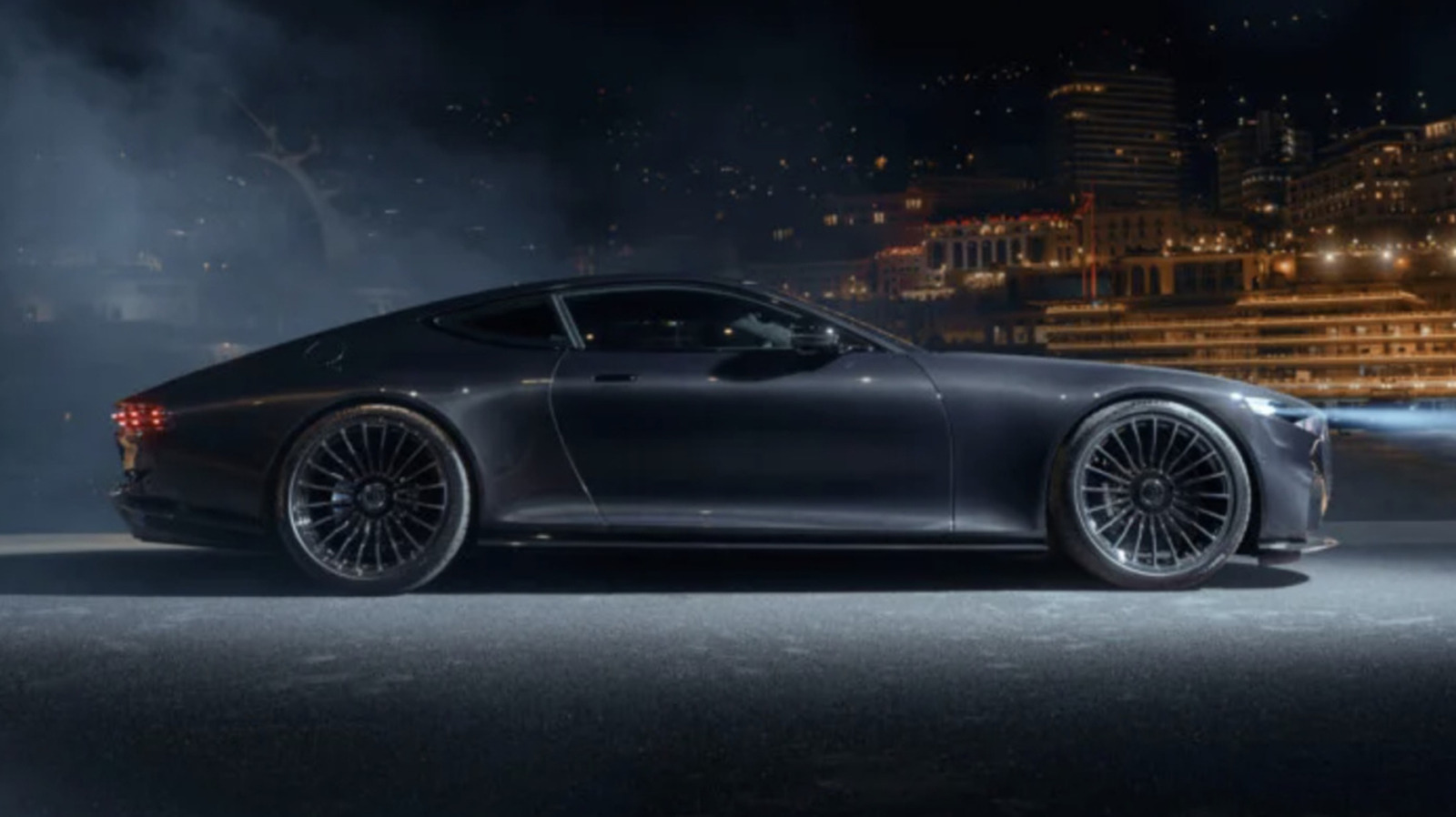
Brabus unveiled its first standalone car, the Bodo, a coachbuilt Aston Martin Vanquish-based coupe with 986 horsepower, 885 lb-ft of torque, a 224 mph top speed, and a sub-3.0-second 0-60 time. The car features a nearly all-new carbon-fiber body, 21-inch wheels, carbon-ceramic brakes, and a lavish leather/carbon-fiber/suede interior. Brabus plans to build 10 to 15 Bodos per year, but pricing was not disclosed.
This is not a meaningful direct equity event, but it is a useful signal for the ultra-luxury auto stack: the value pool is still migrating from pure brand heritage toward bespoke, low-volume, high-margin coachbuilds. That favors manufacturers and suppliers with genuine customization capability, carbon-composite know-how, and the ability to monetize scarcity; it is a negative for volume-oriented luxury marques that rely on halo trims but cannot credibly command six-figure incremental pricing.
The second-order effect is on supply chain economics rather than unit counts. Low-volume projects consume disproportionate engineering bandwidth, composite tooling, and interior trim capacity, which can tighten availability for higher-margin special programs across the niche-performance ecosystem over the next 6-18 months. If this format gains traction, the real beneficiaries are carbon fiber, forged wheel, brake, and high-end upholstery suppliers; the risk is that customization becomes a margin sink if development cycles lengthen or homologation costs rise.
The market is likely underestimating how much of this is an option value play for brand extension. A successful first standalone build gives the tuner/coachbuilder a template to upsell ultra-high-net-worth customers into recurring limited editions, preserving pricing power even if broader exotic demand softens. The contrarian risk is that this remains a one-off novelty: if order intake does not scale to a steady pipeline, the project becomes a marketing expense with limited earnings contribution and little evidence of incremental ROIC.
From a trading lens, the cleanest expression is not the carmaker itself but the suppliers and adjacent luxury ecosystem. For public equities, the opportunity is to own the enabling inputs while fading any assumption that this kind of halo launch automatically expands addressable demand for the donor-brand platform.
AI-powered research, real-time alerts, and portfolio analytics for institutional investors.
Request DemoOverall Sentiment
moderately positive
Sentiment Score
0.45
