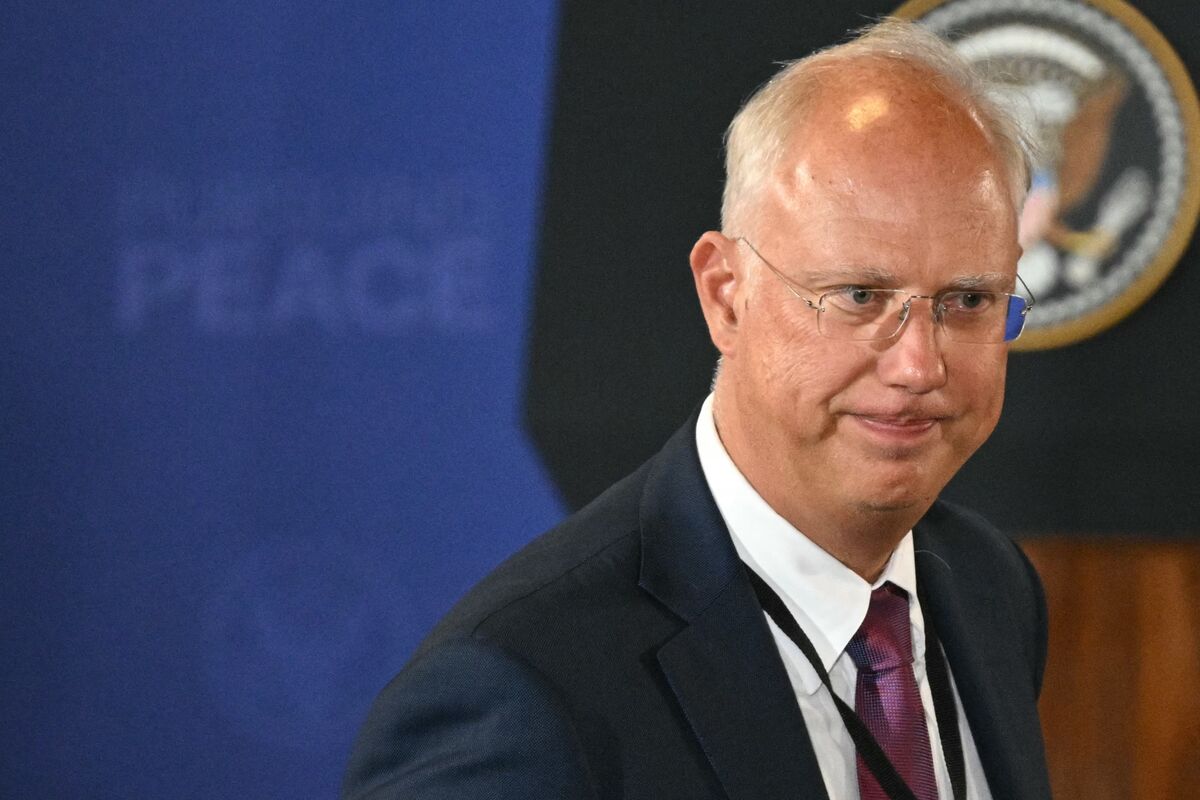
A Bloomberg-reviewed transcript records an Oct. 29 phone call between Yuri Ushakov, President Putin’s senior foreign-policy adviser, and Kirill Dmitriev, an economic adviser, in which they discuss plans for dealing with Donald Trump and related strategic considerations. The content highlights Kremlin-level political planning that could influence U.S.-Russia relations and the future trajectory of sanctions policy, presenting geopolitical risk to monitor, but the call itself contains no immediate financial figures or direct market-moving actions.
Market structure: The transcript increases probability-weighted geopolitical uncertainty rather than a single outcome — winners are defense contractors (procurement upside if tensions persist) and hard-asset producers (oil, gas, precious metals) while sanctioned Russian financial/energy assets remain high-beta losers under continued restrictions. Expect higher realized volatility in RUB, EEM/RSX-like EM rates and equities, and episodic oil upside if export routes are disrupted; Treasury safe-haven bids could push 2s/10s flatter in short bouts.
Risk assessment: Tail risks include abrupt sanction relief (sharp rally in Russia-linked commodity flows and EM assets) or rapid escalation (oil spikes >$100/bbl, supply-chain re-routing), both low-probability but >5% each over 12 months. Near-term (days–weeks) watch for FX and EM equity spikes; medium-term (3–12 months) for policy shifts tied to U.S. election outcomes; hidden dependencies include European banking exposure to dollarized commodity trade and derivative netting across clearing houses.
Trade implications: Position tactically — long defense (LMT, RTX, NOC) and GLD as convex hedges; short concentrated EM/Russia proxies (RSX or EEM overweight Russian exposure) and long USD vs RUB on volatility spikes. Use options (3–6 month call spreads on LMT/RTX; 1–3 month put protection on EEM/RSX) to size asymmetric payoffs and limit drawdowns; enter on a volatility uptick or polling-driven catalyst within 2–8 weeks.
Contrarian angles: Consensus that a Trump win equals immediate Russian asset normalization is under-specified — market may underprice transitional frictions (bank access, asset delists) that keep flows constrained for quarters. Historical parallels (2016/2018 sanction cycles) show 20–40% first-year variance in sanctioned-asset recoveries; avoid all-in directional EM longs and instead scale exposure, taking profits on >30% rallies and cutting if policy announcements lack operational detail.
AI-powered research, real-time alerts, and portfolio analytics for institutional investors.
Request DemoOverall Sentiment
neutral
Sentiment Score
0.00
