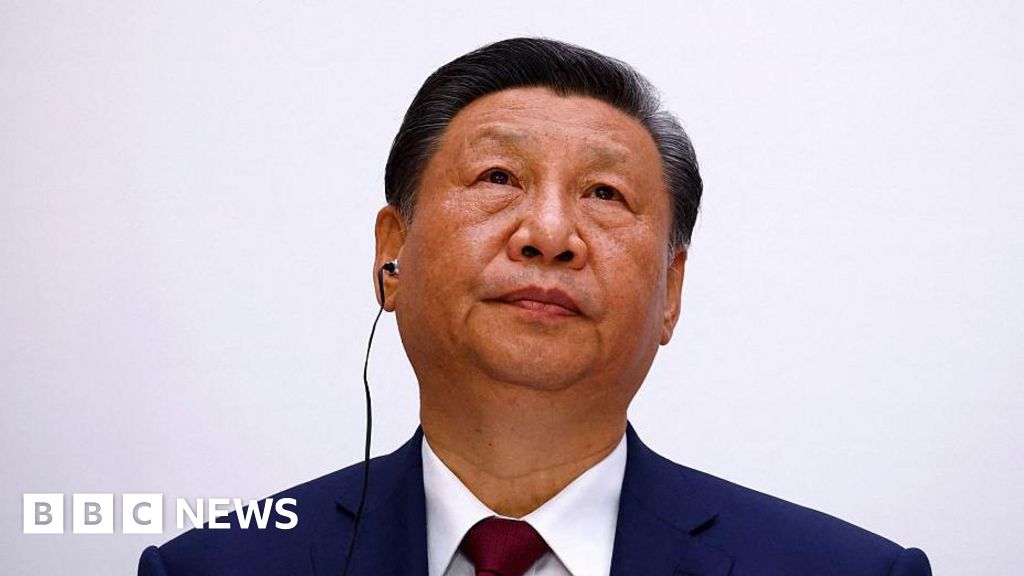
China is being forced to factor the Iran conflict into its economic planning after lowering its annual growth target to the weakest since 1991; it imported roughly 1.38 million barrels per day of Iranian crude in 2025 (about 12% of its crude imports) and researchers report over 46 million barrels of Iranian oil in floating storage across Asia and bonded tanks at Chinese ports. A prolonged disruption—particularly blockade risks in the Strait of Hormuz—would strain China’s energy security, shipping routes and Belt-and-Road investments in Africa and the Global South, lifting energy price risk and supply-chain stress. Beijing is pursuing muted diplomatic responses, hedging its position ahead of a high-profile US visit, while lacking military options to protect partners and managing the political and market fallout.
Market structure: A protracted Middle East conflict raises near-term pricing power for oil & defense suppliers while pressuring trade-dependent Chinese exporters and shipping. If 1.3–1.5m bpd of Iran-origin barrels to China are disrupted, expect OECD seaborne crude tightness that can lift Brent $10–25 within 1–3 months; beneficiaries include integrated oil majors (XOM, CVX) and oil services (OIH). Shipping and logistics (ZIM, FRO) face higher freight rates and rerouting costs, widening margins for owners while hurting cargo-dependent retailers.
Risk assessment: Tail risks include a Strait of Hormuz blockade (>20% seaborne oil flows) causing sustained supply shock, or US-China diplomatic rupture that triggers sanctions on Chinese firms — both would spike volatility across commodities, EM FX (CNY down >3–5%), and credit spreads (EM HY +200–400bp). Immediate (days) effects: volatility and flight-to-safety; short-term (weeks–months): oil spike, shipping reroutes; long-term (quarters–years): re-shoring energy security and accelerated China-Russia energy bilateralization.
Trade implications: Favor long oil exposure (XLE/USO) and defense (RTX, LMT) for 3–6 months while buying protective GLD/physical gold for risk-off; monetize elevated realized vol via 3-month call spreads on energy ETFs and 1–2 month put protection on China large-cap exporters (BABA, JD). Rotate out of China consumer cyclicals and EM banks with Gulf exposure, and increase cash/short-dated Treasuries (TLT for 3–6 month convexity if risk-off deepens).
Contrarian angles: Consensus underprices China's ability to switch to Russian supplies and absorb shortfalls — this caps oil upside after initial spike and suggests mean reversion in energy within 6–9 months. Market may overpay for defense names; favor high-quality aerospace primes (RTX) over smaller suppliers with concentrated Middle East revenue. Unintended consequences: higher freight rates could accelerate onshoring capex beneficiaries (CONNEX, industrials) — early long plays before consensus rotates in.
AI-powered research, real-time alerts, and portfolio analytics for institutional investors.
Request TrialOverall Sentiment
moderately negative
Sentiment Score
-0.50
