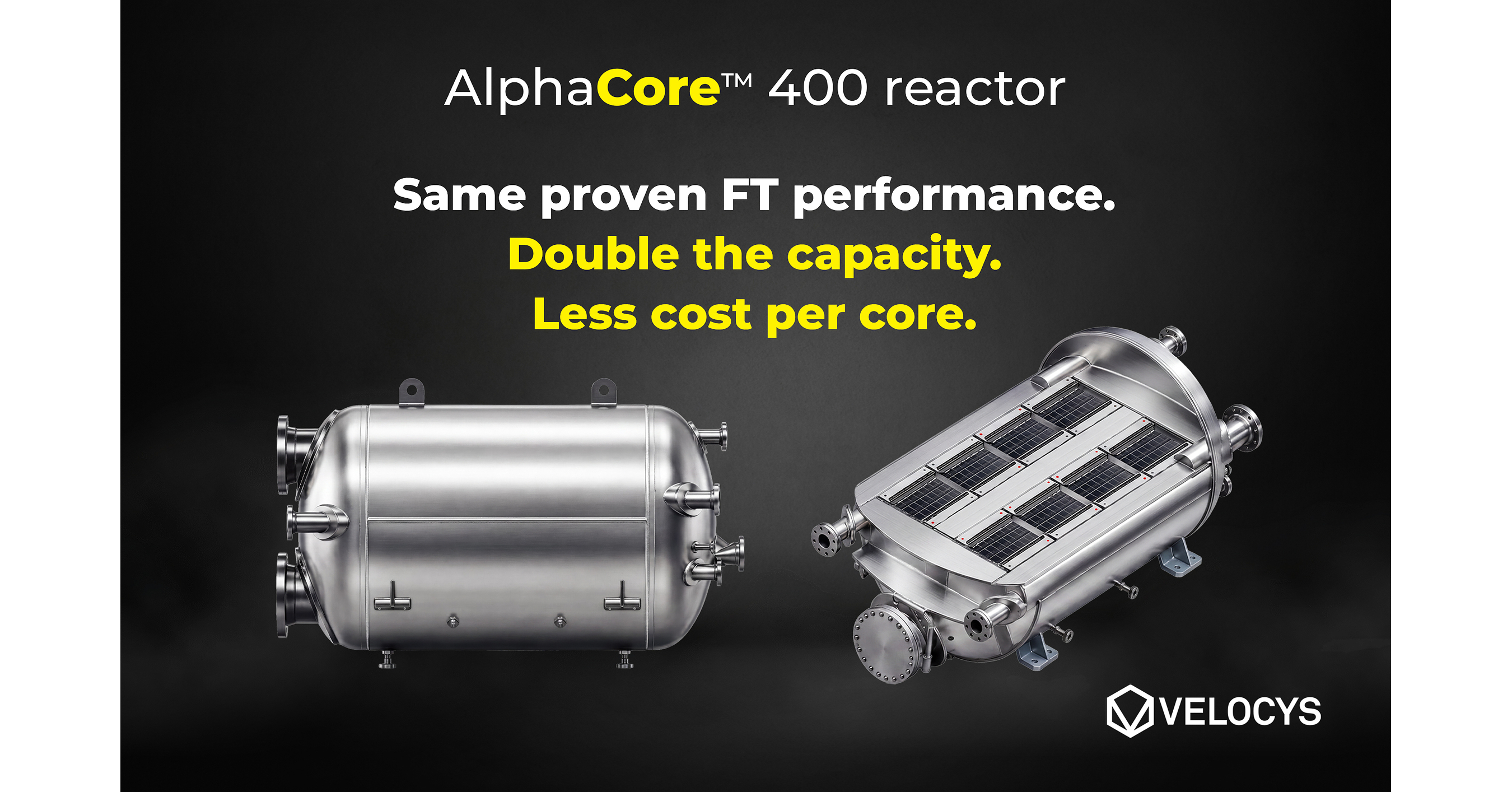
Velocys launched AlphaCore™ 400 as the first step in a roadmap to scale its microchannel Fischer-Tropsch (FT) technology for larger, more cost-competitive SAF plants. The AlphaCore 400 doubles reactor capacity vs the AlphaCore 200, reduces material requirements/capex, and is designed to simplify FT island operation using fewer trains for a given capacity. Management frames this as improving FT economics and expanding deployable project scale, though the news is product-focused rather than a quantified financial update.
This reads as an attempt to move microchannel FT from a “works in niche deployments” story to a financing story: fewer trains, lower capex, and simpler operation matter most when a project is trying to clear an FID, not when management is issuing a roadmap. If credible, the incremental winners are the picks-and-shovels around SAF buildout — EPCs, process licensors, industrial gas suppliers, and project financiers — because the economic hurdle shifts from chemistry to bankability.
The more interesting second-order effect is competitive pressure on smaller, distributed SAF platforms and on any developer whose business model depends on complexity being tolerated by subsidies. A larger, lower-cost FT island also makes hub-and-spoke feedstock aggregation more viable, which could advantage companies with logistics muscle and hurt sub-scale pure plays that need very high realized prices to survive. That said, the market should not price this as a step-function improvement until there is evidence of third-party performance, catalyst life, and actual project conversion.
Risk is mostly execution and policy timing. In the next 1-3 months, the key catalyst is whether this roadmap translates into a named project, an FID, or financing; without that, this is sentiment only. Over 6-18 months, the falsifier is simple: if larger trains do not improve uptime or capex per tonne in real projects, the market will treat the announcement as marketing, not a moat expansion. The contrarian miss is that centralization may add feedstock logistics and contamination risk, which can offset reactor savings.
AI-powered research, real-time alerts, and portfolio analytics for institutional investors.
Overall Sentiment
mildly positive
Sentiment Score
0.25
