

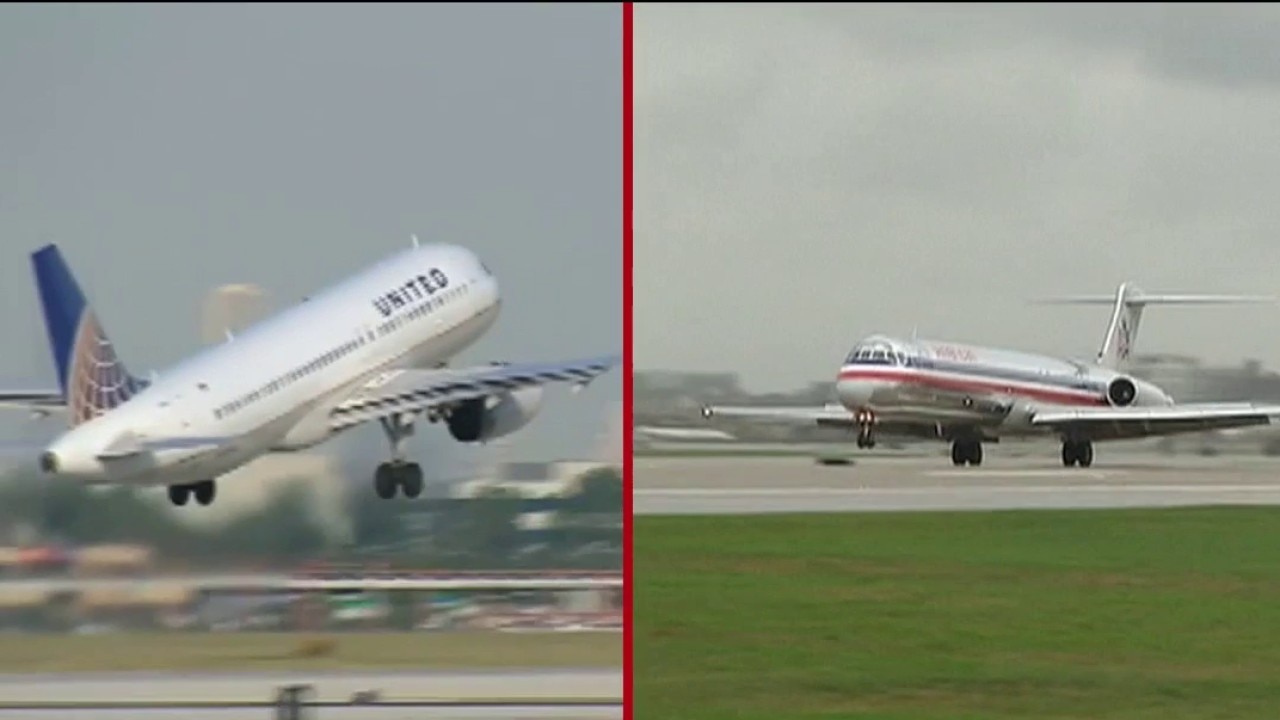
The FAA plans to meet with United and American Airlines to discuss cutting flights at O’Hare this summer amid concerns that a schedule of 3,080 daily flights (400 more than last summer’s 2,680) could overstress runways, terminals and ATC; the agency proposes capping operations at 100 hourly departures and arrivals (about 2,800 flights/day). The dispute highlights competitive gate-allocation incentives—American alleges United added roughly 130 daily flights (a 34% year-over-year rise) to game lease provisions—raising the prospect of reduced capacity, operational disruption and potential revenue impacts for the carriers; effects on already-booked passengers remain unclear.
Market structure: A forced cap from 3,080 to 2,800 daily flights (~9.1% reduction) is an immediate capacity shock concentrated at ORD that disproportionately hurts the carrier that aggressively overscheduled (United). Short-term winners are carriers with stable schedules (American if it avoids large cancelations) and alternative airports (Midway, nearby hubs) that can capture displaced demand; pricing power per remaining seat should rise, supporting fares and load factors over the summer.
Risk assessment: Tail risks include FAA extending caps to other congested hubs or imposing pro-rata cuts that trigger litigation/antitrust claims (low prob. but high impact). Immediate (days) risk is equity/option IV repricing; short-term (weeks–months) risk is revenue disruption from rebookings and fines; long-term (quarters+) is gate-allocation and route-market-share changes feeding through to FY2026 capacity plans. Hidden dependencies: gate-lease rules, airport politics, and consumer rebooking elasticity will determine who captures diverted passengers.
Trade implications: Expect UAL equity and short-dated implied volatility to underperform; AAL may be relatively insulated and could capture share if United cancels. Direct plays: short UAL vs long AAL, size for 1–3 month horizon around FAA decision; consider buying UAL downside puts to hedge. Cross-asset: wideners in high-yield airline bonds and higher option IV suggest protective hedges on debt and equity for 30–90 days.
Contrarian angles: Consensus focuses on punishment for overscheduling; overlooked is yield upside from fewer flights (higher load factors and fare yields) which could improve unit revenue per flight across carriers. Historical parallels (slot/slot-like caps at congested airports) show near-term stock weakness but medium-term margin recovery; if cuts are temporary, equity overreaction could present a 3–6 month buying opportunity.
AI-powered research, real-time alerts, and portfolio analytics for institutional investors.
Request TrialOverall Sentiment
moderately negative
Sentiment Score
-0.30
Ticker Sentiment
