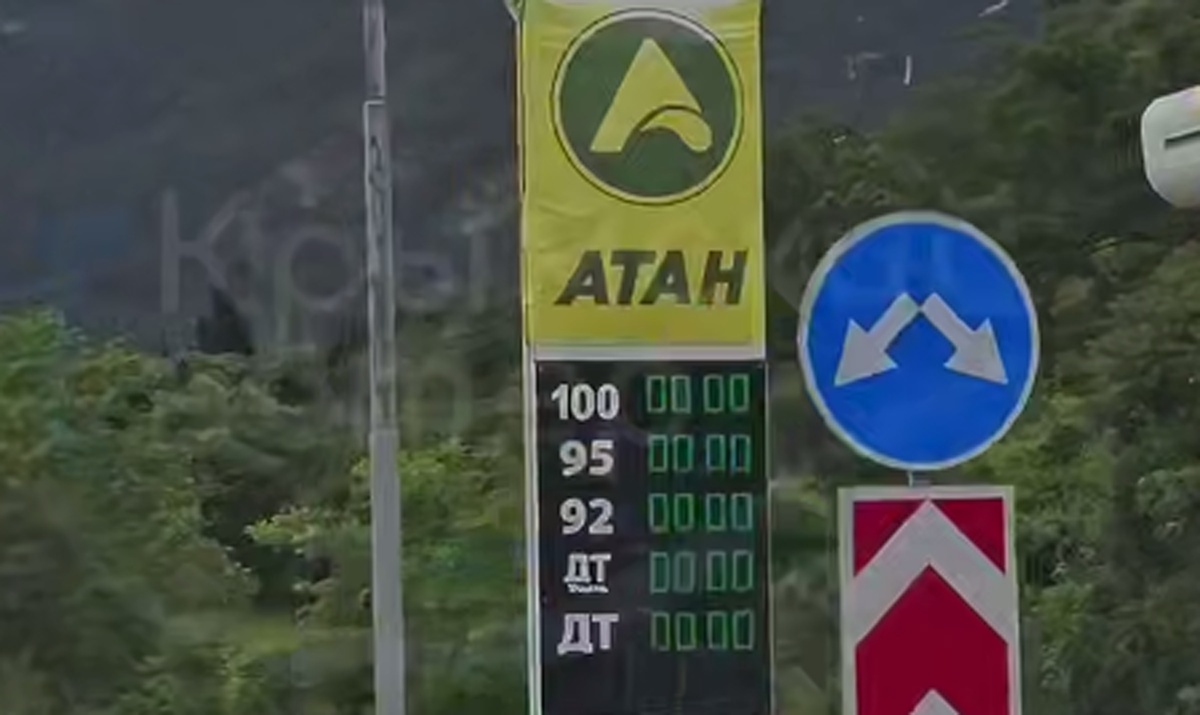
Fuel has largely disappeared across the occupied left bank of Kherson region, with gasoline, diesel, and liquefied gas nearly unavailable and some bus routes already suspended. In certain settlements, fuel is being sold only by hand at 110-150 rubles per liter, while some stations ration sales to 20 liters per car. The shortage is tied to Ukrainian strikes on Russian fuel logistics and refinery infrastructure, and local officials say diesel prices for farmers have risen by up to 20%, risking disruption to harvests.
This is less a localized shortage than a logistics-degradation event: once fuel availability becomes intermittent, the system loses its buffering capacity and every further disruption compounds faster than linear. The immediate second-order effect is on mobility and power continuity, but the more important market signal is that occupied-territory supply chains are becoming brittle enough that even low-tech distribution assets (tankers, retail storage, canister resale) are being disrupted, which raises the probability of broader regional rationing over the next 2-6 weeks.
The biggest economic loser is local agricultural throughput. Diesel scarcity during planting/harvest windows creates a nonlinear hit to output because machinery utilization is time-sensitive; even a 10-20% fuel shortfall can translate into materially larger yield losses if it coincides with peak field activity. That also feeds back into food logistics, forcing higher truck turnaround times, more spoilage, and greater dependence on rail/long-haul corridors that are themselves more exposed to interdiction.
The key tail risk is that fuel scarcity can become self-reinforcing via generator outages: once households and businesses burn through backup power, telecom, refrigeration, and cash-commerce degrade, which in turn reduces the ability to distribute fuel and spare parts. A reversal would require either a durable restoration of supply routes or a temporary pause in strikes, but that is a tactical rather than structural fix; in the near term, any relief is likely to be uneven and quickly arbitraged away by hoarding and black-market pricing.
Contrarian read: the market may underappreciate how much these attacks matter not by destroying headline barrels, but by increasing delivered-barrel friction. Even if refinery output elsewhere normalizes, a corridor-level bottleneck can sustain scarcity and price dislocations for weeks, because the constraint is transport integrity rather than aggregate production. That makes the situation more relevant for logistics risk, regional inflation, and agricultural downside than for broad global energy pricing.
AI-powered research, real-time alerts, and portfolio analytics for institutional investors.
Request TrialOverall Sentiment
strongly negative
Sentiment Score
-0.72
