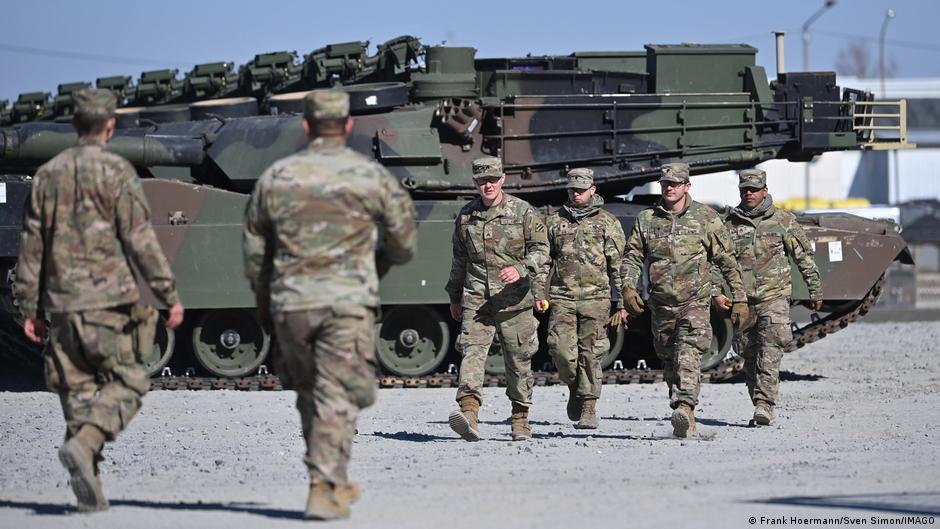
Trump said the US will cut troop levels in Germany "a lot further" than the already announced withdrawal of around 5,000 personnel, with the drawdown expected to be completed in 6 to 12 months. The move also scraps a Biden-era plan to deploy long-range Tomahawk missiles to Germany, prompting criticism from top Republicans who warned it could weaken deterrence and signal the wrong message to Vladimir Putin. Germany currently hosts more than 36,000 active-duty US personnel and over 11,000 reserve and civilian personnel, so the decision is a notable shift in NATO force posture.
The immediate market read is not about force-combat power; it is about the optionality premium embedded in Europe’s security architecture. A further US drawdown in Germany raises the probability that Europe must finance more hard infrastructure, air defense, munitions stockpiles, logistics, and command-and-control capacity sooner than budgets currently assume. That shifts the marginal beneficiary set away from traditional “platform” primes and toward infrastructure-heavy names with exposure to bases, ports, rail, power, and dual-use construction.
The second-order effect is a ratchet in procurement urgency. Even if this is mostly symbolic near-term, the combination of a six-to-twelve-month execution window and public Congressional pushback creates a path where Europe accelerates spending on items that can be fielded quickly: air defense, secure communications, ammunition depots, fuel storage, runway reinforcement, and mobility assets. Companies with bottleneck capacity in those areas should see improved order visibility, while contractors dependent on US-European interoperability programs could face delayed awards as decision-making gets politicized.
The risk is that the signal arrives before the replacements are funded. Over the next 1-3 quarters, this can widen the gap between political rhetoric and deployable capability, which is negative for regional deterrence and could keep a geopolitical risk premium elevated in European equities and credit. The tail risk is a larger posture shift that forces Germany and neighboring states to rebalance budgets away from discretionary spending into defense and logistics, creating a modest growth drag but a sustained demand tailwind for defense infrastructure.
The contrarian angle: the move may be underpriced not because of combat implications, but because investors underestimate how much procurement in Europe is bottlenecked by permitting, labor, and power-grid constraints. If Germany and allies actually move faster, the winners may be civil engineers, industrial electrification, and base-support contractors rather than the headline defense primes. If the White House softens after Congressional and NATO pressure, the trade reverses quickly, so timing matters more than conviction here.
AI-powered research, real-time alerts, and portfolio analytics for institutional investors.
Request DemoOverall Sentiment
mildly negative
Sentiment Score
-0.25
