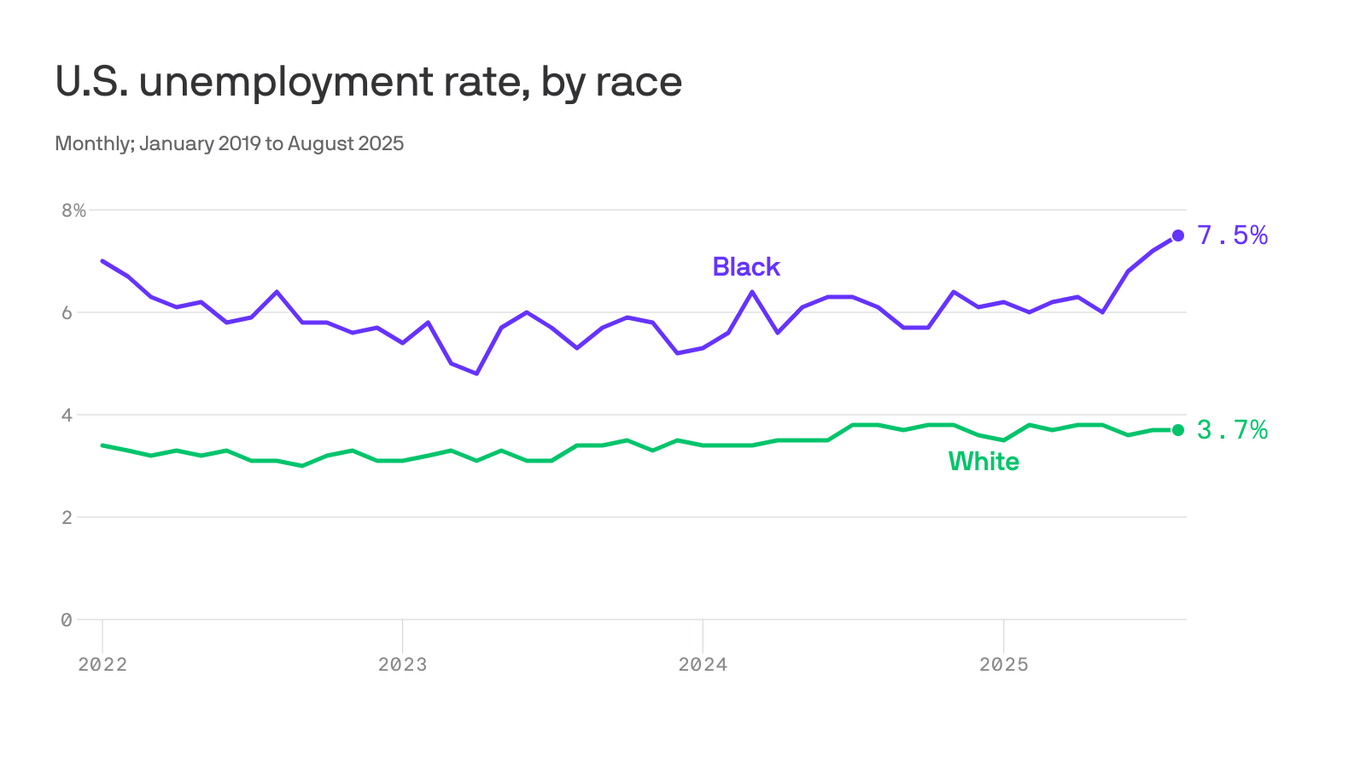
The Black unemployment rate surged to 7.5% in August, up over a point from the start of the year and significantly above the overall 4.3% rate, signaling a broader economic slowdown that disproportionately impacts Black workers. This increase is linked to a general cooling labor market, disproportionate federal layoffs, and a corporate pullback on diversity initiatives. The situation raises questions about the Federal Reserve's monetary policy, particularly whether this indicator will influence potential rate cuts, especially after the Fed recently dropped 'inclusive' language from its maximum employment mandate.
The U.S. Black unemployment rate has surged to 7.5% as of August, an increase of over one percentage point since the start of the year, signaling a potential leading indicator of a broader economic downturn. This figure stands in stark contrast to the overall jobless rate of 4.3% and the white unemployment rate of 3.7%, highlighting a widening disparity that historically precedes weaker labor market conditions. The trend is attributed to a confluence of factors, including a general cooling in job growth, disproportionate impacts from federal government layoffs, and a corporate pullback from diversity, equity, and inclusion (DEI) initiatives. The most critical implication for investors centers on Federal Reserve policy. While the Fed had previously adopted an 'inclusive' approach to its maximum employment mandate, as noted by Goldman Sachs in a 2021 report, it has recently removed this language, creating significant uncertainty about whether this sharp, demographically-concentrated rise in unemployment will be a material factor in its deliberations हाइड्रोजन potential interest rate cuts.
AI-powered research, real-time alerts, and portfolio analytics for institutional investors.
Request DemoOverall Sentiment
strongly negative
Sentiment Score
-0.70
Ticker Sentiment
