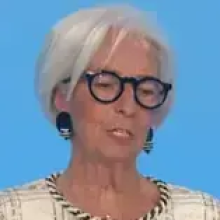
ECB President Lagarde said the economy is moving away from the baseline and that inflation is still expected to be well above 2% in the near term, with downside risks to growth and conflict dampening activity. She also said the ECB debated a rate hike, but the decision was unanimous and she knows where policy is headed, implying a steady but still uncertain path for rates. The comments reinforce a cautious ECB stance and are likely to affect euro rates and the EUR.
The key market signal is that the ECB appears more comfortable keeping policy restrictive than the market may be pricing, while admitting growth is deteriorating. That combination is toxic for cyclicals: disinflation is no longer a clean “soft landing” story if the slowdown is being driven by weaker demand rather than supply normalization. In Europe, that usually shows up first in banks, industrials, and domestically leveraged credit as the market starts to price a higher probability of an earnings recession over the next 1-2 quarters.
For rates and FX, this is structurally bearish for the euro relative to the dollar and Swiss franc if the ECB stays hawkish while growth data soften. The second-order effect is that EUR weakness can partially cushion exporters, but it also tightens financial conditions by raising imported inflation volatility and forcing the ECB to stay cautious longer. If the market had been leaning toward a faster easing path, the near-term unwind is likely in front-end bunds and EUR/USD rather than in the long end, where growth fears may already be partly priced.
JPM is the oddest ticker in the tape: the direct read-through is weak, but the broader relevance is that tighter-for-longer European policy plus softer global demand can pressure global markets mood and cross-border risk appetite. That is usually negative for investment banking, cross-asset trading volatility, and loan growth expectations rather than for near-term credit quality. The contrarian angle is that consensus may be overfocusing on “higher for longer” as euro-positive; if growth deteriorates faster than inflation, the ECB may end up being forced into a dovish pivot later this summer, creating a sharp reversal in rate and FX positioning.
AI-powered research, real-time alerts, and portfolio analytics for institutional investors.
Overall Sentiment
mildly negative
Sentiment Score
-0.15
Ticker Sentiment
