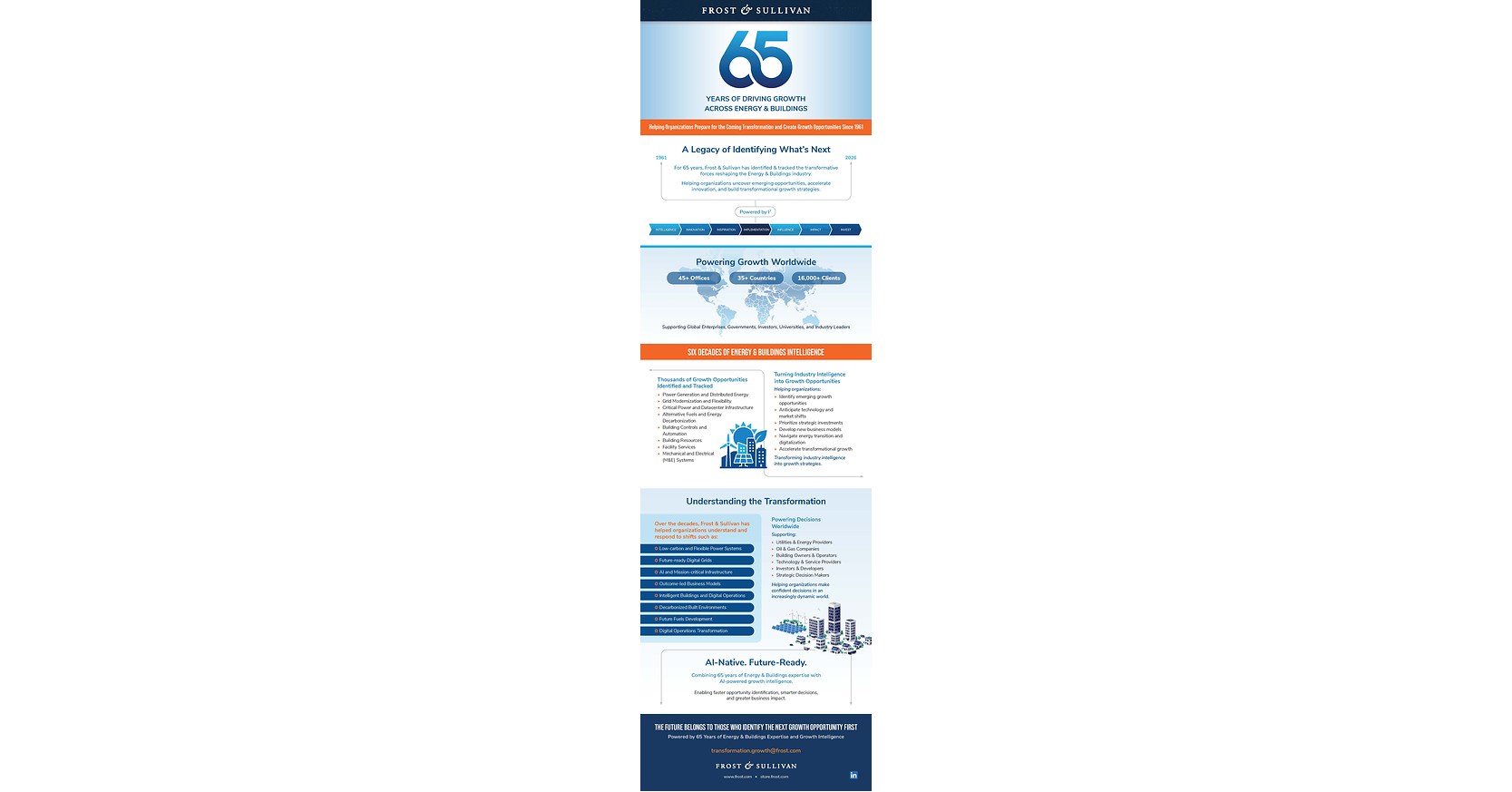
Frost & Sullivan marks its 65th anniversary, positioning its AI-powered growth intelligence to help energy and buildings stakeholders navigate decarbonisation, digitalisation, electrification, and grid modernisation. The company highlights rising data centre and mission-critical computing demand, arguing AI analytics and digital twins can improve utility and asset efficiency and resilience. This is largely a promotional/strategy update with no direct financial figures or immediate market-moving implications.
This is not a new catalyst so much as a reminder that the real monetization of AI in the built environment will accrue to bottlenecked infrastructure suppliers, not to the narrative layer. The incremental value is in electrical gear, controls, cooling, and project execution capacity, where lead times and installed-base upgrades can support pricing for several quarters; there is no discernible read-through to ALGN, so any reaction there would be noise.
The second-order winner set is the picks-and-shovels basket around power distribution and building automation: ETN, JCI, VRT, HUBB, CARR, nVent, and industrial contractors with data-center exposure. The risk is that the market has already capitalized the “AI infrastructure” theme, so the next leg depends on actual order acceleration, backlog conversion, and margin expansion rather than more commentary. If utility capex or hyperscaler deployment slows, these names can de-rate quickly because the story is already crowded.
Contrarian view: consensus may be overestimating the speed of conversion from AI demand to revenue. Permitting, transformer scarcity, and long procurement cycles usually push real economics out by 2-4 quarters, which means the near-term setup is more about call-option value on future orders than immediate earnings upside. The thesis is falsified if managements in ETN/JCI/VRT report decelerating orders/backlog or if hyperscaler capex guidance rolls over.
AI-powered research, real-time alerts, and portfolio analytics for institutional investors.
Overall Sentiment
neutral
Sentiment Score
0.10
Ticker Sentiment
