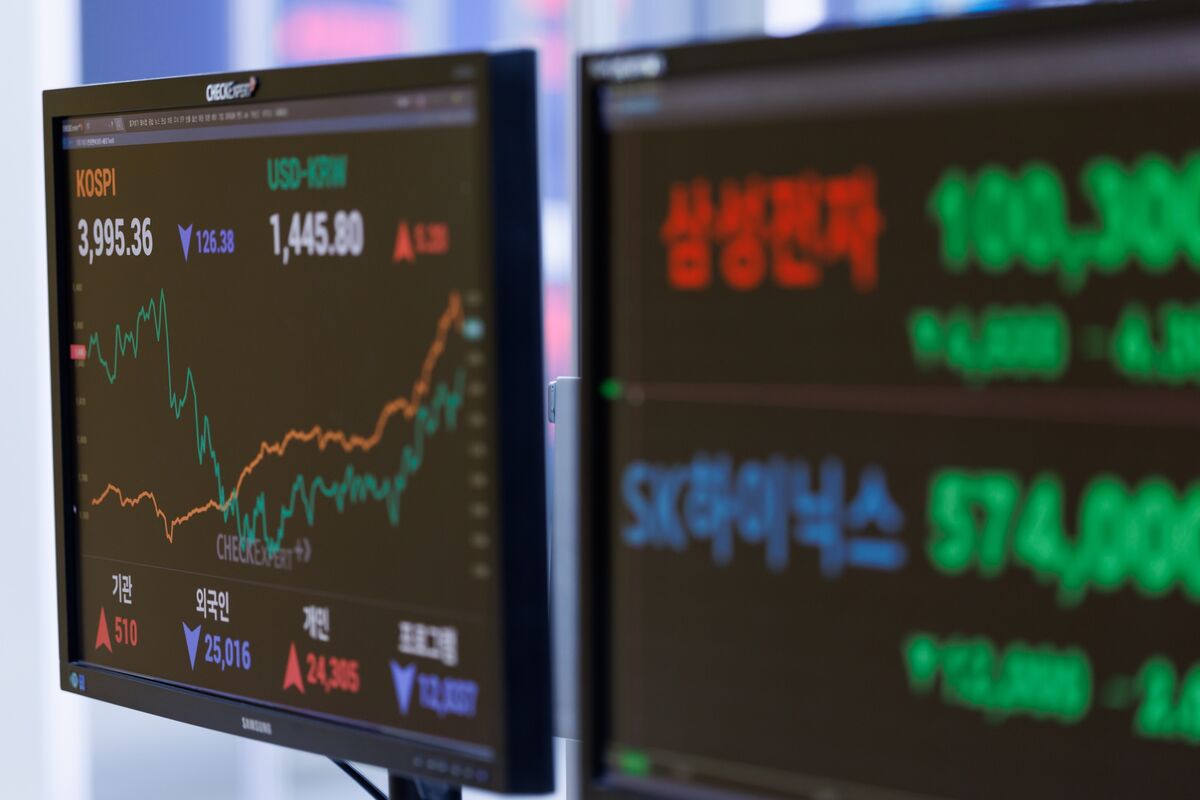
Morgan Stanley strategist James Lord says the South Korean won, which recently endured its worst selloff since the 2008 financial crisis, may soon stabilize and even reverse some losses as expected US interest-rate cuts align with the end of Korea's policy-easing cycle. He notes near-term volatility will persist but argues monetary-policy shifts and easing trade tensions improve the risk-reward toward a recovery and potential outperformance of the currency.
Market structure: A stabilizing or recovering KRW benefits Korean local-asset holders, importers, domestic bond investors and FX-hedged foreign buyers while pressuring large exporters’ USD revenue (Samsung, Hyundai) if appreciation is rapid; expect 3–8% directional moves over weeks as flows re-price. Ending BoK easing plus Fed cuts compresses carry differentials, shifting capital from USD cash into KRW-blend EM flows and Korean sovereign/IG credit.
Risk assessment: Near-term (days–weeks) elevated volatility persists (risk of 5–10% swings). Tail risks include renewed US-Korea trade flareups, BoK policy mistake, or a faster-than-expected US rate cut/vol spike that reverses KRW gains; monitor BoK minutes and Fed dot-plot changes in next 30–90 days as primary catalysts.
Trade implications: Direct plays: long KRW via NDFs or 3–6m call spreads and long Korea equity exposure (EWY) versus broad EM (EEM) capture relative recovery; volatility sell strategies (short-dated straddles) are attractive if IV > realized by >20% but require strict tail hedges. Expect cross-asset impact: local bond yields to tighten 10–40bp on sustained KRW strength, equity P/E expansions of 5–8% for domestic cyclicals.
Contrarian angles: Consensus assumes sustained FX outperformance only after Fed cuts — risk is market already priced for initial Fed dovishness; if Fed delays, short-term rebound can roll over. Historical parallels: 2003–2004 EM recoveries showed sharp 6–12% mean reverts then consolidation; position sizing and optionality are key to avoid being whipsawed.
AI-powered research, real-time alerts, and portfolio analytics for institutional investors.
Overall Sentiment
mildly positive
Sentiment Score
0.35
Ticker Sentiment
